

Fury Explodes As Trump's Drug Crackdown Jails Maduro — but Pardons a Proven Trafficker
Donald Trump's aggressive hunt for Venezuelan narco-crime ends in the arrest of Nicolás Maduro even as he erases the conviction of a major drug trafficker, igniting fury and allegations of hypocrisy.
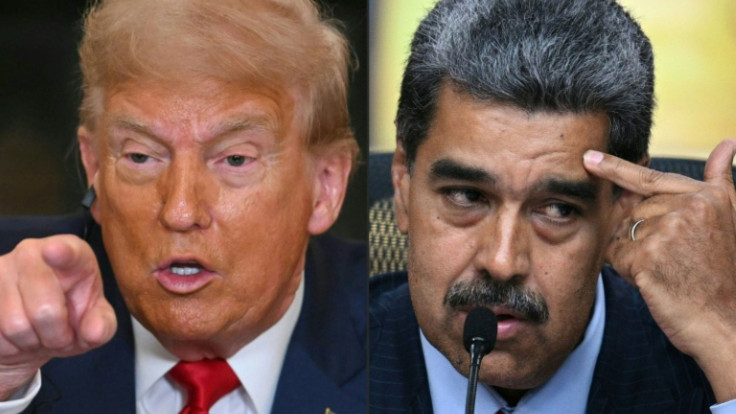
President Donald Trump's contrasting actions this week, jailing Venezuelan leader Nicolás Maduro on drug charges while pardoning a convicted trafficker, have exposed deep contradictions in US drug policy and provoked international outrage.
In a dramatic escalation of his so-called war on drugs, President Trump authorised a military operation that captured Venezuelan President Nicolás Maduro and transported him to New York to face federal narcotics charges. At the same time, Trump has granted clemency to high-profile convicted drug traffickers, including former Honduran president Juan Orlando Hernández, who had been serving a 45-year sentence for cocaine trafficking.
Maduro to Face 'Full Wrath of American Justice'
President Nicolás Maduro Moros of Venezuela was seized in a US-led operation in Caracas and brought to the United States to face federal indictment in Manhattan. The Southern District of New York indictment against Maduro and several senior Venezuelan officials was originally filed on 26 March 2020 and alleges an extensive narco-terrorism and cocaine importation conspiracy spanning more than 25 years.
Prosecutors assert Maduro and his co-defendants conspired with violent drug networks, including factions of the FARC, the Sinaloa Cartel, the Zetas, and Venezuela's own Cartel of the Suns to 'ship tons of cocaine into the United States'. Maduro and his wife, Cilia Flores, face counts including narco-terrorism conspiracy, cocaine importation conspiracy, and possession of machine guns and destructive devices.
The President's capture followed months of US pressure and sanctions, including doubling the reward for information leading to his arrest to £40m ($50m). The military action, code-named Operation Absolute Resolve, involved air and ground forces entering Venezuelan territory. US Attorney General Pam Bondi stated on social media, emphasising that Maduro 'will soon face the full wrath of American justice on American soil in American courts.'
Nicolas Maduro and his wife, Cilia Flores, have been indicted in the Southern District of New York. Nicolas Maduro has been charged with Narco-Terrorism Conspiracy, Cocaine Importation Conspiracy, Possession of Machineguns and Destructive Devices, and Conspiracy to Possess…
— Attorney General Pamela Bondi (@AGPamBondi) January 3, 2026
Pardons for Cocaine Trafficker and Silk Road Founder
While Maduro faces charges of directing vast drug-trafficking operations, President Trump has simultaneously utilised his clemency powers to free several individuals convicted of drug crimes, raising questions about the administration's consistency on narcotics enforcement. In late 2025, Trump issued a full pardon to former Honduran President Juan Orlando Hernández, who had been extradited to the United States, convicted in 2024, and sentenced to 45 years for running an extensive Cocaine trafficking conspiracy, including importing more than 400 tonnes into the US market. Trump claimed Hernández had been 'treated very unfairly' by US prosecutors, a position sharply criticised by legal analysts given the evidence presented at trial.
Former Silk Road creator Ross Ulbricht, who had been serving a life sentence for operating the online drug marketplace that facilitated thousands of illegal drug transactions, was also granted a full and unconditional pardon on 21 January 2025. The pardon drew considerable controversy due to Ulbricht's central role in one of the most notorious darknet drug distribution platforms.
The broader clemency list released from the White House's official records highlights that Trump's pardons have extended to figures whose actions significantly impacted organised drug flows. Critics argue that these actions undercut the moral authority and legal rationale of aggressive measures like the Maduro operation. 'If stopping drug trafficking is the motivating factor, why pardon the Honduran president convicted of cocaine trafficking,' said policy expert Jeffrey Singer, framing the issue as emblematic of inconsistent policy.
Reporter: You said Maduro is responsible for drug trafficking. You recently pardoned the former president of Honduras convicted of drug trafficking.
— Siddharth (@DearthOfSid) January 3, 2026
Trump: He was the head of the country. He was persecuted very unfairly.
Irony died a thousand deaths.
pic.twitter.com/5ZXKHroRUS
Global and Domestic Backlash
The extraordinary capture and prosecution of Maduro have triggered global diplomatic backlash. Multiple Latin American governments, the United Nations, and legal scholars have condemned the US military's unilateral action, warning that it sets a 'dangerous precedent' for international relations and sovereignty. The UN Security Council is set to meet urgently to address the legality and implications of this operation.
Domestically, critics from across the political spectrum have also responded forcefully. Prominent Democrats and some Republicans argue the operation circumvents both international law and congressional oversight, while highlighting the inconsistency of prosecuting Maduro ruthlessly on drugs while nullifying federal convictions through presidential pardons. Former Vice President Kamala Harris described the operation as 'unlawful and unwise,' emphasising that such actions do not enhance US security and could even destabilise the region further.
Donald Trump’s actions in Venezuela do not make America safer, stronger, or more affordable.
— Kamala Harris (@KamalaHarris) January 4, 2026
That Maduro is a brutal, illegitimate dictator does not change the fact that this action was both unlawful and unwise. We’ve seen this movie before. Wars for regime change or oil that…
Public forums and social commentary reflect widespread bewilderment at the juxtaposition of policies that simultaneously escalate military intervention against alleged foreign traffickers while forgiving convicted domestic figures, fuelling intense debate about political motives and legal standards.
Trump's contrasting approach to drug enforcement, imprisoning one alleged trafficker abroad while pardoning others at home, may redefine the global fight against narcotics and leave a lasting imprint on US foreign and domestic policy.
© Copyright IBTimes 2026. All rights reserved.