

How Maduro's 'No War' Moves Allegedly Triggered Trump's Most Explosive Venezuela Threat Yet
Experts say Venezuelan president's 'No War, Yes Peace' overtures preceded a dramatic US military operation
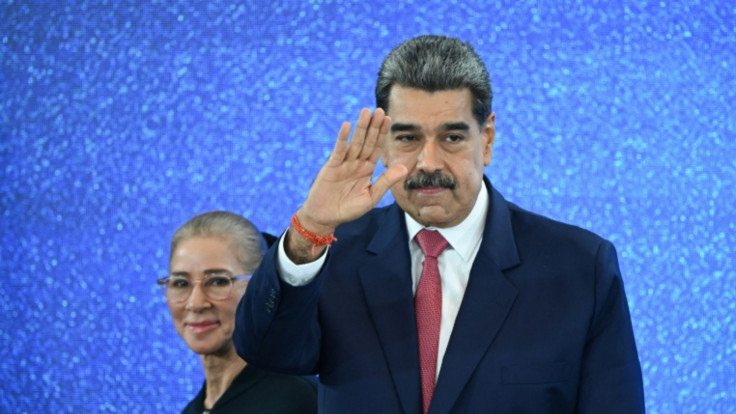
A shift to 'No War, Yes Peace' in Caracas is now being linked by multiple sources to one of the most dramatic escalations in US-Venezuela relations in decades. In the final weeks before his capture by US forces, Venezuelan President Nicolás Maduro was filmed dancing to a remix of his own call for peace.
The surreal footage, which shows Maduro swaying to an English-language slogan of 'No war, no crazy war, peace, peace, yes peace,' has gone viral following the surprise pre-dawn US military operation that led to his capture in Caracas and his transfer to New York on federal drug trafficking charges.
A Message of Peace Messaging Amid Rising Tensions
In the final weeks before the US operation, the Venezuelan state broadcast footage showing President Maduro in Caracas at a Student Day march, visibly swaying and emphasising an English-language slogan, 'No war, no crazy war, peace, peace, yes peace,' to a music remix of his own speeches.
This messaging occurred against a backdrop of intense US military pressure, including months of strikes on suspected drug trafficking vessels in the Caribbean and Pacific, which Washington said were part of counternarcotics operations. Maduro also publicly offered to start serious talks with the United States, even signalling willingness to engage on shared goals such as combating drug trafficking and opening Venezuela's oil sector to foreign investment.
However, US official statements in the same period stressed a very different framing. President Donald Trump repeatedly described Venezuela's government as a narco-terrorist organisation and warned of dire consequences if Venezuela continued what he characterised as threats to American security and influence.
Maduro seems to be under immense mental pressure.
— Visegrád 24 (@visegrad24) November 24, 2025
He delivered this message today to American students after some dancing.
🇺🇸🇻🇪 pic.twitter.com/I21VcB9S9J
🚨ARE YOU KIDDING ME
— CALL TO ACTIVISM (@CalltoActivism) January 4, 2026
According to new reporting by the New York Times, Trump seeing videos of Maduro dancing amid his threats pushed him over the edge to remove him.
And MAGA said women are be too emotional to be president.
pic.twitter.com/hvNtZReCDq
'Operation Absolute Resolve'
In the early hours of 3 January 2026, President Trump announced via his social media platform that the US had conducted a 'large-scale strike' against Venezuela, claiming the capture of President Nicolás Maduro and his wife, Cilia Flores, who were then flown to the United States to face charges. The strikes hit multiple Venezuelan military and strategic sites, and Maduro was subsequently shown in US custody at Stewart Air National Guard Base near New York.
White House officials later described the mission, reportedly rehearsed using a mock version of Maduro's residence and involving elite Special Forces and CIA operatives, as meticulously planned and executed with precision. This initiative, dubbed by insiders as 'Operation Absolute Resolve,' was intended to incapacitate Maduro's command before his allies could respond.
At a news conference held later that day at Mar-a-Lago, President Trump announced that the United States would 'run the country until we can do a safe, proper, and judicious transition,' signalling an unprecedented intention to exert direct influence over Venezuelan governance and its vast oil industry. Trump positioned these actions as necessary to secure geopolitical interests and disrupt drug trafficking networks.
International Condemnation
The US action has been met with fierce international criticism. Venezuelan Vice President Delcy Rodríguez, who under Venezuelan law assumed interim leadership after Maduro's removal, denounced the operation as an 'illegal kidnapping' and demanded Maduro's release, describing the assault as a violation of sovereignty.
The president offered multiple off ramps, but was very clear throughout this process: the drug trafficking must stop, and the stolen oil must be returned to the United States. Maduro is the newest person to find out that President Trump means what he says.
— JD Vance (@JDVance) January 3, 2026
Kudos to our brave… pic.twitter.com/b1fqkdbB4x
Legal questions about the operation's authority have proliferated in Washington. The federal constitution ordinarily reserves declarations of war to Congress, and expert analyses noted that Trump did not seek pre-approval for military strikes inside Venezuelan territory. Critics in both political parties in the United States have raised concerns about potential violations of domestic and international law.
The Justice Department's unsealed indictments against Maduro and Flores cite long-standing allegations of narcotics trafficking but do not, according to some legal scholars, establish a clear basis for military intervention. The optics of charging a foreign head of state with drug crimes while simultaneously conducting military action have intensified debate over motive and proportionality.
Nicolas Maduro arriving to the DEA offices in New York:
— Pop Base (@PopBase) January 4, 2026
“Happy new year”
pic.twitter.com/POOgajtQvc
Regional and global reactions have been sharply divided. Governments in Latin America and beyond have condemned what they term a unilateral assault on a sovereign nation. Meanwhile, allied politicians in the US expressed support for decisive action against a regime widely criticised for human rights abuses and corruption.
The unfolding situation raises profound questions about the future of US-Latin America relations, the rule of law in global affairs, and the potential for further escalation. Analysts warn that the humanitarian and political ramifications could ripple beyond Venezuela's borders, setting precedents with long-term consequences.
© Copyright IBTimes 2026. All rights reserved.