

ICE Agents Fear for Their Lives After Renee Good Killing Sparks 'Gun Sign' Threats from Public
Federal agents increasingly targeted with intimidation tactics amid public backlash
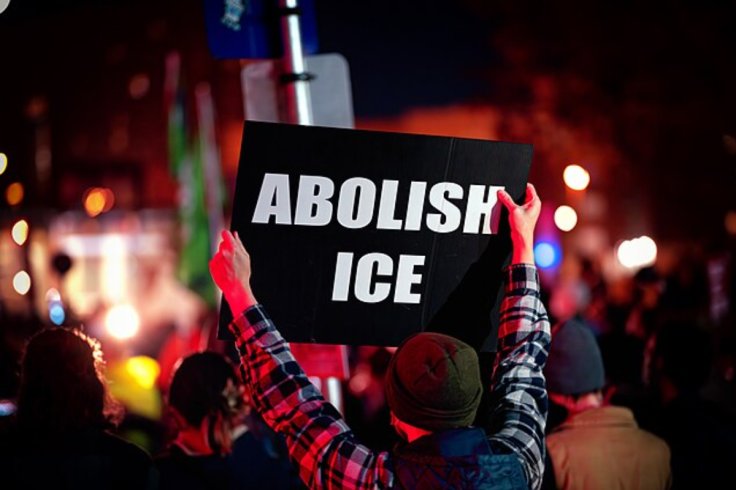
Federal immigration agents say they are now afraid for their own safety as anger over the killing of Renee Nicole Good spills onto the streets, with some describing morale inside ICE as 'miserable' and their jobs as 'mission impossible'. Former officers warn that the current climate feels like a powder keg, with small acts of hostility risking escalation into real violence.
Their fears are rising just as public calls to dismantle ICE are growing louder. More than 1,000 protests erupted nationwide within 48 hours of Good's death on 7 January, turning the agency into a catalyst in America's larger fight over immigration, policing, and political power.
Agents Feel Targeted on the Streets
Former Homeland Security Investigations officers told The Daily Beast that agents in Minneapolis are regularly seeing drivers roll past and make 'gun sign' gestures at them with their fingers, a taunt they fear could foreshadow attacks like the September 2025 shooting at a Dallas ICE facility, which left two detainees dead. Those gestures are just one sign of the backlash following Good's killing, after agent Jonathan Ross shot the unarmed 37‑year‑old mother three times in her car during a Minneapolis operation.
The threatening gestures represent just one symptom of a broader crisis engulfing the agency. More than 1,000 anti-ICE demonstrations erupted across the United States over the weekend, organised in just 48 hours by advocacy groups. Protests stretched from Washington DC to Los Angeles, with demonstrators carrying signs reading 'ICE Out' and demanding accountability.
'Morale Is in the Crapper' Inside ICE
The external hostility coincides with internal turmoil that has left agents feeling overwhelmed and undervalued. Current and former ICE officials told The Atlantic they feel crushed by impossible arrest targets and constantly shifting priorities under President Donald Trump's mass‑deportation agenda. 'Morale is in the crapper,' one ex‑investigative agent said, adding that even colleagues who support the mission are unhappy about 'quotas and the shift to the low‑hanging fruit to make the numbers'.
The pressure has intensified as White House deputy chief of staff Stephen Miller demands 3,000 arrests per day to meet President Donald Trump's goal of deporting one million people annually. Yet despite promises to target 'the worst of the worst', data shows the agency had arrested just 752 of the 13,000 undocumented immigrants convicted of murder between October and May in 2025, whilst focusing heavily on non-criminals to inflate arrest numbers.
Training Cuts and Questions Over the Good Shooting
To meet those ambitions, ICE has expanded at breakneck pace, more than doubling its workforce from roughly 10,000 to over 22,000 in under a year, with much of the surge crammed into four months. To meet recruitment targets, the agency cut training programmes in half, removed all age requirements, and offered signing bonuses up to £37,000 ($50,000).
'How realistic this goal is and whether you can maintain those standards all depends on the time frame', former acting ICE director John Sandweg said. 'Unfortunately, I think we're seeing that the administration is so eager to get them deployed that we're seeing a reduction in those standards'.
That is why homeland security expert Juliette Kayyem questioned whether Ross followed proper training in Good's shooting. When asked if the agent's actions aligned with a 2023 DHS policy stating officers 'may use force only when no reasonably effective, safe and feasible alternative appears to exist', Kayyem said: 'No. I think it's very fair to say that'.
Public Opinion Turns Sharply Against ICE
The backlash has translated into measurable shifts in public sentiment. YouGov polling data shows ICE's approval rating collapsed from plus 16 in February 2025 to minus 13 currently—a 29-point plunge since Trump returned to office. Additionally, 52 per cent of respondents now disapprove of how ICE performs its duties, whilst 51 per cent believe the agency uses excessive force.
On the ground in Minneapolis, the mood is equally stark. Schools cancelled classes for the rest of the week after Good's death, as students at Maple Grove High School and Roosevelt High staged walkouts, and more than a dozen Twin Cities restaurants closed, citing safety fears tied to the ICE surge. Former agents told The Daily Beast they now worry that, if the backlash continues, a future Democratic administration could simply dissolve ICE. 'For those of us who care about the good work ICE has done in the past three decades, that's a very sad state of affairs,' one said.
An ICE agent was caught slipping on ice in Minnesota. pic.twitter.com/wXMxisaOAm
— Pop Crave (@PopCrave) January 13, 2026
Operations Strain and Legal Pushback
Leaked Border Patrol documents obtained by journalist Ken Klippenstein show that federal leaders tried to recruit 300 volunteers for 'Operation Metro Surge' in Minneapolis but hit resistance, with at least one agent writing, 'We do have personnel but some just don't want to go.' A senior Homeland Security official summed up the bind: heavy‑handed tactics and heated rhetoric from Washington may now be putting officers' lives at risk more than protecting them.
Minnesota Governor Tim Walz and Attorney General Keith Ellison have filed a lawsuit seeking to end the federal surge, accusing masked agents of 'aggressively assaulting and terrorising' communities. Minneapolis Police Chief Brian O'Hara warned on a New York Times podcast that repeated clashes between protesters and law enforcement could spiral beyond anyone's control.
Good's killing was the ninth time since September 2025 that ICE agents have opened fire on people across five states and Washington, DC, with four deaths linked to deportation operations in that span. The shooting happened during what DHS called its largest immigration enforcement push ever, sending 2,000 agents into the Minneapolis–Saint Paul area. As hundreds more federal officers head to the city this week, ICE faces a brutal double test: can it execute an aggressive deportation mandate while also restoring public trust and protecting agents who say they have never felt more hated—or more exposed?
© Copyright IBTimes 2026. All rights reserved.