

The International Space Station Is Retiring: Meet the Private Space Stations That Will Replace It
Private firms race to replace the retiring ISS with new orbital hubs
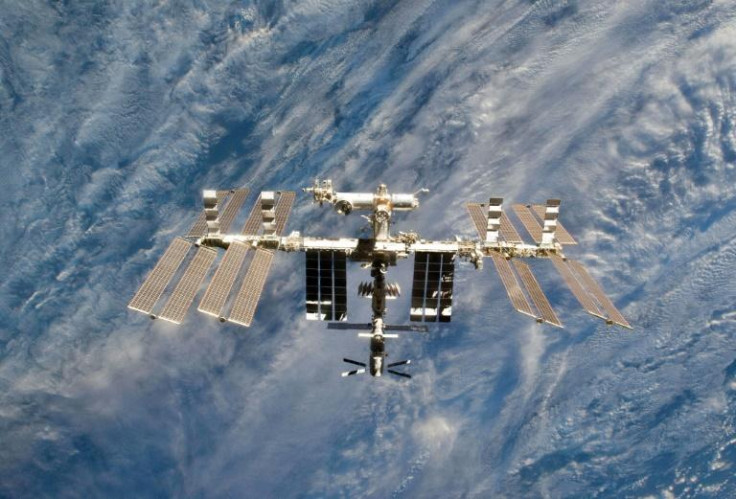
The International Space Station (ISS), the icon of international collaboration and scientific success, is approaching the end of its working life. Having spent over twenty years in Earth orbit, the ISS will be retired by 2030, marking the end of an era of human spaceflight. NASA has verified that the station will be deorbited and steered into the Pacific Ocean, concluding a period that started back in 1998.
The ISS has accommodated international astronauts, been home to multiple pioneering experiments, and served as a platform for collaboration among countries. However, as the hardware ages and maintenance costs rise, the station's retirement has become unavoidable.
The Emergence of Private Space Stations
With the ISS set to be decommissioned, the private sector is gearing up to spearhead similar space operations. As rivalry grows in the private space station sector, the world is poised to see the development of alternative hubs that would foster space research, tourism, and other industry-driven activities, and, more so, on a grander scale, as each industrial player aims to lead the shift.
As of late, NASA has granted companies such as Axiom Space, Blue Origin, and Northrop Grumman to work on orbital outposts. Such projects are likely to advance sustainability in science and present novel prospects for business.
Axiom Space will be affixing modules to the ISS and then disattaching them to create a separate station. Blue Origin, sponsored by Jeff Bezos, is constructing 'Orbital Reef', a commercial station that will accommodate researchers and individual travellers. In the meantime, Northrop Grumman is developing a modular station that could accommodate government and commercial missions.
Why Private Stations Matter
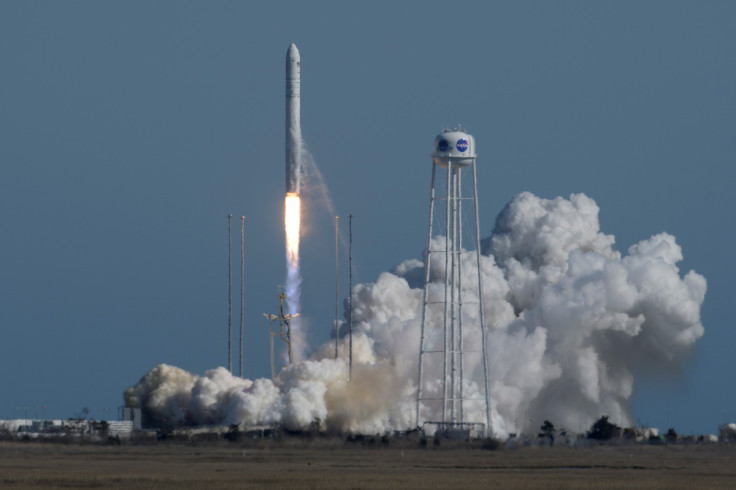
The shift to privatisation is indicative of a broader change in space exploration. Governments are even turning to commercial partners to supply infrastructure, which cuts down on costs and fosters innovation.
NASA has indicated that the presence of private stations will be required to maintain a continuous human presence in low Earth orbit. They will enable scientists to continue their experiments in space, to manufacture products that take advantage of space conditions, and to serve as training sites for missions to Mars and the Moon.
Commercial stations also promise to increase access to space. They would be democratising space exploration by providing both tourism and industrial facilities, thus not making it the preserve of national agencies.
Challenges Ahead
While optimism is rising, there are still significant challenges to address. The construction and operation of orbital stations are complicated and expensive. Private industrial players would need to demonstrate their ability to deploy resilient platforms that can withstand extreme conditions in space and comply with all safety standards.
Funding is another hurdle. Although NASA has been able to provide seed capital, companies will have to attract private investors and customers to maintain operations. Space tourism and commercial research are new markets that still require an in-depth feasibility study.
Moreover, there are geopolitical considerations. The ISS has seen a sustained lack of cooperation among the United States, Russia, Europe, Japan, and Canada. It is unclear whether this spirit of collaboration can be replicated by the private stations, especially as the tension between major private powers mounts.
A New Era In Space Exploration
The wind-up of the ISS initiative marks the end of a very ambitious project for humankind. Nevertheless, it is also the birth of a new phase in space exploration, led by private space players.
A successful commercial use would make low Earth orbit a busy place, capable of serving science, industry, and tourism. They can also serve as the building blocks for further missions to space, forming the infrastructure that would support human exploration beyond Earth.
With NASA and its collaborators preparing for the ISS's final years, the competition to build its successors is on. The success of the transition will not only define the future of astronomical research but also the future of mankind in space travel.
© Copyright IBTimes 2026. All rights reserved.