

JPMorgan CEO Jamie Dimon Issues Direct Warning Over Trump's 'Hard Way' Fed Pressure
Jamie Dimon warns Trump that political pressure on Federal Reserve would backfire spectacularly, raising inflation and interest rates contrary to president's goals.

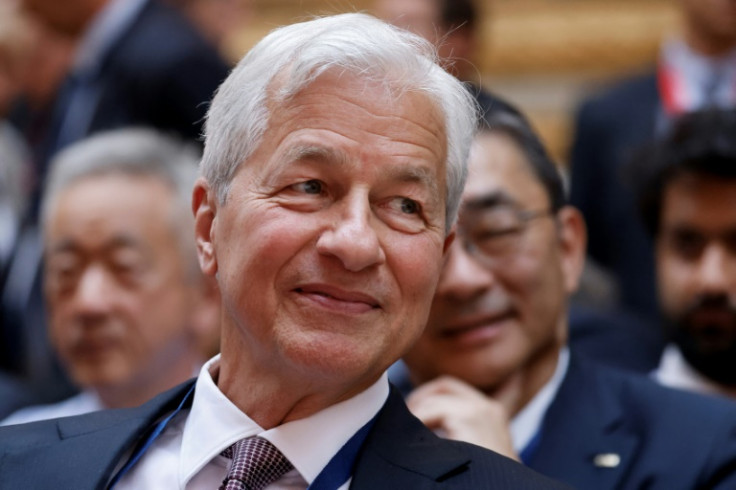
The most powerful banker in America walked into his quarterly earnings call on Tuesday with a message he knew would resonate from the trading floors of Manhattan to the corridors of the White House: leave the Federal Reserve alone. Jamie Dimon, the 69-year-old chief executive of JPMorgan Chase and de-facto leader of Wall Street's establishment, had grown weary of watching his nation's political leaders threaten the independence of the institution that underwrites economic stability itself. And he was not about to remain silent any longer.
'Anything that chips away at the Fed's independence is probably not a good idea,' Dimon told reporters gathered after announcing his bank's fourth-quarter earnings. His language was measured, but the message was unmistakable. What began as veiled warnings had evolved into something far more direct. Dimon was essentially telling President Trump that his assault on the Federal Reserve would achieve the precise opposite of what the president claimed to want.
The context made Dimon's intervention both timely and urgent. Just days earlier, Federal Reserve Chair Jerome Powell had disclosed in a remarkable video statement that the Justice Department had served the central bank with grand jury subpoenas.
Worse still, Powell made explicit what had previously been implicit: the investigation appeared designed to punish him for refusing to lower interest rates according to Trump's preferences.
The Fed chair used words rarely heard from the leadership of America's central bank. He described the investigation as a 'threat' and accused the administration of attempting to use 'prosecutorial pressure' to bend monetary policy toward political goals.
The Federal Reserve Showdown: Why Political Interference Would Backfire
Dimon's intervention carries particular weight because he has spent months defending Powell and the Fed's independence, both publicly and in private conversations with Trump himself. Yet his latest remarks suggest his patience has worn thin. Speaking on Tuesday's earnings call, he articulated with crystalline clarity what economic theory and decades of experience have demonstrated: political interference in monetary policy produces inflation, not economic growth.
'It will have the reverse consequences,' Dimon said flatly. 'It will probably raise inflation expectations.' The logic is straightforward. Markets depend upon the belief that interest rates are set by technocrats responding to economic data, not by politicians responding to electoral pressure.
The moment investors conclude that the Fed has been politicised, they immediately demand higher interest rates as compensation for the heightened uncertainty. What Trump sought—lower rates and a cheaper housing market—would become impossible to achieve.
Dimon's remarks echo those of JPMorgan's Chief Financial Officer Jeremy Barnum, who warned that 'if investors lost confidence in the Fed's independence, the larger question is damage to American economic prospects, and frankly, global economic stability.'
The warning is not merely theoretical. The bond markets—where the cost of borrowing for the entire economy is ultimately determined—would respond immediately and severely to any genuine threat to central bank autonomy.
Yet what gives Dimon's intervention particular credibility is his acknowledgment that he is not a reflexive defender of Powell's every decision. 'I want to say that I don't agree with everything the Fed has done,' he told reporters on Tuesday. This nuance matters. Dimon is not claiming the Federal Reserve is infallible.
He is claiming something far more fundamental: that whatever mistakes the Fed may make, the independence to make those mistakes is essential to economic stability. 'I do have enormous respect for Jay Powell the man,' he continued.
The banking community has largely coalesced around this position. Robin Vince, chief executive of Bank of New York Mellon, echoed Dimon's warnings on Tuesday, describing the Trump administration's pressure on the Fed as 'counterproductive' and emphasising that central bank independence was critical for the bond market.
More dramatically, former Federal Reserve Chairs Alan Greenspan and Ben Bernanke, alongside former Treasury Secretaries from both Republican and Democratic administrations, issued a joint statement on Monday declaring the investigation 'an unprecedented attempt to use prosecutorial attacks to undermine' the Fed's independence.
A Rare Show of Global Solidarity
What began as an American dispute has metastasised into a matter of international concern. On Tuesday, the heads of leading central banks from across the globe issued a remarkable joint statement of support for Powell and the principle of central bank independence.
The signatories included the governors of the European Central Bank and the central banks of the United Kingdom, Sweden, Denmark, Switzerland, Australia, Canada, South Korea, and Brazil, as well as leaders from the Bank for International Settlements.
'The independence of central banks is a cornerstone of price, financial and economic stability in the interest of the citizens that we serve,' the statement declared. This is not merely diplomatic language. It represents a unified front by the world's most significant economic powers, signalling that any American assault on Fed independence would have immediate and lasting consequences for global financial stability.
Powell's decision to fight back represents a dramatic shift in his demeanour. For years, he had largely absorbed Trump's criticism without public response. Yet the moment the Justice Department issued subpoenas, Powell abandoned his traditional restraint. Speaking directly to the camera on Sunday evening, he made clear that he believed the investigation was pretextual—a cover for the administration's deeper desire to subordinate monetary policy to political will.
The stakes could hardly be higher. Powell's term as Fed chair expires in May 2026. The Trump administration has indicated it will nominate a successor, with candidates rumoured to include figures more sympathetic to the president's desire for lower rates. Yet any new chair arriving with the taint of political appointment would immediately lose credibility in financial markets. Rates would spike, housing prices would rise rather than fall, and the economic chaos Trump seeks to avoid would become inevitable.
Dimon's warning thus serves a dual purpose: it reminds Trump that the financial establishment will defend central bank independence, and it signals to markets that the banking sector remains committed to supporting the Fed through this political crisis. Yet whether even Wall Street's unified voice will prove sufficient to restrain a determined president remains an open question.
© Copyright IBTimes 2026. All rights reserved.