Longest Solar Eclipse: When and Where To Watch, Plus What To Expect During the Six-Minute Darkness
Egypt is expected to offer the longest and clearest view of totality
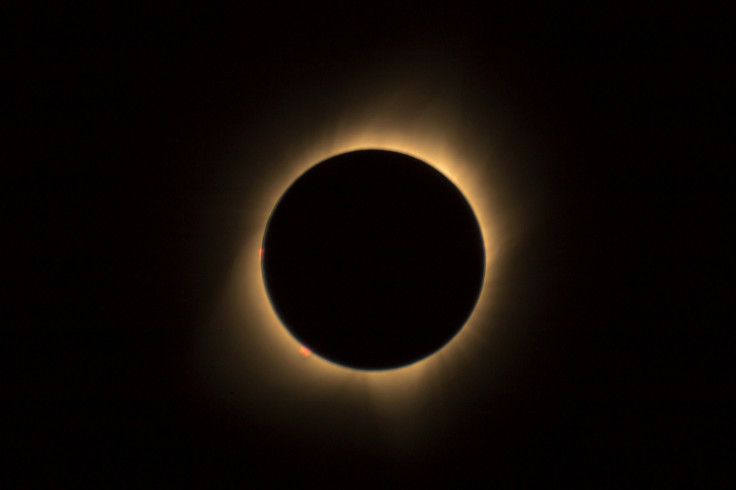
The longest solar eclipse of the century will occur on 2 August 2027. It promises more than six minutes of total darkness in parts of Europe, Africa, and the Middle East. This rare event is already attracting global interest as scientists and sky-watchers get ready for what experts describe as one of the most impressive celestial alignments of the 21st century.
Totality will last up to 6 minutes and 23 seconds along the eclipse's central path, making it the longest land-viewable total solar eclipse until at least 2114.
The eclipse will start over the Atlantic Ocean and move across southern Europe and northern Africa, with viewing times varying by region. Astronomers say the longer duration is due to a favourable alignment where the Moon will be close to Earth, appearing big enough to entirely cover the Sun for an unusually long time.
Where To Watch the 2027 Solar Eclipse
The 2027 total solar eclipse will be visible along a narrow path crossing three continents. Countries expected to experience total darkness include Spain, Morocco, Algeria, Tunisia, Libya, Egypt, Saudi Arabia, and Yemen. Cities along this path will witness the incredible moment when the Moon fully blocks the Sun, briefly turning day into twilight.
Egypt is set to be the prime viewing destination, especially in Luxor and Aswan, where totality will last its maximum of about 6 minutes and 23 seconds.
Other locations on the path will see a somewhat shorter duration of darkness. Even outside the path of totality—such as parts of southern Europe and North Africa—a partial solar eclipse will still be visible.
Clear skies are typical across much of North Africa in August, improving the odds for a clear view. Southern Spain likewise offers favourable weather, making both regions popular choices for travellers planning eclipse-viewing trips.
What To Expect During the Eclipse
At totality, the Sun's outer atmosphere, called the corona, will become visible as a glowing halo surrounding the Moon's dark silhouette. Observers will notice the temperature drop as daylight fades to near night conditions. Bright planets and stars will likely appear in the darkened sky, creating a surreal, almost otherworldly atmosphere.
The unusually long duration results from several orbital factors: the Moon will be near perigee, its closest point to Earth, while the Sun will appear slightly smaller due to Earth's position in its orbit. This combination lets the Moon fully cover the Sun for a much longer time than during most total solar eclipses.
Safety Measures for Viewing
Experts strongly warn against looking directly at the Sun without proper eye protection, as it can cause serious eye damage. Only during the brief phase of totality is it safe to gaze at the eclipse without specialised glasses.
Outside totality, certified solar-viewing glasses or indirect methods such as pinhole projectors must be used. Correct timing and conditions are crucial to safely enjoying this spectacular event.
Historical and Scientific Context
While the 2027 eclipse will be the longest visible from land in this century, eclipses can last even longer. A future eclipse predicted for July 2186 may last up to 7 minutes and 29 seconds. The maximum theoretical duration of a total solar eclipse is about 7 minutes and 32 seconds, making the 2027 event one of the rarest and most extraordinary viewing opportunities worldwide.
© Copyright IBTimes 2026. All rights reserved.
- MOST POPULAR IN Trending