'No Natural Comet' : Shocking New Images of 3I/ATLAS Go Viral
Unusual Anti Tail of Comet 3I/ATLAS Raises New Questions About Its Chemical Make-Up
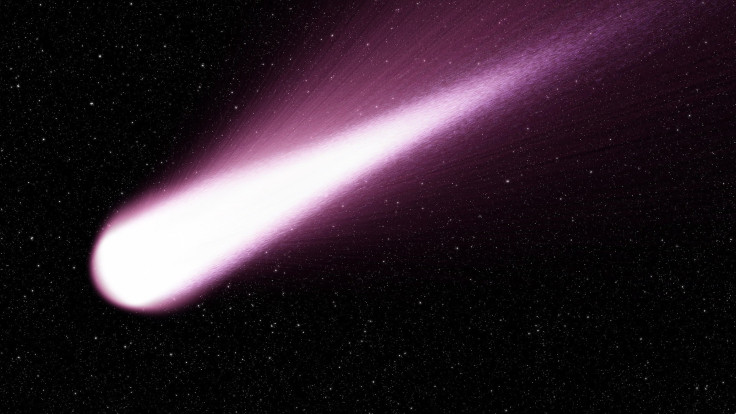
Just yesterday, shocking new images of 3I/ATLAS have puzzled astronomers and amateur stargazers, especially on social media. The comet, the third known interstellar visitor ever recorded, appears in photographs with a vivid green glow and an unusual 'anti-tail' pointing toward the Sun.
Some people on social media have gone so far as to declare that no natural comet in modern history has looked like this.
Why 3I/ATLAS Is Being Seen As Alien
The images went viral and sparked debate over whether 3I/ATLAS is simply a comet or something altogether more mysterious. What makes 3I/ATLAS so unusual starts with its strange appearance. A thread shared on Twitter described the object as having a 'green anti-tail, flowing against the solar wind' and a 'blue opposite tail, flowing with the solar wind.' The green hue, in particular, drew massive attention.
Some attributed this colour to nickel ions, which is a claim that, if true, would be extraordinary. Here is the viral post:
3I/ATLAS on December 1, 2025 by Sebastian Voltmer.
— Red Collie (Dr. Horace Drew) scientist/inventor (@RedCollie1) December 3, 2025
Green anti-tail, flowing against the solar wind.
Blue opposite tail, flowing with the solar wind.
HOW TO EXPLAIN? The green color is due to nickel ions.
No natural comet in all of modern history has ever looked like this. pic.twitter.com/agllTlyCNK
But what do scientists actually think is behind the green glow? Early on, when images of 3I/ATLAS appeared during a lunar eclipse, astronomers, per Space.com, suggested that the green colour came from diatomic carbon (C₂), which is a molecule known to fluoresce under sunlight.
Later spectroscopic observations complicated that picture because data from telescopes showed that 3I/ATLAS is poor in the typical carbon-chain molecules that produce the classic comet green glow.
Instead, some scientists reportedly now suggest that the green glow could come from other, more exotic molecules or perhaps from nickel vapour detected in the comet's coma. Furthermore, observations from the Keck Observatory revealed nickel emissions confined to just a few thousand kilometres around the nucleus, which is a concentration far higher than usually seen in comets.
There is no “natural comet” explanation that survives these observations.
— NMSI - Oscillating Physics (@PCosmologist) December 4, 2025
A dual-tail structure flowing in opposite directions
a green anti-tail rich in Ni⁺ ions going against the solar wind,
and a blue plasma tail moving with the wind
is not something any standard comet model…
Perhaps even more shocking is the comet's tail orientation. This is because rather than pointing away from the Sun, as most comet tails do under solar radiation pressure, 3I/ATLAS has exhibited a pronounced 'anti-solar tail', which is a stream of dust and gas seemingly directed toward the Sun.
According to recent research, this odd morphology is not simply an optical illusion. The anti-tail appears real, likely caused by the slow ejection of large dust particles from the sunlit side of the comet, which are not easily pushed away by the solar wind.
So when all of this is taken together, the unbelievable green glow and the sunward tail depart incredibly from what we expect of typical comets. It is no wonder that many are calling the images 'shocking' and even entertaining the idea that 3I/ATLAS might be something beyond a natural comet.
Read More: WATCH: Viral Video of Unusual Activity on 3I/ATLAS Sends Social Media Into Meltdown
Read More: NASA Releases New 3I/Atlas Images - It's Coming From Mars to Earth
Scientific Response: Is 3I/ATLAS Really That Different?
Despite how unusual 3I/ATLAS looks, most astronomers remain cautious it seems. Moreover, observations from NASA and its collaborating institutions affirm that the object behaves like a comet. It has an icy nucleus, a coma of gas and dust, and a hyperbolic orbit, meaning it came from beyond our Solar System and is now leaving.
Furthermore, estimates based on data suggest the nucleus of 3I/ATLAS is between about 440 metres and 5.6 kilometres across. Why that matters is that its size and behavioural traits place it within the general comet family, though it remains very different in composition and appearance.
Even spectroscopic analysis provides one possible explanation for the oddities. A recent peer-reviewed preprint suggests that the comet may be unusually metal-rich and composed of pristine carbonaceous material akin to ancient meteorites.
The authors reportedly propose that a high metal content plus water ice could, on heating near the Sun, produce unusual chemical reactions and jets that cause the strange coma structure and make the comet appear 'alien.'
© Copyright IBTimes 2026. All rights reserved.
- MOST POPULAR IN Technology