

Maduro Toppled: What Trump's Shock Venezuela Strike Means and Why America Moved Now
Trump claims Maduro was captured and flown out after US strikes, marking Washington's boldest Latin America intervention in decades

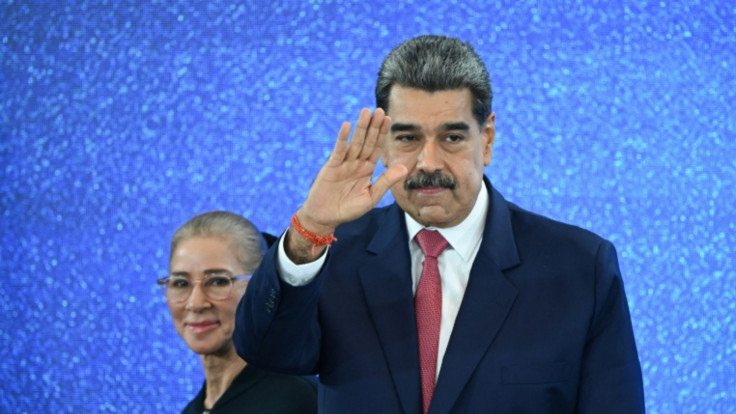
The United States has triggered a political earthquake across Latin America after President Donald Trump announced Saturday that Venezuelan President Nicolás Maduro has been deposed, captured and flown out of the country following what he described as a 'large scale strike', marking Washington's most aggressive military intervention in the region in more than three decades.
In a shocking early morning post on Truth Social, Trump declared: 'The United States of America has successfully carried out a large scale strike against Venezuela and its leader, President Nicolas Maduro, who has been, along with his wife, captured and flown out of the Country.'
The extraordinary claim sent shockwaves through global capitals and plunged Venezuela into uncertainty, reviving memories of an era many believed had ended.
Trump said the operation was carried out 'in conjunction with U.S. Law Enforcement' and promised more details at a news conference scheduled for 11am at his Mar-a-Lago resort in Florida, fuelling intense international speculation about what comes next.
If confirmed in full, the operation would represent the most direct US intervention in Latin America since the 1989 invasion of Panama, when Washington removed military ruler Manuel Noriega on drug trafficking charges.
No American president has ordered such an action in the region in more than 30 years.
A President Removed by Force
Maduro, who came to power in 2013 after the death of Hugo Chávez, has long been accused by Washington of presiding over a 'narco-state', rigging elections and allowing drug trafficking networks to operate with impunity.
The United States has charged him with narco-terrorism and spent years tightening sanctions, blocking oil exports and pressing allies to isolate Caracas diplomatically. Trump's declaration signals that this pressure campaign has now escalated into outright regime removal.
Reuters reported that Maduro was captured by elite special forces, as explosions rocked Caracas and other parts of the country for more than an hour. Venezuelan authorities responded by declaring a national emergency, mobilising troops and accusing the United States of launching an 'imperialist attack'.
Defence Minister Vladimir Padrino struck a defiant tone on state television, saying Venezuela rejected 'with all the strength of its libertarian history the presence of these foreign troops', and called on citizens to unite and resist.
"The United States of America has successfully carried out a large scale strike against Venezuela and its leader, President Nicolas Maduro, who has been, along with his wife, captured and flown out of the Country. This operation was done in conjunction with U.S. Law Enforcement.… pic.twitter.com/sFa5OC4ZrZ
— The White House (@WhiteHouse) January 3, 2026
Why Is America Doing This?
For Washington, the justification rests on two pillars: drugs and democracy.
Trump has repeatedly accused Venezuela of flooding the United States with narcotics and framed the campaign as part of an 'armed conflict' with drug cartels. His administration has already authorised dozens of strikes on boats suspected of carrying drugs in the Caribbean and eastern Pacific, attacks that have killed more than 110 people and drawn widespread international condemnation.
The president has also insisted that Maduro stole the 2024 election, a claim supported by Venezuela's opposition and echoed by several Latin American governments. Trump has said Maduro's continued grip on power poses a threat not only to Venezuelans but to regional stability.
Maduro, however, has consistently argued that the real motive is oil. Venezuela holds the largest proven oil reserves in the world, and he has accused the US of pursuing regime change to gain control of the country's vast resources.
A Region on Edge
The reported strike has reopened deep scars across Latin America, where memories of US-backed coups and military interventions remain raw. Even governments that oppose Maduro have historically rejected direct American military action, fearing it sets a dangerous precedent.
Cuba and Iran were quick to condemn the operation, calling it a blatant violation of national sovereignty, while questions mounted over the legal authority for the strikes. US lawmakers from both parties have already voiced concerns about whether the action was authorised by Congress.
US Senator Mike Lee warned that he was eager to learn 'what, if anything, might constitutionally justify this action in the absence of a declaration of war or authorisation for the use of military force'.
Nicolas Maduro and his wife, Cilia Flores, have been indicted in the Southern District of New York. Nicolas Maduro has been charged with Narco-Terrorism Conspiracy, Cocaine Importation Conspiracy, Possession of Machineguns and Destructive Devices, and Conspiracy to Possess…
— Attorney General Pamela Bondi (@AGPamBondi) January 3, 2026
Chaos on the Ground
In Caracas, residents described fear and confusion as explosions lit up the night sky and aircraft roared overhead. Power outages struck areas near military bases, while smoke rose from installations linked to Venezuela's armed forces.
'It was horrible,' said one resident. 'We heard explosions and planes. We don't know anything from the government, only what state television says.'
Despite Trump's announcement, it remains unclear who is currently running Venezuela, with Maduro's precise whereabouts unconfirmed beyond the US president's claim that he has been removed from the country.
What Comes Next?
Trump has offered few details beyond his declaration of success, saying only: 'Details to follow.' Yet the implications are already profound.
If Maduro's removal holds, Venezuela faces a power vacuum, the risk of unrest and an uncertain political future. For the United States, the operation represents a high-stakes gamble that could either dismantle a long-standing adversary or ignite wider instability across the region.
One thing is already certain. With a single overnight strike and a social media post, Washington has redrawn Venezuela's political landscape and revived an era of US intervention many believed had been consigned to history.
Whether it delivers democracy, chaos or something in between may ultimately define Donald Trump's foreign policy legacy.
© Copyright IBTimes 2026. All rights reserved.