

MAGA Reporter Justifies Trump's 'In The Toilet' Approval Rating Due To His Success
Fox News contributor claims Donald Trump's unpopular poll numbers reflect unrealistic voter expectations rather than political weakness.
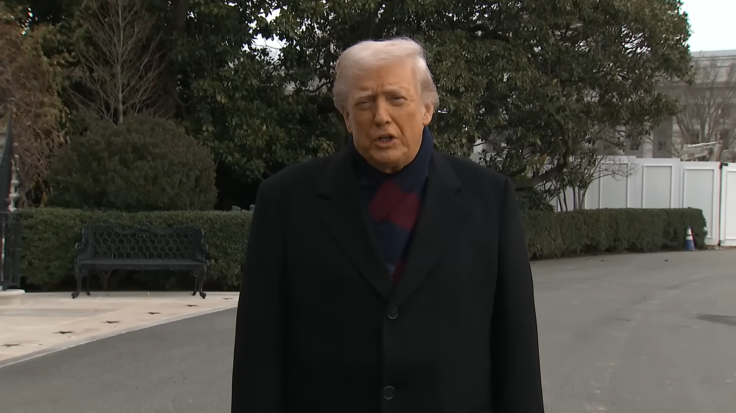
In a fervent defence of Donald Trump's embattled public support, a Fox News commentator asserted that the former president's record-low approval ratings are the result of voters holding him to expectations set by his own 'successes'.
Trump's approval ratings have hovered at historically poor levels throughout 2025, with several authoritative polls showing his support below the critical 40% mark, a position that political analysts characterise as 'underwater' and atypically weak for a sitting or recent president. Independent polling data reflect broad dissatisfaction with his handling of economic and national issues, even as Republican loyalty remains relatively high.
Fox News Explanation At Odds With Public Polling
On 26 December 2025, during an episode of The Five on Fox News, contributor Kaylee McGhee White offered a controversial explanation for Trump's low poll numbers. White claimed that the GOP leader was 'a victim of his own success', attributing poor national approval figures to voter expectations that are unrealistically high because of Trump's perceived accomplishments.
White emphasised Trump's high approval among Republican voters, citing a poll showing him at 87 per cent approval within the party, and argued that criticism from Democrats is rooted in an inability to present an alternative vision or leader, rather than a genuine reflection of public discontent.
In her remarks, White attempted to reframe Trump's declining popularity as a paradox of performance.
She argued that voters expect more from Trump because of what she described as his many policy achievements, including immigration enforcement measures and military actions, and that such expectations result in harsher assessments when any metric falls short.
Independent Polling Paints A Different Picture
Independent polling organisations, using transparent methodologies, depict a starkly different reality. An independent national poll conducted in December 2025 found Trump's approval rating near 39 per cent, down from higher levels earlier in the year and within a point of his lowest figures this term.
BREAKING: Fox News triggers Trump, posting his lowest approval rating yet at just 39%, with 59% disapproving.
— Really American 🇺🇸 (@ReallyAmerican1) December 17, 2025
He is unfit to lead, and America is rejecting him. pic.twitter.com/Mnz6yn35Wn
These data indicate particularly weak performance on matters such as the economy and cost of living, with just a third of respondents approving of his economic stewardship.
Gallup polling from July 2025 similarly showed overall approval at around 37 per cent, a figure widely interpreted as deeply unfavourable for a sitting president. Support among independents was consistently low at 29% even though Republican approval remained high.
Rachel Maddow: “Donald Trump has never been more unpopular than he is right now. His disapproval rating is higher than it was in the immediate aftermath of January 6th. 63% disapprove, only 37% approve of Trump. He is 26 points underwater. That’s astonishing” pic.twitter.com/pLJxeJDCz7
— Marco Foster (@MarcoFoster_) November 4, 2025
Other national surveys echo these trends. An Emerson College Polling survey from late December 2025 registered Trump's job approval rating at approximately 41 per cent, with a corresponding disapproval at 50%, placing net approval in the negative range among likely voters.
Poll aggregates maintained by RealClearPolitics also confirm this broader pattern, showing multiple national polls placing Trump's approval below a majority threshold, with disapproval consistently outpacing approval across multiple data sets.
Public Opinion On Policy Issues Undermines Claim Of Universal Success
Crucially, these polls also measure public opinion on specific policy areas where White claimed Trump enjoyed broad support.

For instance, Associated Press-NORC polling in December 2025 found Trump's approval on economic handling and immigration, traditionally core bases of his appeal, languishing near historic lows, with just 31% approving his economic performance and 38% approving his immigration policies.
These poll results contradict White's assertion that Trump's policy achievements are enjoying '80 to 90%' backing among the public. Instead, they indicate that many Americans are dissatisfied with his performance, particularly on economic issues that directly affect everyday life.
Experts in political science and public polling emphasise that presidential approval ratings are a barometer of public sentiment on leadership and governance, not merely performance on a narrow set of ideological priorities.
The assertion that Donald Trump's low approval ratings stem from 'being a victim of his own success' stands at odds with comprehensive polling data showing widespread disapproval across the general electorate.
These polls, conducted independently and with transparent methodologies, indicate that Trump's popularity struggles reflect substantive voter dissatisfaction rather than mere overzealous expectations.
© Copyright IBTimes 2026. All rights reserved.