

Moderna Shares Double Overnight Because a Made-to-Order mRNA Vaccine Actually Beats Skin Cancer
Moderna's mRNA vaccine, intismeran, reduces melanoma recurrence in Phase 3 trial, boosting stock prices
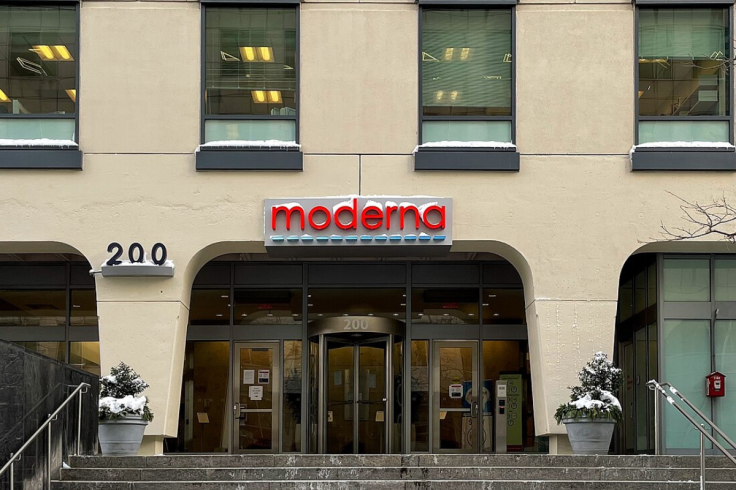
Moderna shares surged in pre-market trading after the US biotech announced that its personalised mRNA cancer vaccine, intismeran, showed a statistically significant reduction in melanoma recurrence in a late-stage clinical trial.
The news, released on Wednesday, sent Moderna's stock soaring by more than 100 per cent in early trading as investors reacted to what some analysts described as a potentially significant development in personalised cancer treatment.
To recall, the therapy, developed in partnership with Merck, combines a customised mRNA vaccine with the immunotherapy drug Keytruda.
MERCK $MRK AND MODERNA $MRNA JUST HIT THE FIRST POSITIVE PHASE 3 RESULT EVER FOR A PERSONALIZED CANCER VACCINE
— Evan (@StockMKTNewz) August 19, 2026
Their Phase 3 INTerpath-001 trial found that "intismeran autogene, an mRNA therapy custom-built from each patient's own tumor mutations, combined with Merck's KEYTRUDA,… pic.twitter.com/9mMcrACjmZ
Unlike traditional vaccines, intismeran is designed using the unique mutational profile of each patient's tumour, creating a personalised treatment approach. It is administered as a series of up to nine doses over approximately one year.
A Personalised Vaccine That Could Change Cancer Treatment
The Phase 3 INTerpath-001 trial enrolled 1,137 high-risk patients with completely resected stage IIB-IV melanoma, meaning their tumours had been surgically removed. Participants were randomly assigned to receive either Keytruda plus intismeran or Keytruda alone.
BREAKING: Moderna stock, $MRNA, surges over +110% after announcing the first ever positive Phase 3 results for a personalized cancer vaccine. pic.twitter.com/BTTxvitEHT
— The Kobeissi Letter (@KobeissiLetter) August 19, 2026
Interim results showed the combination therapy met its primary endpoint of recurrence-free survival and a key secondary endpoint of distant metastasis-free survival. This means the treatment reduced the risk of melanoma returning and spreading to other parts of the body.
No new safety concerns were identified, and the safety profile remained consistent with earlier studies. That is significant because melanoma remains the most dangerous form of skin cancer. Cancer Research UK estimates that around 2,600 people died from melanoma in the UK between 2022 and 2024.
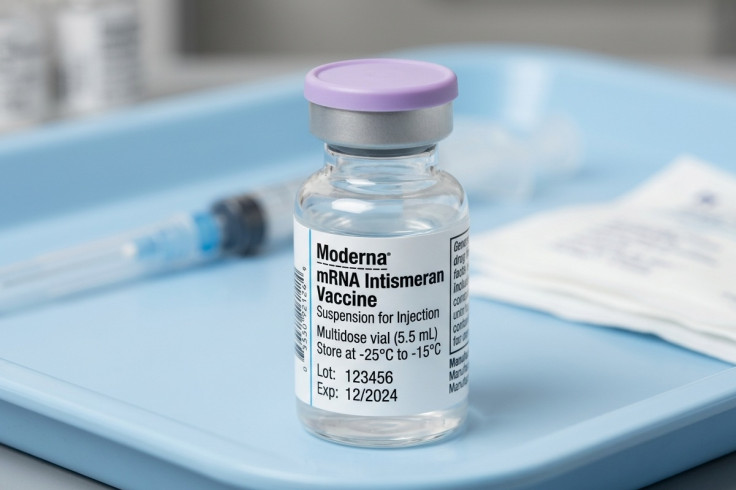
Professor Georgina Long, the study's principal investigator and medical director of Melanoma Institute Australia, said in a statement, 'This is the first Phase 3 study to show that intismeran, a treatment designed based on the unique mutational 'fingerprint' of a patient's own tumour, given in combination with pembrolizumab, can reduce the risk of recurrence or death in patients with completely resected stage IIB-IV melanoma compared with KEYTRUDA alone.'
Dean Li, president of Merck Research Laboratories, added, 'These first Phase 3 findings for intismeran in combination with Keytruda as adjuvant therapy reinforce the promise of a more personalised approach to cancer treatment.'
Market Reaction and What Comes Next
When trading opened on the Nasdaq, Moderna shares jumped more than 84 per cent to $115.91 (£89.70) before climbing to $126.81 (£98.10), more than double the previous close of $62.96 (£48.70). Merck shares also rose, gaining more than 8 per cent to $146.50 (£113.30).
Lale Akoner, global market strategist at eToro, said, 'Moderna and Merck's melanoma vaccine success is a major confidence boost for investors... the sharp share-price reaction reflects that potential.'
MODERNA, MERCK MRNA CANCER VACCINE SUCCEEDS IN PHASE 3$MRNA and $MRK say their personalized mRNA cancer vaccine, intismeran, combined with Keytruda slowed melanoma recurrence and spread in a late-stage trial.
— Wall St Engine (@wallstengine) August 19, 2026
The study was stopped at its first interim analysis after positive… pic.twitter.com/Vk7N1jptd6
However, she cautioned that investors should remain cautious. 'We think retail investors should keep expectations measured. The companies have not yet released the full trial data, overall survival results are still pending, and manufacturing personalised vaccines at scale could be expensive and complex,' Akoner said.
Barclays analysts previously estimated the therapy could generate around $3 billion (£2.3 billion) in melanoma-related revenue by 2035.
However, the trial was stopped at the first of several planned interim analyses, meaning questions remain over whether the treatment can extend overall survival. Those results could take years to establish.
For now, Moderna and Merck plan to present the unpublished data to regulators at an upcoming international medical meeting and discuss the next steps for potential approval.
While the results mark an important milestone, regulators have not yet approved intismeran, and further analysis will be required before its long-term benefits are confirmed.
© Copyright IBTimes 2026. All rights reserved.