

'Nothing To Do With Trump,' DOJ Claims — Yet 15 Epstein Documents Have Vanished In Baffling Mystery
Deputy Attorney General Todd Blanche defends DOJ's actions as Congress and advocacy groups demand transparency
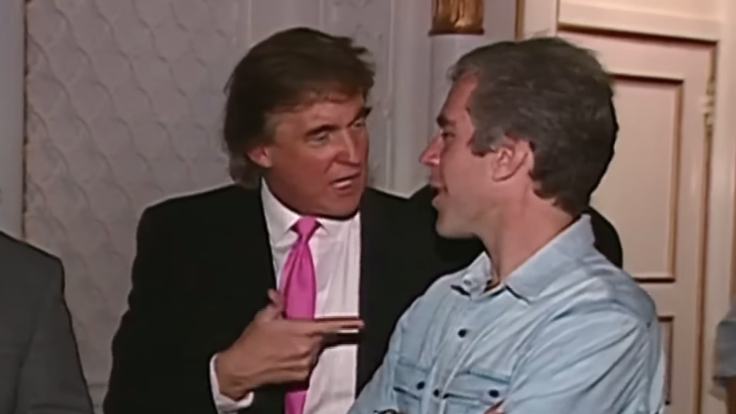
A cloud of scepticism now shrouds the Jeffrey Epstein files as the United States Department of Justice insists that missing documents are unrelated to former President Donald Trump, while critics cry foul.
In a high-stakes interview on NBC's Meet the Press, Deputy Attorney General Todd Blanche faced intense questioning about the disappearance of at least fifteen images and documents from the public Epstein archive. Blanche's assurance that the files' removal had 'nothing to do with President Trump' did little to calm concerns about transparency in one of the most politically charged disclosures in recent memory.
Department Of Justice Explains Missing Files
Blanche told Meet the Press moderator Kristen Welker that the missing images were pulled from the public catalogue after concerns were raised by victims' rights groups, not because of the content involving Trump. According to Blanche, the department learned that certain photographs contained unredacted images of women potentially connected to victims and therefore needed further review and redaction.
The deputy attorney general stated that any image or document mentioning Trump will be released, provided it is consistent with the law. Blanche emphasised that the removal of files was about protecting individuals, not shielding politically sensitive information.
Blanche said, without equivocation, that there was 'no effort to hold anything back because there's the name Donald J. Trump or anybody else's name' and reiterated that the department was not redacting the names of famous individuals associated with Epstein.
Despite these assertions, critics argue that the lack of clarity about the criteria governing file removals leaves ample room for suspicion.
Legal experts and advocacy groups have noted that the transparency law prohibits redactions based on political sensitivity, reputational harm, or embarrassment, a provision intended to prevent selective withholding of material.
The Vanishing Trump Photo
At least sixteen items initially visible on the DOJ's public database vanished within hours of being posted. Among these was a photograph that appeared to show a desk at one of Epstein's properties with printed photos, including one of Trump with Epstein, Melania Trump, and Ghislaine Maxwell.
The abrupt disappearance of these files sparked immediate backlash from members of Congress and advocacy groups who have demanded a full explanation. Critics say that even if the removal was prompted by legitimate concerns about protecting victims' privacy, the department failed to provide adequate public notice or documentation explaining the changes.
Democratic Representative Ro Khanna said the initial release did not comply with the spirit of the law and accused the department of selectively withholding pivotal records. He has suggested Congress could pursue legal tools to compel full disclosure.
The Epstein Files Transparency Act required the DOJ to provide all unclassified records related to Epstein's criminal investigations, internal communications about prosecutorial decisions, and any information about individuals connected to Epstein's network. The department missed the statutory deadline for releasing all files and for explaining any withheld material.
In defending the DOJ's actions, Blanche stressed the department's obligation to balance transparency with legal obligations to protect victims. He described the redaction process as complex and necessary, given the extensive references to individuals and sensitive testimonies implicating survivors.
This photo, file 468, from the Epstein files that includes Donald Trump has apparently now been removed from the DOJ release.@AGPamBondi is this true? What else is being covered up? We need transparency for the American public. pic.twitter.com/3wYZAl2dse
— Oversight Dems (@OversightDems) December 20, 2025
Political And Legal Fallout
The missing files have ignited a political firestorm in Congress and among the public. The partial release of documents has already drawn criticism from lawmakers on both sides of the aisle, with some accusing the Justice Department of stonewalling and others warning against unfounded conspiracy speculation.
Some Republicans aligned with Trump have expressed dissatisfaction with the slow pace of release and the heavy redactions, while Democrats have decried what they view as an attempt to bury information about powerful figures tied to Epstein. Legal scholars say Congress could use its oversight powers, including holding officials in contempt or filing lawsuits, to demand compliance with the law's full disclosure requirements.
Concurrently, victims' advocates argue that the focus on high-profile names detracts from the legal and human imperatives of safeguarding survivors and handling traumatic information with care. They point out that releasing unredacted images or testimony could re-victimise survivors who were compelled to share their experiences with authorities.
Deputy Attorney General Blanche reiterated that the department aims to release an ongoing stream of documents over the coming weeks and months, and that missing images will be returned to the public archive once final redactions have been applied. The lingering mystery over the missing files suggests that public scrutiny will only intensify as the Epstein files continue to unfold.
© Copyright IBTimes 2026. All rights reserved.