

NVIDIA Expands AI Ambitions With Rubin Platform and Open-Model Supercomputers
The chipmaker's latest AI systems signal a shift towards open, industry-defining supercomputing at unprecedented scale
NVIDIA is raising the stakes in artificial intelligence with a bold push that could reshape healthcare, robotics, autonomous driving and climate science. At CES 2026, the chipmaker unveiled its Rubin platform, signalling a decisive move towards more powerful, open and industry-spanning AI systems.
The announcement reinforces Nvidia's position at the centre of the global AI race, as governments, scientists and companies compete to harness computing power at unprecedented scale.
A Landmark Reveal at CES 2026
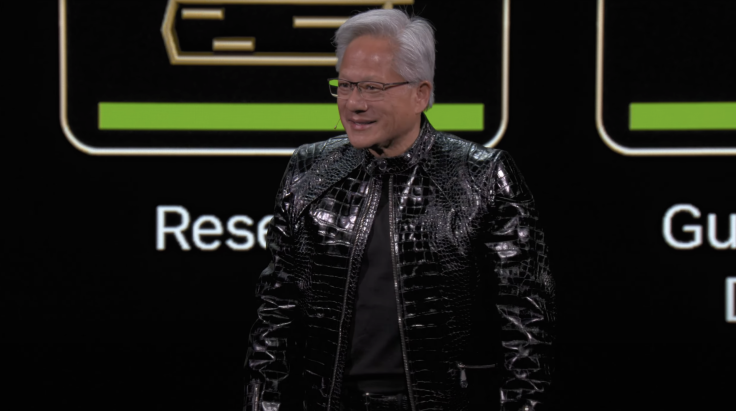
Speaking at CES 2026 at the Fontainebleau Las Vegas on 5 January, NVIDIA founder and chief executive Jensen Huang introduced Rubin, the company's first extreme co-designed, six-chip AI computing platform. The system marks NVIDIA's most ambitious architecture to date.
Huang said the platform reflects how rapidly AI has moved from experimentation to core infrastructure. As organisations channel larger budgets into AI research and development, demand for faster and more efficient computing has surged.
The platform is named after Vera Florence Cooper Rubin, the American astronomer whose work transformed the understanding of dark matter. NVIDIA said the name honours scientific curiosity and long-term discovery.
Inside the Rubin Platform
Rubin follows Nvidia's Blackwell design and is now in full production, with first products expected in the second half of 2026. According to CNN, the AI server rack will deliver more bandwidth than the entire internet.
The platform includes the Vera Rubin NVL72 rack-scale solution and the HGX Rubin NVL8 system. Together, they integrate six tightly co-designed chips, including NVIDIA's Vera CPU, Rubin GPU and NVLink 6 Switch.
Additional components include the ConnectX-9 SuperNIC, BlueField-4 DPU and Spectrum-6 Ethernet Switch. NVIDIA said this approach allows the system to function as a single, highly efficient AI engine rather than disconnected parts.
Rubin also introduces five major innovations, including next-generation NVLink interconnects, an upgraded Transformer Engine, Confidential Computing, a new RAS Engine and the Vera CPU.
'Rubin arrives at exactly the right moment, as AI computing demand for both training and inference is going through the roof', Huang said in a company statement. 'With our annual cadence of delivering a new generation of AI supercomputers — and extreme codesign across six new chips — Rubin takes a giant leap toward the next frontier of AI'.
Open Models Target Real-World Impact
Beyond hardware, NVIDIA outlined an expanded portfolio of open AI models designed for specific industries. The company said these tools aim to shorten development cycles and lower barriers to adoption.
The Alpamayo architecture focuses on autonomous vehicle development, while Clara targets medical imaging, diagnostics and healthcare research. Nemotron supports advanced reasoning and multimodal AI applications.
In climate science, NVIDIA's Earth-2 platform enables high-resolution climate modelling and forecasting. Cosmos, meanwhile, supports synthetic data generation and robot policy testing in simulation.
For robotics, NVIDIA introduced GROOT, an AI model built for humanoid robots and embodied intelligence, according to TechCrunch.
Why It Matters
NVIDIA's strategy reflects a broader shift in AI, from isolated tools to foundational systems that power economies and scientific breakthroughs. As AI capabilities accelerate, the company's technology could influence how societies address health, mobility and environmental challenges.
The scale of Rubin also raises questions about energy use, access and global competition, underscoring the growing human impact of advanced computing.
Stay informed on the technologies shaping the future. Explore our latest coverage on artificial intelligence and share your thoughts on how AI should evolve responsibly.
© Copyright IBTimes 2026. All rights reserved.