

AI Bubble 'Set to Pop' as Ex-Intel CEO Claims Quantum Computing Will Kill GPUs
AI bubble warning grows as ex-Intel CEO says quantum tech will end the GPU era
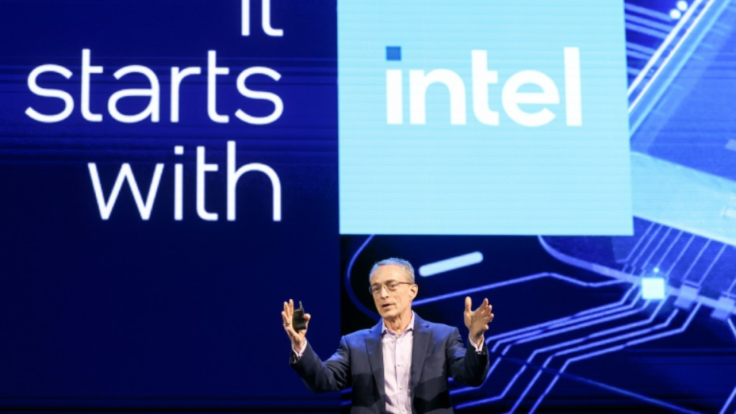
The explosive rise of artificial intelligence has fuelled a global investment frenzy, and the warnings about an overheated market are getting louder.
Economists, central banks and major tech leaders have already voiced concerns about excessive valuations across the AI sector. Now a striking new claim has entered the debate. Former Intel CEO Pat Gelsinger says quantum computing will arrive faster than expected and ultimately render today's GPU-driven AI systems obsolete.
A Market Already on Edge
The broader economic context has already raised questions about the durability of the current AI boom. A detailed analysis from The Guardian compared today's AI mania to past speculative bubbles, highlighting the speed at which money has flooded into models, chips and data-centre infrastructure. Nvidia's valuation more than doubled within months, much of it built on expectations rather than concrete long-term revenue.
Several analysts remain concerned that companies are financing the AI race with increasing levels of debt. Big Tech firms have collectively raised nearly $250 billion (approximately £188 billion) this year to expand their AI footprints. Economists warn that if spending slows or expected breakthroughs fail to materialise, the financial consequences could ripple through global markets.
Gelsinger's Quantum Bombshell
Into this uncertain moment arrived Pat Gelsinger's bold prediction. In a recent interview cited by Wccftech, the former Intel executive said quantum computers will reach mainstream adoption much faster than many expect. He called quantum tech one of the three essential pillars of computing and insisted it will surpass both classical processors and AI-optimised hardware.
Gelsinger argued that once qubits become scalable, they will outperform GPUs in tasks that modern AI depends on. He believes that shift will overturn the current hierarchy of computation. During the interview, he also reflected on historical missteps at Intel and described how the company struggled to maintain discipline during crucial development cycles. He added that his exposure to quantum-focused ventures sharpened his belief that a significant transition is approaching.
Implications for Nvidia and the AI Supply Chain
The claim directly challenges the foundation of today's AI investment strategies. Virtually all major models, from OpenAI's GPT series to enterprise systems built by Amazon and Meta, rely on GPUs. These chips form the backbone of training pipelines, inference engines and fast-expanding data-centre clusters.
If quantum systems mature quickly enough, the entire AI hardware economy would face disruption. Analysts note that this would reshape the market far more dramatically than previous technological shifts, since modern AI capacity depends on enormous GPU installations and long-term supply commitments.
Economists also stress that the scale of current capital expenditure magnifies the risk. A rapid industry pivot would leave companies with significant sunk costs in data-centre construction, chip procurement and energy infrastructure.
Is Quantum Really That Close?
Researchers remain divided. Quantum computing has made steady progress, but many scientists argue that large-scale, fault-tolerant systems remain years away. Gelsinger's claim, however, rests on the idea that incremental breakthroughs could accelerate faster than traditional roadmaps suggest.
AI researchers are also debating whether quantum systems would replace GPUs outright or coexist alongside them. Some believe quantum machines may assist in specialised tasks while GPUs continue to drive general-purpose AI workloads.
A Bubble Ready to Burst or a Transition in Slow Motion?
The warnings from economists and Gelsinger share a common thread. Both raise doubts about the sustainability of the sector's current trajectory. If today's valuations rely on assumptions that GPUs will remain dominant for decades, a quantum breakthrough could reshape economic expectations almost overnight.
For now, investors continue to pour money into AI infrastructure at record levels. Yet the conversation has shifted. The question is no longer simply whether an AI bubble exists. It is how sharply it might burst if the next computing revolution arrives sooner than expected.
© Copyright IBTimes 2026. All rights reserved.