

CES 2026: Everything NVIDIA Announced for the Future of Tech
From Automotive to Physical AI: Everything NVIDIA revealed at CES 2026
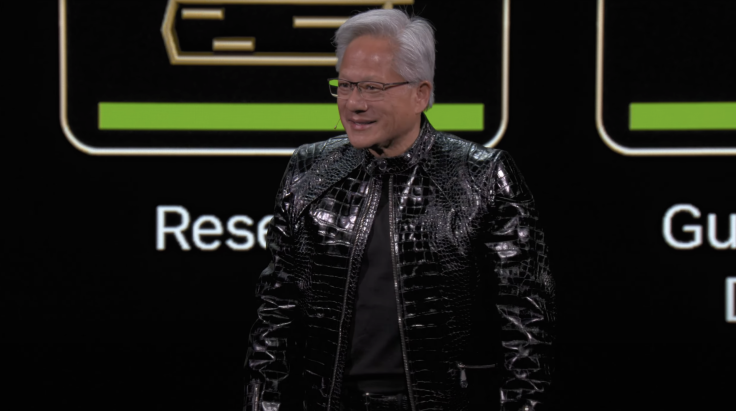
It is the age of AI, and at the 2026 Consumer Electronics Show in Las Vegas, one company got perhaps the most attention from technologists, investors and industry leaders. NVIDIA, often dubbed the 'King of AI' for its big role in powering AI hardware and software infrastructure, took to the stage with a slate of announcements that pointed at much more than graphics cards and into the very future of computing, robotics and autonomous systems.
It was all inclusive, from next-generation AI platforms to massive visions for physical AI. The company's keynote gave a main theme at this year's CES: AI that thinks, reasons and acts in the physical world is no longer sci-fi but fast approaching reality.
NVIDIA: The Reigning Powerhouse in AI
NVIDIA has given the tech industry the fastest advancements in AI. Its specialised graphics processing units, originally designed to accelerate gaming and visual workloads, became indispensable for training deep learning models as the AI boom took hold. Today, the company's hardware powers data centres, research labs and autonomous systems across the world, and its platforms have become the backbone of modern machine intelligence.
Read More: CES 2026: Every New Gadget Launched at the Biggest Tech Show
Read More: 'Not Kidding' : Elon Musk Warns Twitter Users on Misusing AI
NVIDIA's Announcements at CES 2026
It was a superb keynote at CES 2026, as Chief Executive Jensen Huang's presentation set the tone not just for NVIDIA's endgame but for the next phase of the AI revolution. Instead of just focusing on consumer GPUs, the company was all about platforms, tools and systems made to address the rising demands of AI in data centres, robotics, autonomous vehicles and real world agentic intelligence.
The star of the show was Vera Rubin, NVIDIA's new AI computing platform that the company says is now in full production and poised to transform how AI workloads are processed. Named after the astronomer Vera Rubin, this next-generation system integrates many components including a Vera CPU, Rubin GPU, networking switches and advanced DPUs into a unified, rack-scale architecture that promises huge improvements in performance and efficiency compared with its predecessor, Blackwell. Rubin GPUs are said to deliver up to 5x the AI training performance of Blackwell, and the full platform can handle large models with much lower cost.
Moreover, important to NVIDIA's pitch is the idea that future AI systems must be capable not just of generating text and images but of understanding and interacting with their environments. This concept, often called physical AI, was a recurring theme throughout the CES presentations. Huang described it as a turning point similar to when generative AI first got into people's imaginations. The company also talked about new tools, models and partnerships made to advance robotics, autonomous vehicles and simulation technologies that enable machines to reason, plan and act safely in the real world.
In addition to hardware platforms, NVIDIA's chief also talked of open models trained on its infrastructure, aimed at accelerating development across domains like healthcare, climate, reasoning, robotics and autonomy. According to early reports, these open models and datasets are intended to foster greater collaboration and speed innovation by making powerful AI capabilities more available.
Furthermore, autonomous driving also made big gains. NVIDIA continues to extend its automotive footprint with Drive platforms and open frameworks that help partners implement advanced driver assistance and eventual hands free driving capabilities. Alongside this, the company announced collaborations with top automakers, with Mercedes-Benz's 2026 CLA as one of the first production vehicles integrating NVIDIA's automated driving technology.
Another huge reveal was DGX Spark, a desktop AI supercomputer that brings powerful model training and inference features closer to developers and enterprises. DGX Spark supports large models and local AI agents, showing NVIDIA's plan to democratise access to substantial AI compute resources.
Finally, Robotics was also in sharp focus. NVIDIA showcased advancements in simulation, training tools and robot ready AI stacks such as Isaac Sim and Cosmos, which provide high-fidelity virtual environments and data generation for training embodied AI.
© Copyright IBTimes 2026. All rights reserved.