

NYC Mayor Mamdani Sparks Israel Outrage as Palestine Supporters Back Revoking IHRA Antisemitism Definition
Jewish groups also condemned the revocations, citing antisemitism risks.
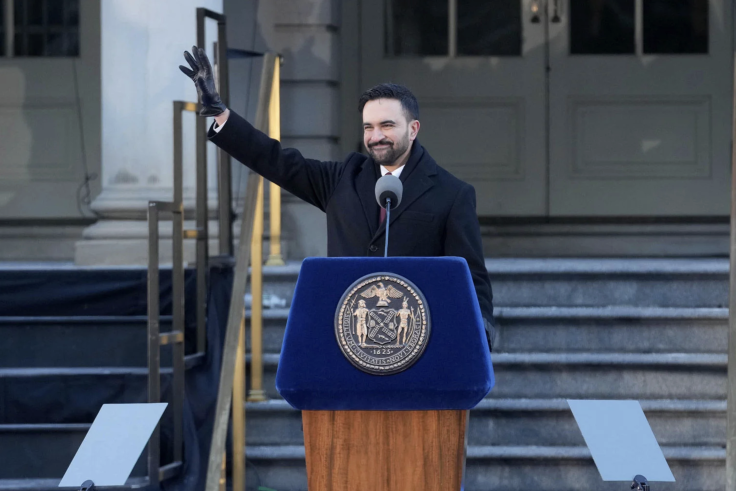
The Mayor of New York City, Zohran Mamdani, has ignited a diplomatic incident following his cancellation of two executive orders related to Israel.
The directives, issued by former Mayor Eric Adams, prohibited city agencies from engaging in boycotts against Israel and established a definition of antisemitism based on the International Holocaust Remembrance Alliance (IHRA), which included examples linked to criticism of Israel.
Israel Slams Mamdani's Executive Revocations
Israel's Ministry of Foreign Affairs expressed strong disapproval on social media. On X, it wrote: 'Mamdani shows his true face ... This isn't leadership. It's antisemitic gasoline on an open fire.'
Israeli officials, including Minister of Diaspora Affairs Amichai Chikli, further accused Mamdani of sympathising with Palestinian militants and describing his actions as indicative of a wider anti-Israel agenda.
Some Jewish organisations in New York, such as the Anti-Defamation League, American Jewish Committee, and UJA Federation, have come together to express their concerns regarding the recent revocations.
In a joint statement, they note that these actions 'reversed two significant protections against antisemitism' and may jeopardise the safety and inclusion of Jewish communities within the city.
On his very first day as @NYCMayor, Mamdani shows his true face: He scraps the IHRA definition of antisemitism and lifts restrictions on boycotting Israel.
— Israel Foreign Ministry (@IsraelMFA) January 2, 2026
This isn’t leadership. It’s antisemitic gasoline on an open fire.
Not healthcare, nor the cost of living, nor the middle or working class.
— עמיחי שיקלי - Amichai Chikli (@AmichaiChikli) January 2, 2026
On his first day in office, Hamas sympathizer @ZohranKMamdani makes his top priority loud and clear: targeting and harming the Jewish community by repealing the IHRA definition of antisemitism and New York… pic.twitter.com/dVaJ8Xwuqs
Palestinian Advocates Applaud the Move
On the other hand, Mamdani's decision received a positive response from Palestinian rights activists and progressive organisations.
Nasreen Issa, representing the Palestine Youth Movement in New York, told Al Jazeera that there has been a longstanding effort by Israel and its allies to 'criminalise dissent,' characterising the IHRA guidelines as an excuse to suppress criticism of Israeli policies.
'So, Mamdani's rejection of this is a positive step towards protecting the rights of New Yorkers and the dignity of Palestinians,' Issa stated.
Afaf Nasher, leader of the New York chapter of Council on American-Islamic Relations (CAIR), characterised the orders as violations of free speech rights.
'This unconstitutional, Israel First attack on free speech should have never been issued in the first place,' she said, adding that the IHRA definition was overly broad and could wrongly equate opposition to Zionism with antisemitism.
YL Al-Sheikh, a Palestinian-American writer affiliated to the Democratic Socialists of America, described Mamdani's revocation as a strong affirmation of free speech and a right to challenge Israeli policies.
Changes to City Policy Explained
Two executive orders have been revoked. The first imposed a ban on city agencies participating in boycotts of Israel. The second involved the adoption of the IHRA definition of antisemitism, which outlines 11 examples of anti-Jewish bias, six of which are directly tied to Israel.
Some critics contend that the IHRA framework blurs the line between valid criticism of Israeli policies and antisemitism, whereas supporters assert that it is essential for safeguarding Jewish communities.
Mamdani also adjusted other Adams-era directives relating to protests outside houses of worship, ensuring both the Police Department and Law Department share oversight, rather than concentrating authority in a single office.
Implications for Israel and Palestinians
Mamdani's actions carry significant symbolic and political weight. For Israel, the revocations represent a major threat to its authority over global perspectives and local policies in one of the most Jewish-populated cities outside of its borders. For Palestinians and advocates of free speech, these actions signify a notable municipal-level endorsement of their right to protest and criticise Israel without facing accusations of antisemitism.
Analysts note that while the Israeli government's response has been intense, the revocations are part of Mamdani's broader agenda to protect civil liberties while remaining committed to ensuring the safety of Jewish New Yorkers.
In his inaugural address, he emphasised his administration's pledge to 'celebrate and cherish' Jewish residents and to maintain the Mayor's Office to Combat Antisemitism. This ongoing effort aims to alleviate concerns while advancing progressive reforms.
© Copyright IBTimes 2026. All rights reserved.