

Ocean Infinity Set to Resume Government-Funded Search for Long Lost Malaysian Plane
Malaysian authorities negotiated a 'no find, no fee' deal with the firm
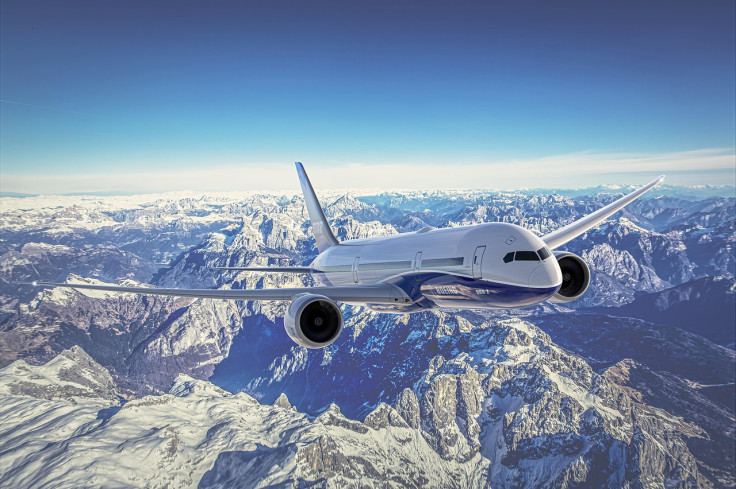
The world's most chilling aviation mystery is about to be dragged back into the spotlight.
Tomorrow, Ocean Infinity will return to the depths of the Indian Ocean, reigniting the desperate hunt for Malaysia Airlines Flight MH370, backed by millions in funding from the Malaysian government and fuelled by renewed hope that the truth may finally be uncovered.
The doomed Boeing 777, carrying 239 passengers and crew from 15 countries, took off from Kuala Lumpur International Airport on 8 March 2014, bound for Beijing. It should have been an uneventful six-hour journey. Instead, it became one of the greatest unsolved mysteries in modern aviation.
Just 40 minutes after take-off, the aircraft vanished from civilian radar over the South China Sea.
What followed only deepened the horror. Military radar later revealed a series of baffling and violent manoeuvres: a sudden U-turn back across Malaysia, a climb to an extraordinary 45,000 feet, then a plunge to just 5,000 feet, far below safe cruising altitude.
Satellite data from Inmarsat traced the aircraft's final, ghostly journey south, flying for hours into the emptiest reaches of the Indian Ocean before its presumed catastrophic end.
Years later, fragments of the aircraft began to wash ashore, offering grim confirmation of its fate but no answers. A flaperon discovered on Réunion Island in 2015, followed by wing fragments found in Madagascar, proved the aircraft had met its end at sea.
Yet the crucial questions remain unanswered.
Where exactly did MH370 come down? Why did it deviate so violently from its flight path? And why has the main wreckage never been found?
Now, more than a decade after the jet disappeared, Ocean Infinity is preparing to search once again in some of the most remote and unforgiving waters on Earth.
For the families of the victims, this renewed mission represents a final, fragile hope that the ocean may yet give up its secrets and that the silence surrounding MH370 may finally be broken.
Lost for Over a Century. In 1915, the ship of legendary explorer Sir Ernest Shackleton, The Endurance, sank after being trapped in sea-ice. #OTD in March 2022 the wreck was found at the bottom of the Weddell Sea, in remarkably good condition #Antarctica #History #OnThisDay pic.twitter.com/wlrahMTl4i
— Stephen Chambers (@SteveJChambers) March 5, 2023
Revamped Deal Fuels Renewed Optimism
Malaysia's transport ministry, under mounting pressure from anguished families and a public hungry for truth, has revived its alliance with Ocean Infinity, the innovative seabed specialists hailing from the UK and US. The Guardian reports their deal is a 'no find, no fee' setup where the firm stands to earn up to £52 million ($70 million) if they locate and verify the wreckage otherwise, taxpayers foot nothing beyond operational outlays.
This government-funded push targets a refined 15,000-square-kilometre zone, pinpointed through reanalyzed satellite data, drift models, and acoustic anomalies from past expeditions.
The search stuttered to life in February 2025, only to be thwarted by savage storms after 22 relentless days at sea. Crews battled 10-metre swells and gale-force winds that made deploying gear a death-defying feat.
But with meteorological models now forecasting a window of relative calm, the operation reboots 30 December for a marathon 55-day stint. To date, they've combed through nearly 10,000 square kilometres using autonomous fleets, with ambitions to sweep an additional 25,000.
Cutting-Edge Tech Armada Assembles
Ocean Infinity's arsenal is straight out of a sci-fi thriller. Spearheading the assault are their Hugin 6000 autonomous underwater vehicles (AUVs), each a £6 million ($8 million) behemoth capable of plummeting to 6,000 metres, deeper than most submarines dare.
These self-guided marvels roam independently for up to 100 hours, their hulls bristling with multibeam echo sounders, side-scan sonar for razor-sharp imaging, sub-bottom profilers to peer beneath sediment and magnetometers tuned to detect the faint magnetic signatures of aircraft alloys. High-resolution cameras capture every nodule and crevice, while laser scanners build intricate 3D models of the seafloor.
Supporting the AUVs are remotely operated vehicles (ROVs) tethered to mother ships, equipped with mechanical arms for close-up inspections and sample retrieval. Data floods back via acoustic modems, processed in real-time by AI algorithms that flag anomalies like twisted metal, unnatural shapes amidst the chaos.
This tech has proven its mettle before: in 2022, Ocean Infinity stunned historians by locating Sir Ernest Shackleton's Endurance, intact under Antarctic ice after 107 years. Yet MH370 has eluded them once; their 2018 foray, covering 112,000 square kilometres, yielded zilch.
Echoes of Grief and Conspiracy Whirlwinds
For the victims' kin scattered from China to Australia, the resumption stirs a cocktail of hope and dread. Support groups like Voice370 have lobbied tirelessly, decrying official opacity and demanding independent oversight.
Leaked reports hint at cargo anomalies: lithium batteries, exotic fruits, but nothing conclusive.
Malaysian officials, scarred by past PR blunders, pledge full disclosure if the plane surfaces, potentially triggering insurance payouts and legal reckonings. As Ocean Infinity's robots descend anew into the inky void, the globe tunes in, wondering if this taxpayer-backed quest will finally pierce the veil—or consign MH370 to eternal myth.
© Copyright IBTimes 2026. All rights reserved.
- MOST POPULAR IN World


