ICE Refuses to Use 2,500 Branded Vehicles Ordered by a 28-Year-Old Official Appointed by Kristi Noem
ICE agents warn marked vehicles make them targets, leaving millions in taxpayer money stuck in storage.
The US Department of Homeland Security (DHS) is working to correct what officials describe as a 'multimillion‑dollar error' after Immigration and Customs Enforcement (ICE) acquired thousands of branded vehicles that agents say cannot be used in everyday operations.
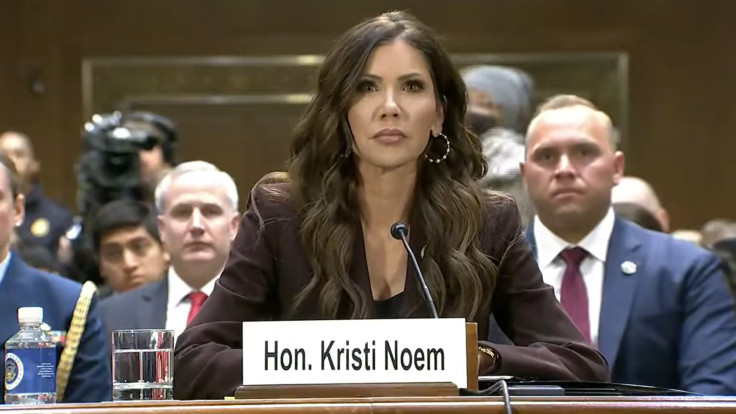
The order was placed under Madison Sheahan, a 28‑year‑old deputy director appointed by then‑Homeland Security Secretary Kristi Noem. Despite warnings from field officers that conspicuously marked cars would jeopardise undercover enforcement work, the vehicles were emblazoned with dark navy paint, gold ICE lettering, and the motto 'Defend the Homeland.'
These are the very same branding that agents have said make them easily recognisable and unsafe for street‑level operations.
Now DHS officials are trying to amend remaining deliveries and strip the markings before they arrive.
ICE Agents Won't Use Marked Vehicles
ICE usually relies on unmarked or low-key vehicles so agents can work quietly without drawing attention. But in the second half of 2025, the agency ordered thousands of pickup trucks and SUVs with ICE logos and colours, creating a fully branded fleet for the first time since the agency started in 2003.
According to The Daily Beast, it was reported that roughly 2,500 vehicles were wrapped with the logo, name, and slogan. But agents declined to use them in regular enforcement work.
One source explained that career officials would not have supported such a purchase if consulted in advance. This is because driving identifiable vehicles 'tips off anyone in eyesight that ICE is out,' making it harder to carry out sensitive operations.
Another insider said the decision left many of the branded cars stored in garages or at detention centres, with some only used for custodial pickups. Currently, some were being used to transport individuals already in custody, rather than for street arrests or searches.
Who Is Madison Sheahan?
Madison Sheahan served as deputy director of US Immigration and Customs Enforcement (ICE) from March 2025 until January 2026. At only 28 years old, this makes her one of the youngest people ever to hold such a senior role in a major federal law‑enforcement agency.
She resigned in January 2026 to run for Congress in Ohio's 9th District, characterising herself as a 'Trump conservative' in her campaign announcement
Before joining ICE, Sheahan held significant roles at the state level.
She worked as political director for Governor Kristi Noem of South Dakota and was executive director of the South Dakota Republican Party. She later served as Secretary of the Louisiana Department of Wildlife and Fisheries, overseeing a £224m ($280m) budget and leading more than 800 staff.
At ICE, she was responsible for day‑to‑day operations involving more than 20,000 employees, including criminal investigators and enforcement officers. She also helped implement parts of the Trump administration's aggressive immigration enforcement agenda.
Noem's Fleet Mistake Leaves DHS With Budget Strain
The exact cost of the ICE vehicle order is not known, as the Department of Homeland Security (DHS) and ICE have not shared how many vehicles were bought or how much was spent.
The decision has created a big burden for taxpayers because the first batch of branded vehicles cannot be used. DHS is now trying to change the remaining orders so future vehicles arrive without the markings that made the originals impractical.
This spending comes from a larger funding package, called the One Big, Beautiful Bill, which included about £23.6 billion ($29.5 billion) for ICE and other immigration enforcement programmes. Critics have said the bill did not include enough rules to make sure the money was spent wisely.
Rep. Lucy McBath, on the House Judiciary Committee, said taxpayers 'expect to see how their hard‑earned money is being spent,' also emphasising that government funds are real money that must be used responsibly.
ICE is still trying to fix the fleet order, but it is unclear how long it will take or how much of the initial spending can be recovered.
For ICE agents, the issue shows a bigger problem: leadership sometimes makes major spending decisions without listening to the people who actually carry out the work.
© Copyright IBTimes 2026. All rights reserved.
- MOST POPULAR IN World