

Princess Beatrice, Princess Eugenie Are Andrew's 'Secret Weapon' To Spy On Royal Family: Report
Royal insiders suggest the York sisters have become Andrew's only conduit to family discussions after his exclusion from royal duties and decision-making

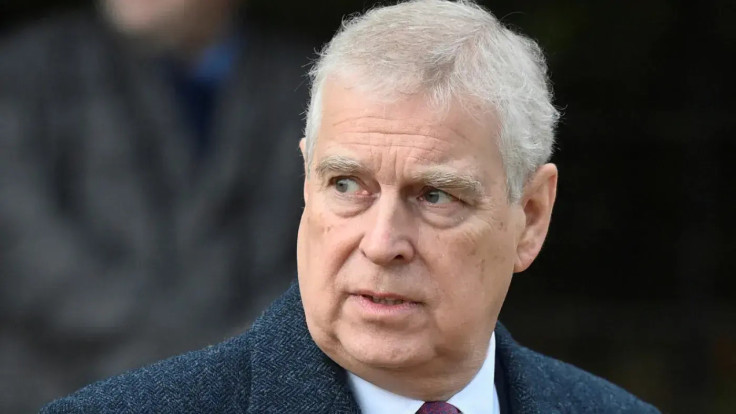
Princess Beatrice and Princess Eugenie have emerged as Prince Andrew's only remaining connection to the Royal Family's inner workings, according to senior royal commentators, as the disgraced Duke of York slips further into isolation.
Stripped of honours, removed from official duties and increasingly absent from royal life, Prince Andrew is said to rely on his daughters to stay informed about conversations he is no longer permitted to hear.
While both princesses continue to attend key royal gatherings, their presence is now being interpreted less as quiet loyalty and more as a strategic necessity.
With Andrew frozen out by King Charles III, observers say the sisters may represent his last indirect line into a family that has otherwise closed ranks.
The Strategic Value of a Father's 'Passport'
When the princesses surprised observers by joining the rest of the royals at Sandringham over Christmas, despite widespread speculation that they might boycott the gathering in solidarity with their father, it was a telling moment.
Royal commentator Ingrid Seward, a seasoned observer of palace dynamics, has been remarkably candid about what likely transpired behind closed doors. 'I don't think Beatrice and Eugenie had a choice,' Seward told The Sun, offering a stark assessment of the power dynamics at play.
Seward went further, suggesting that Andrew would have issued what amounted to a directive: 'He wants to keep a foot in. A, he wants to know what's going on. B, he'd want to know what people were saying about him.'
The expert's choice of words—noting that both Andrew and his ex-wife the Duchess of York have previously described their daughters as their 'passport'—suggests an understanding that has become uncomfortably explicit.
The princesses are no longer simply dutiful daughters attending family occasions; they are Andrew's intelligence network within an institution that has otherwise frozen him out entirely.
A Former Prince Desperate to Remain Relevant
Andrew's isolation represents one of the most dramatic reversals in modern royal history. Pictured recently driving his car alone through Windsor on Christmas Day whilst his family gathered in Norfolk, the once-prominent figure has been systematically dismantled by his association with convicted paedophile Jeffrey Epstein.
His refusal to cooperate fully with legal proceedings and the mounting details surrounding his friendship with the financier have left the monarchy with little choice but to sever ties completely.
Yet the human cost of this exile is evident in the behaviour that royal experts have observed. Charlie Rae, another prominent royal commentator, described Andrew's likely state of mind with uncomfortable clarity. 'He's not invited, so he's not at the table any more,' Rae explained, before adding a chilling detail about what reportedly happens next: 'So one of the first things that would have happened when they got back would be Andrew would be on the phone saying, right, who said what?'
This image—of a desperate man interrogating his own daughters about whispered conversations and political manoeuvres happening without him—captures the pathetic reality of his predicament. He is no longer a player; he is a spectator reduced to depending on his children for scraps of information about the world he once inhabited with ease and authority.
A Diminished Future Within the Sandringham Estate
The King's decision to allow Andrew to remain within the Sandringham Estate, albeit in considerably reduced circumstances, represents a final act of mercy disguised as mercy. Rather than his sprawling Royal Lodge—the residence he has occupied for nearly twenty years—Andrew is expected to relocate to a smaller property, with reports suggesting the move will take place by Easter. This arrangement effectively places him under the institution's watchful eye, a prisoner in all but name within its grounds.
Throughout this entire ordeal, Andrew has consistently denied any wrongdoing, a position that rings increasingly hollow to observers who have watched the evidence mount and the noose tighten. His daughters' continued presence at royal events now carries an element of tragedy—they must maintain appearances for the institution whilst simultaneously serving as their father's lifeline to information he can no longer access himself.
The arrangement speaks to a fundamental truth about power within the Royal Family: once you have lost it, there is no redemption, only diminishment. Andrew's reliance on his daughters as his sole connection to royal life is less a sign of their loyalty and more an indictment of how completely his position has collapsed.
© Copyright IBTimes 2026. All rights reserved.