

Cancer-Stricken King Charles Set to Hand Over Throne to Prince William Within Months: Report
Behind the rumour lies a monarchy preoccupied with control as King Charles undergoes treatment.
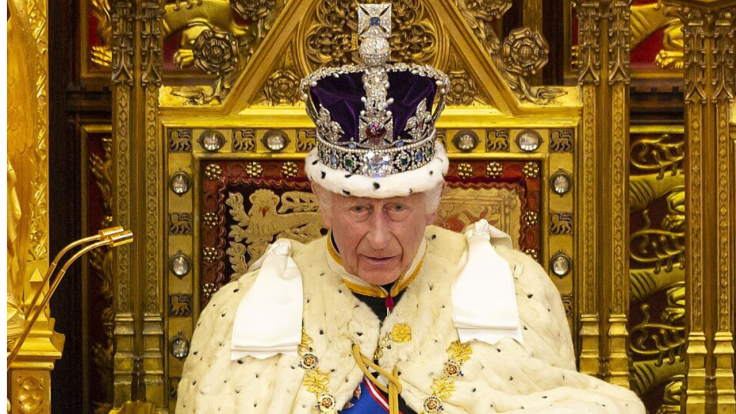
Cancer-stricken King Charles is once again at the centre of speculation in the UK after a report claimed the 77‑year‑old monarch could hand the throne to Prince William within months, a suggestion attributed to unnamed palace sources and framed as a possible response to his ongoing treatment. The claim, published in early March by journalist Rob Shuter on Substack, is unconfirmed, and there has been no formal move or public statement from Buckingham Palace.
For context, Shuter's report relies heavily on anonymous voices and offers no documentary evidence of an impending transition. The post itself underlines that nothing official has been announced, stressing that neither Parliament nor the palace has set out any procedural steps for the king to step back. Yet the discussion has gathered energy because it touches a sensitive point: Charles' cancer diagnosis, revealed in 2024, and the quiet adjustments that often follow when a senior royal faces prolonged medical treatment.
The broader situation remains unclear. There is no date, no formal plan, only a tone in the reporting. The language used by sources quoted by Shuter suggests that, if any change were to occur, it would be introduced as a controlled and voluntary shift, not a forced retreat. That detail has shaped much of the commentary around the king's circumstances.
Talk of a 'Measured' Transition
Shuter quotes a 'senior courtier' describing how such a move might be presented, with health framed as 'the most unassailable explanation.' A second source, labelled as a 'palace insider,' insists that public perception would be managed carefully, saying the king would never be portrayed as pushed aside. 'He has waited a lifetime for this role. When he steps back, it will be entirely on his terms,' the source reportedly told Shuter.
OK! Magazine repeated this account, reporting that Charles is 'ready to step down and possibly abdicate' in favour of William, the 43‑year‑old Prince of Wales. The magazine also echoed Shuter's wording about the transition appearing 'measured and dignified,' presenting health as the dominant narrative rather than any form of internal pressure. Both outlets rely on anonymised sources, and neither provides independent corroboration beyond their quoted insiders.
The impression they build is one of stage‑management rather than immediacy. Royal stories have a habit of circulating long before events actually unfold, and this one is no exception. The suggestion that an abdication or formal handover is on the horizon remains, for now, a rumour supported by sourced claims rather than concrete evidence.
The Crown's Past
The news also lands against the backdrop of Charles' unusually late accession. After Queen Elizabeth II's death in September 2022, Charles became sovereign at 73, making him the oldest person ever to assume the British throne. He had held the position of heir apparent since 1952 and was crowned at Westminster Abbey in May 2023.
William has gradually absorbed more responsibilities as his father undergoes treatment. OK! reports that the prince has increased his public engagements, and Shuter cites a 'longtime aide' who claims that 'in many ways, he's already king unofficially.' That characterisation is unverified but reflects an emerging perception that the momentum of day‑to‑day royal duties is shifting.
The conversation around the monarchy is also coloured by familiar reputational baggage, including the continuing shadow cast by Prince Andrew and his ties to Jeffrey Epstein. OK! expands on this, saying Charles' reign has been 'marred' by scandal and reporting that the king stripped Andrew of his titles and removed him from Royal Lodge in October 2025.
Royal writer Russell Myers, whose book William and Catherine claims William had pushed for Andrew's removal years earlier and warned that Andrew 'must be banished before the rot sets in'.' Myers is quoted suggesting that an earlier intervention might have allowed the family to manage the fallout more effectively.
Set against these pressures, the talk of succession takes on an added edge. Even though there is no confirmation of any impending abdication, the narrative orbiting King Charles is increasingly concerned with control, presentation and maintaining stability around a monarch balancing illness with duty.
© Copyright IBTimes 2026. All rights reserved.