

'And They Don't Wanna Thank Trump': US Murders Plunge 20% in Largest Annual Decline Ever Recorded
Historic crime drop sparks fierce online battle over credit
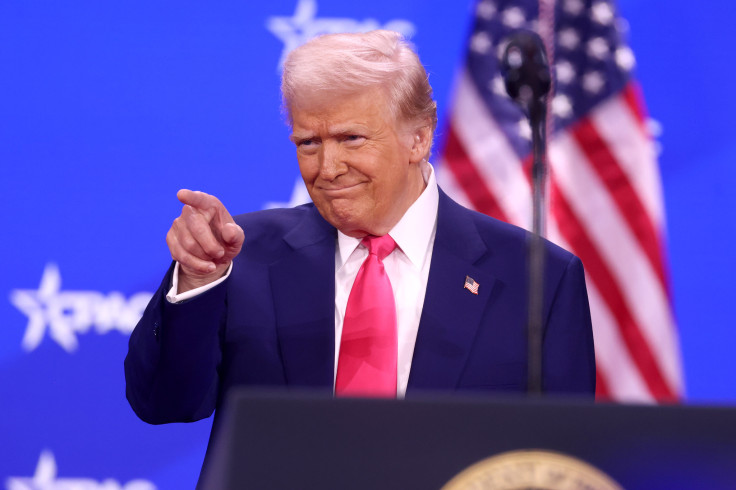
America is witnessing the largest one-year drop in murders ever recorded, with killings down nearly 20 per cent from 2024 to 2025 - yet the historic achievement has sparked a brutal political fight online over who deserves credit.
The staggering figures, compiled by crime analyst Jeff Asher using the Real-Time Crime Index, show murders fell from 7,369 to 5,912 through October 2025. Mass shootings dropped over 20 per cent, whilst overall shootings declined 17 per cent nationwide. New York City logged its fewest shootings ever recorded.
Social media erupts over Trump credit
The data, shared on TikTok by Dylan Page to his 18 million followers, immediately ignited a firestorm in the comments section. 'And they don't wanna thank Trump', one user wrote, receiving more than 5,000 likes. Another commenter asked: 'Wait so Trump was right?'
The political divide was stark. Supporters flooded the comments with variations of 'Thank God for President Trump' and 'W Trump', whilst critics pointed out a crucial detail buried in the TikTok: crime has been falling since 2023, before Trump's second term began.
'Trending down since 2023. MAGA: "thanks Trump"', one user wrote, capturing the scepticism. Another added: 'He literally said crime has been falling since 2023.'
One particularly popular comment summed up the pro-Trump sentiment with sarcasm: 'Who would have thought enforcing the laws would cause this', garnering nearly 6,000 likes.
@dylan.page What do you guys think?🤔
♬ original sound - Dylan Page
The numbers behind the historic drop
The decline isn't limited to murders. According to data analysed by Asher for his Substack publication Jeff-alytics, motor vehicle thefts plummeted 23 per cent, robberies fell 18 per cent, and aggravated assaults dropped 7.5 per cent nationwide.
Major cities that have historically struggled with gun violence saw remarkable improvements. Birmingham, Alabama led the nation with a stunning 49 per cent drop in murders. Baltimore's killings fell 31 per cent, whilst Atlanta saw a 26 per cent decrease and Albuquerque recorded a 32 per cent decline.
Chicago saw murders fall 28 per cent, whilst Washington DC experienced a nearly 28 per cent drop. Memphis recorded a 20 per cent decline.
The Real-Time Crime Index, which compiles monthly data from 570 law enforcement agencies covering roughly 115 million people, has historically tracked closely with official FBI figures. The FBI won't release formal 2025 violent crime data until late next year, but the RTCI provides a reliable snapshot of national trends.
'A roughly 20 per cent drop in murder in 2025, as is suggested by the current data, would be by far the largest decline ever recorded', Asher wrote in his analysis, noting it would eclipse the 15 per cent drop seen in 2024.
Asher's analysis notes that approximately 12,000 fewer people were murdered in the United States in 2024 and 2025 combined than in 2020 and 2021 - the peak years of the pandemic-era crime surge. 'That is tremendous progress that should be celebrated', he wrote, 'while acknowledging that 14,000 or so murders this year in the United States is still far too many'.
The timing question fuels debate
The crux of the online argument centres on timing. Crime data shows murders actually began declining in 2023, with a 13 per cent drop that year followed by last year's 15 per cent decrease. Trump didn't return to the White House until January 2025.
Axios noted that whilst Trump has prioritised cracking down on violent crime in his second term, 'there is no clear evidence linking his policies to the decline'. The publication reported that crime rates have been trending downward since 2021 according to both RTCI and FBI data.
NPR's analysis echoed this assessment, stating the decline follows a broader drop in violent crime after the COVID-era spike.
Trump has deployed National Guard troops to various cities throughout 2025, including Chicago, Washington DC and New York - all of which he claimed required federal intervention to combat escalating crime. Critics argue these cities were already experiencing declining murder rates before the deployments.
Will the trend continue?
Researchers express caution about whether the dramatic decline will continue into 2026. Some worry that with crime falling so sharply in 2025, rates could tick back upward next year simply through statistical normalisation.
Ames Grawert, senior counsel in the justice programme at the Brennan Center for Justice, told NPR that government funding cuts are concerning. In April, the Justice Department cut grants to hundreds of organisations focused on community safety, including school violence prevention programmes and rural police training. Many affected organisations have already had to shrink services or lay off employees.
'These are programmes that people of both parties should agree are an important way to reduce gun violence, an important way to support communities and reduce crime', Grawert said.
The TikTok comment section suggests Americans remain deeply divided not just on who deserves credit, but on the significance of the data itself. Some users questioned the validity of the statistics altogether, with one writing: 'sounds like propaganda', whilst another suggested: 'people are getting better at hiding bodies, but i just can't prove it'.
The historic nature of America's crime decline carries significant implications for public policy, policing strategies and political narratives heading into future elections. Accurately attributing credit - or understanding that multiple factors may be at play - helps inform evidence-based approaches to public safety rather than politically motivated policies.
The debate over 2025's crime statistics demonstrates how even objectively positive news can become ammunition in partisan battles, potentially obscuring the real question: what combination of factors is actually making Americans safer, and how can those successes be sustained?
© Copyright IBTimes 2026. All rights reserved.