

Tim Walz–Trump Call: President Agrees to Reduce Federal Agents After Minnesota Deaths
The decision follows two deadly ICE-linked shootings and marks a rare de-escalation after weeks of political confrontation
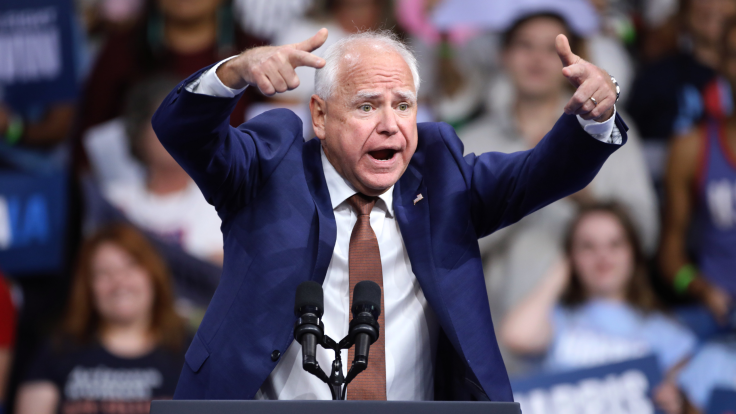
In a major de-escalation of the federal immigration standoff in Minneapolis, President Donald Trump has agreed to 'look into' reducing the number of federal agents in Minnesota following a 'productive' direct call with Governor Tim Walz.
The discussion, held on Monday, 26 January 2026, marks a sudden pivot from weeks of hostile rhetoric between the White House and state leadership.
Trump's conciliatory tone follows a wave of bipartisan outrage over the death of Alex Pretti, a 37-year-old nurse who was shot in the back by federal agents on Saturday, the second fatal shooting of a US citizen in Minneapolis this month.
Trump has now appointed 'Border Czar' Tom Homan to oversee the mission, effectively replacing controversial Border Patrol commander Gregory Bovino, whose removal from the state was confirmed shortly after the call.
Despite the softer tone, President Trump emphasised that the mission is not ending. He stated that Governor Walz 'respectfully understood' that the administration remains focused on detaining 'any and all criminals' in state custody. Walz reminded the President that Minnesota already notifies ICE when non-citizens are released from prison, countering previous White House claims of 'hostile resistance.'
Minneapolis Mayor Jacob Frey, who also spoke with the President, confirmed that federal agents would begin leaving the Twin Cities as early as Tuesday, 27 January. As Homan takes command, local leaders are hopeful for a return to 'coordinated law enforcement' rather than the 'fear and chaos' described by Walz over the weekend.
Trump To Reduce Federal Agents in Minnesota
Trump confirmed the call and described it as constructive and cooperative. He said Walz had reached out to discuss working together on the situation in Minnesota, signalling a shift from public confrontations to direct talks. Trump said the two leaders appeared aligned on several points, even as tensions remained high.
🚨BREAKING: Gov. Tim Walz shares details of his call with Trump.
— CALL TO ACTIVISM (@CalltoActivism) January 27, 2026
Trump blinked. The good people of Minnesota are pushing aside Greg Bovino and Kristi Noem.
Walz had asked for the call a while back, but today Susie Willes called Walz to say that Trump wants to speak with him,… pic.twitter.com/VJAYZgwrl3
Following the discussion, Trump said he would instruct Tom Homan, his appointed border czar, to engage directly with the Minnesota governor and oversee federal activity in the state. According to Walz's office, Trump also agreed to consider reducing the number of federal immigration agents operating across Minnesota. The move was presented as a response to local concerns rather than a reversal of federal policy.
Trump added that Walz acknowledged the administration's focus on detaining individuals described as criminals. The White House framed the exchange as a step towards cooperation while maintaining its broader enforcement priorities.
Decision Follows Deadly ICE Shootings in Minnesota
The decision followed two fatal shootings involving immigration officers in Minneapolis, incidents that intensified scrutiny of federal enforcement tactics. On 24 January 2026, Alex Pretti, a 37-year-old intensive-care-unit nurse, was shot and killed by federal agents during a confrontation involving protesters. Video footage later showed a Customs and Border Protection agent shooting Pretti in the back.
The killing came weeks after the death of Renee Nicole Good, an unarmed woman who was shot by an ICE officer during a separate operation in the city. Both cases triggered protests and renewed calls for accountability, with demonstrators questioning the use of force by federal agents.
Walz said state authorities were prevented from fully investigating the Pretti shooting, adding to tensions between Minnesota officials and federal agencies. The incidents drew bipartisan criticism and raised questions about conflicting accounts from federal officials and evidence captured on video.
Trump–Walz Call Successful
Walz's office later described the call as productive, confirming that Trump agreed to allow Minnesota to conduct its own investigation into the Pretti shooting. The Department of Homeland Security was instructed to cooperate with state authorities, addressing one of the governor's central demands.
Trump also spoke separately with Minneapolis Mayor Jacob Frey, who said the president accepted that the situation in the city could not continue. Senior officials confirmed that Gregory Bovino, a senior Border Patrol official based in Minnesota, would depart the state. While one account said Bovino had been removed from his role and would return to California ahead of retirement, the Department of Homeland Security disputed claims that he had been relieved of duty.
A Reuters/Ipsos poll released the same day reflected the public mood, with a majority saying ICE agents had gone too far. The findings underscored the political pressure surrounding the Trump–Walz call and the steps that followed.
For Walz, the call represented a breakthrough after repeated public clashes with federal officials. For Trump, it marked a rare moment of compromise, as national scrutiny, video evidence, and polling data converged to force a recalibration of strategy.
© Copyright IBTimes 2026. All rights reserved.