

Travis Scott Receives Mixed Reactions Online as He Slams AI Use For His Children
Why Travis Scott Says AI Could Damage Children's Learning and Creativity
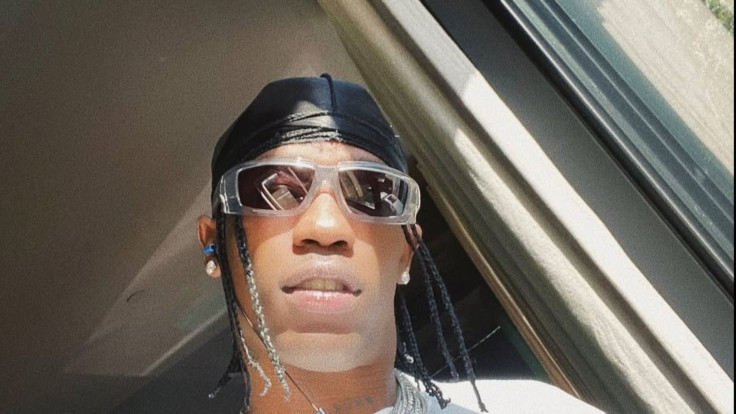
It is no exaggeration to say that AI is everywhere today, from education to parenting. Now, one of hip-hop's biggest stars has started an online debate with a very personal stance on the technology.
It is Travis Scott, the American rapper and producer renowned for his chart-topping hits, who has recently revealed that he has banned AI use for his children, arguing that the technology could 'compress their brain's ability to maximise' their learning potential. Scott's comments have gotten a lot of attention not just because of his celebrity status, but also because of their timing amid ongoing global conversations about AI's ethical and developmental impact on young minds.
So, while some have championed his perspective as thoughtful and protective, others have criticised it. We live in a time where AI tools are already a big part of many educational platforms and household devices. Scott's words have become a means for discussion about parenting, technology and the future of learning.
Travis Scott's Views on AI and Parenting
Now, Travis Scott's comments about AI and his children came during an interview with Rolling Stone, where he explained his reasoning behind forbidding his kids from using AI tools at their current stage of development.
According to Scott, the main issue is that unrestricted access to AI could change the way children learn to think independently and develop essential cognitive skills. He was implicitly saying that having AI do everything for you might prevent young minds from learning how to solve problems through experience and effort alone.
Moreover, in his view, children should first learn through hands-on methods before introducing them to technologies like AI that might take their own methods around foundational learning. This philosophy is about building a strong foundation in critical thinking and reasoning before using tools that could automate much of the thinking process. As he put it, he wants his children to 'learn the physical and actual way of learning' so they can later use AI effectively and responsibly, rather than relying on it as a crutch.
Furthermore, Scott's method is already being discussed among educators and parents about how and when technology should be introduced into children's lives. Some educators advocate for controlled, purposeful use of AI as a supplement to learning, while others warn against early exposure that could diminish motivation for independent thought. His position does not reject AI outright, but positions it as something that should come later in life, once a child has acquired fundamental skills and confidence in their own abilities.
The Public Response to Travis Scott's AI Stance
Now, the question of AI's impact on children is not merely a celebrity talking point, but a real concern among psychologists, educators and technology experts. Research shows that while AI can be a powerful educational tool, aiding personalised learning and problem solving, it can also foster dependency if introduced too early or without guidance.
So, tools that automatically generate answers or complete tasks may reduce children's opportunities to grapple with challenges, which can be very important for building persistence. Also, critics of early AI use contend that this kind of reliance affects the development of memory retention, critical analysis and creative thinking. Experts often recommend a structured, moderated use of technology, ensuring that it supports learning rather than replacing it entirely.
Travis Scott says he doesn't allow his children to use AI:
— Kurrco (@Kurrco) January 21, 2026
"My kids don't have AI. Having AI right now will compress their ability for their brain to maximize. So they got to learn the physical and the actual way of learning so then they know how to actually use AI to their best… pic.twitter.com/pjfaVLtdz2
Furthermore, online reactions to Scott's announcement have been mixed, showing public uncertainty about balancing technological benefits with developmental risks. Some have fully supported him.
W Father. Good job Travis
— ladidai (@ladidaix) 💋 see linkinbyeo (@ladidaix) January 21, 2026
i mean thats a perfect way to protect a child
— NSBrooklynTV🌃 (@NSBrooklyn) January 21, 2026
I applaud Travis Scott for barring his kids from using AI. I/myself when eventually I have kids I wouldn't allow them to use most of what AI can be used for either.
— Hnergoose (@hnergoose) January 21, 2026
Some have also been critical of his view.
Travis probably thinks he did something with that commentary
— luis.sonic | $S 💥 (@_lfausto) January 21, 2026
These are modern tools
AI is there to assist
You can learn the physical and actual way while using AI at the same time for further depth
AI is literally a tool. If you want to do something you’ve never done before it’ll guide you thru the same way you can see a guide video on YouTube or a guide pdf on google
— 🏦 (@pswagoo) January 22, 2026
AI won’t hop out of the phone to do your literal work for you. It’s just a more personalized google search
We don't make kids hunt food before using a grocery store.
— Youssef El Manssouri (@yoemsri) January 21, 2026
Use the tools.
While it's on each individual parent to decide for their own child, research does support Travis's stance.
© Copyright IBTimes 2026. All rights reserved.