

Trump Claims Greenland Doesn't Own Their Land 'Just Because It Landed A Boat There 500 Years Ago'
Trump stokes diplomatic crisis over Greenland by questioning Denmark's sovereignty based on a 500-year history
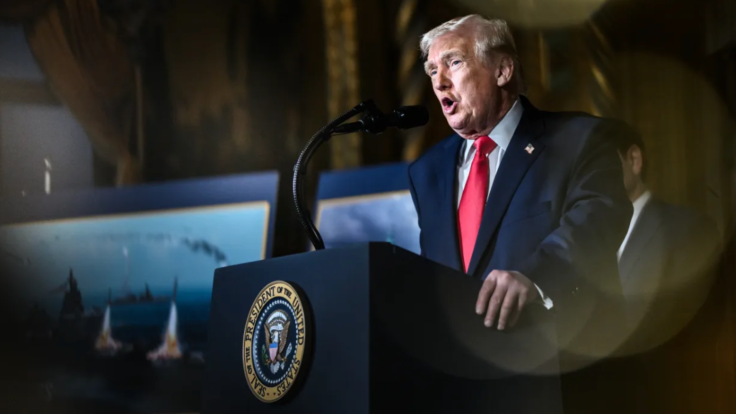
US President Donald Trump argued that Denmark's centuries-long claim to Greenland is not valid simply because Danish settlers arrived on the territory half a millennium ago, signalling an unprecedented challenge to established international law and sovereignty norms.
Trump said that the fact Denmark had a ship 'land there 500 years ago doesn't mean they own the land', and suggested that the United States will pursue control of Greenland 'the easy way or the hard way' to prevent Russia or China from gaining influence.
The remarks, which came amid Trump's broader effort to justify the US acquisition of the Arctic island, reveal a stark reinterpretation of historical settlement as a basis for state sovereignty, a position that legal scholars and allied governments have swiftly rejected.
National Security and Ownership Over Treaties
Speaking on Jan. 9, 2026, Trump framed Greenland's acquisition as essential to US national security. He stated that defending leases or treaties is insufficient, asserting 'you defend ownership, you don't defend leases', and repeating his belief that Greenland must be under US control to deter rival powers.
Trump on Greenland:
— Clash Report (@clashreport) January 9, 2026
The fact that they landed a boat there 500 years ago doesn’t mean they own the land. pic.twitter.com/Ybha6NfyTb
Trump has publicly maintained that the United States must 'do something on Greenland, whether they like it or not,' stressing that Russia or China might otherwise occupy the strategic Arctic territory.
According to a report, the president said full ownership is necessary despite the US already maintaining a military presence in Greenland under a 1951 defence agreement with Denmark.
Longstanding legal frameworks place defence and foreign affairs under Danish control while Greenland enjoys extensive self-government under the 2009 Greenland Self-Government Act, which leaves sovereignty with the Kingdom of Denmark.
Backlash from Danish and Greenlandic Leaders
The responses from Denmark and Greenland were swift and unequivocal. On the same day, Greenland's political leaders issued a joint statement rejecting the notion that the United States could claim the island, affirming that 'only Greenland and Denmark should decide their own affairs'. Greenland's Prime Minister Jens-Frederik Nielsen emphasised the principle of self-determination, and all five major political parties in the territory rejected any notion of US acquisition.
Statement by the Prime Minister of Greenland Jens-Frederik Nielsen🇬🇱#Greenland #Naalakkersuisut pic.twitter.com/jaCESVBaXa
— Greenland in USA&CDA🇬🇱 (@GreenlandRepDC) January 5, 2026
Similarly, a unified statement reported by the Associated Press noted that Greenland's leaders condemned Trump's proposals, emphasising that decisions about the island should align with international law and respect Greenlandic autonomy. Denmark's Prime Minister Mette Frederiksen warned that any attempt to forcibly take control of Greenland could threaten the cohesion of NATO, underscoring the alliance's core values of collective defence and respect for sovereignty. Multiple European nations, including France and Germany, echoed Denmark's stance, asserting that sovereign decisions about Greenland are for Denmark and its people alone.
Precedents and Legal Frameworks
Greenland has been part of the Kingdom of Denmark for centuries. While Norse settlement dates back to around 986 CE, formal Danish control was consolidated in the early 18th century.
Notably, the United States has shown interest in Greenland previously. In 1946, the Truman administration offered £100 million ($137 million) to purchase the island, a bid declined by Denmark.
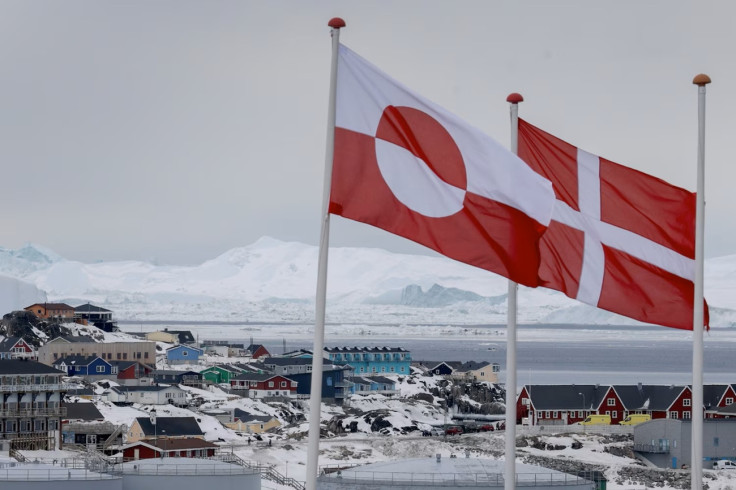
However, Greenland's status evolved with increasing self-government: the 1979 Home Rule Act and the 2009 Self-Government Act expanded Greenland's autonomy, with Copenhagen retaining authority over foreign policy and defence.
Under international law, norms embodied in the Vienna Convention on Succession of States in Respect of Treaties and customary practice establish that contemporary sovereignty is not determined by early exploration alone but by sustained governance, recognised jurisdiction and consent of the governed. Trump's assertion clashes significantly with these legal frameworks, elevating geopolitical ambition over legal orthodoxy.
In asserting that Denmark's '500-year' claim isn't valid simply because a boat arrived there, Trump has ignited a diplomatic crisis with NATO allies, challenged international legal norms and provoked a firm assertion of autonomy from Greenland — a moment that will test the resilience of Western alliances and the principles of sovereignty that have underpinned the post-World War II international order.
© Copyright IBTimes 2026. All rights reserved.