

Trump State of the Union 2026: New Government 401(k) Plan Could Give Millions of Workers a Retirement Match for the First Time
The plan builds on Biden's SECURE 2.0 Act, prompting Democrats to accuse Trump of 'stealing' his predecessor's policy
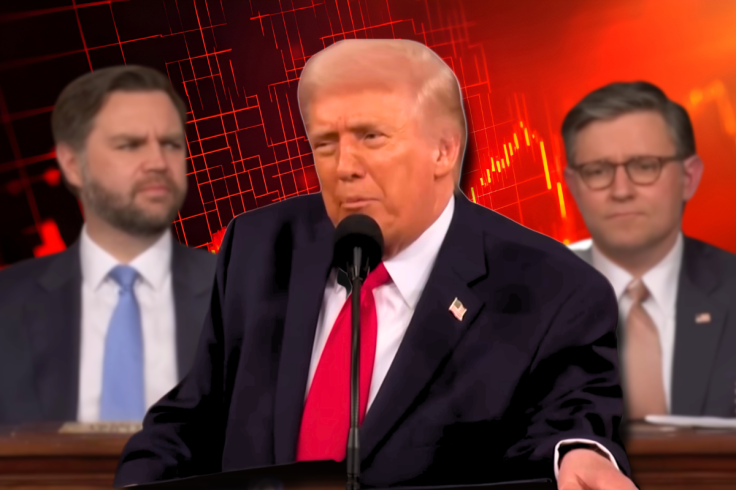
About 57 million American workers have no retirement plan through their employer. President Donald Trump wants to change that.
During his State of the Union address on Tuesday night, Trump announced a government-backed 401(k) plan that would give workers without employer retirement benefits access to accounts modelled after the federal Thrift Savings Plan. The government would match contributions up to $1,000 (£737) per year.
'Half of all working Americans still do not have access to a retirement plan with matching contributions from an employer,' Trump told Congress. 'To remedy this gross disparity, I'm announcing that next year, my administration will give these oft-forgotten American workers access to the same type of retirement plan offered to every federal worker.'
The speech ran 108 minutes. That's the longest State of the Union in modern history, according to the American Presidency Project, which has tracked speech lengths since 1964.
What This Means for You
The numbers tell a clear story. Nearly half of America's private sector workforce lacks access to employer-sponsored retirement savings, according to a 2025 analysis by the Pew Charitable Trusts. Gig workers, freelancers, and employees at small businesses are hit hardest. Without an employer match, many never start saving at all.
That gap comes with a price tag. A 2023 research showed that insufficient retirement savings could cost federal and state governments $1.3 trillion (£958 billion) over 20 years through increased demand on social assistance programmes.
According to CNBC, Teresa Ghilarducci, a professor at The New School who co-authored research on retirement savings with National Economic Council Director Kevin Hassett, called the proposal 'a meaningful step to get universal coverage.' She added: 'Many, many people who are left out of the system will start accumulating for retirement.'
How It Would Work
The new accounts would operate like the Thrift Savings Plan used by federal employees. Workers could invest in low-cost index funds, including US Treasury bonds, an aggregate bond fund, the S&P 500, and an international stock index.
Treasury Secretary Scott Bessent told NBC's Kristen Welker the administration could push the legislation through budget reconciliation. 'This is the president coming back for working Americans,' he said.
The plan builds on the SECURE 2.0 Act, signed by President Joe Biden in 2022. That law created a Saver's Match allowing the government to match 50% of retirement contributions for eligible workers, up to $2,000 (£1,475) for couples, starting in 2027.
Senate Minority Leader Chuck Schumer accused Trump of simply rebranding Biden's programme. 'Trump hasn't done anything for middle class Americans, so he has to steal Biden's accomplishments,' Schumer wrote on social media.
White House officials say the new plan offers better portfolio options and easier access.
The Housing Proposal
Trump also renewed his push to ban large institutional investors from buying single-family homes. He called on Congress to make permanent an executive order he signed in January.
'We want homes for people, not for corporations,' Trump said. 'Corporations are doing just fine.'
He pointed to Raysall Wiggins, a Houston mother of two who lost bids on 20 homes to what Trump called 'gigantic investment firms that bypassed inspection, paid all cash and turned those houses into rentals.'
According to a 2023 Urban Institute analysis, large institutional investors own about 3.8% of single-family rental homes nationwide. But in Atlanta, that figure reaches 28%. In Charlotte, it's 20%. Houston sits at 9%.
Senator Elizabeth Warren introduced competing legislation on the same day, proposing to strip tax deductions from companies owning 50 or more homes.
The Political Context
These proposals come at a difficult moment for Trump. A CNN poll conducted February 17-20 found just 36% of Americans approve of his handling of the economy, with 63% disapproving. His approval among independents has dropped to 26%, down from 43% a year ago.
Congress may or may not act before November's midterm elections. But for those 57 million workers with nothing saved for retirement, the policy debate isn't abstract. It's the difference between security and uncertainty.
© Copyright IBTimes 2026. All rights reserved.