

Donald Trump Admits Voters Are Struggling: 'Take a While' To See My Economy
Donald Trump admits voters are struggling to see his economic success as polls hit record lows and GDP growth shrinks to 1.6%.
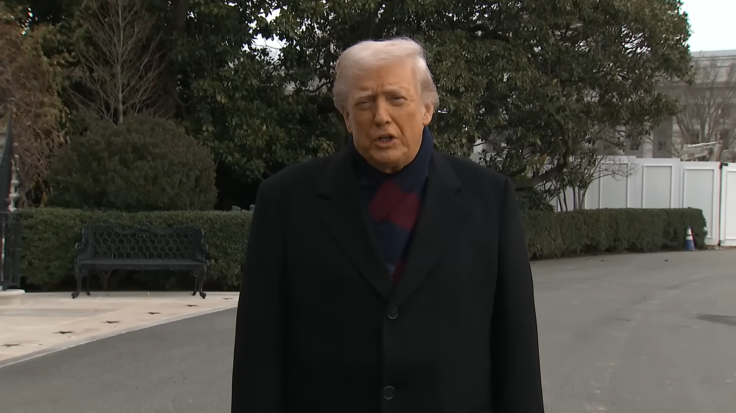
It is a dissonance that defines the modern political era: a President who sees a golden age, where his constituents see only empty wallets. In a rare and revealing moment of candour, the 79-year-old billionaire has finally acknowledged that the American electorate does not share his exuberant assessment of the nation's financial health.
While continuing to boast of unprecedented success, the President admitted that the public disconnect is real. This admission comes as the gap between White House rhetoric and the reality on Main Street widens to a chasm, with millions of families bracing for a leaner holiday season.
Why Donald Trump Is Losing the Trust of the American Voter
The President's assertion that he has built an economic juggernaut stands in stark contrast to the cold, hard data emerging from his second term. Economic forecasts indicate GDP growth is forecast to shrink dramatically by the end of December.
Growth has nearly halved over the last 12 months, dropping from 2.8 per cent to just 1.6 per cent, a decline many analysts attribute to the President's aggressive tariff wars. The labour market is showing similar signs of strain, with payroll growth plummeting and unemployment ticking up to roughly 4.3 per cent nationwide.
Perhaps most damaging for the administration is the stubborn persistence of inflation. With the consumer price index hovering at 3 per cent, the rising cost of essentials—energy, utilities, and groceries—is disproportionately battering lower- and middle-income households.
'I cannot tell you how that's going to equate to the voter, all I can do is do my job,' Trump told The Wall Street Journal, defending the capital pouring into car plants and AI development.
Donald Trump Dismisses Crisis as 'Hoax' While Polling Hits Record Lows
“The Democratic Party is out of touch with the real issues affecting Americans”
— Political Polls (@Politics_Polls) April 17, 2025
Agree 68%
Disagree 29%
.@atlas_intel, 2,347 Adults, 4/10-14
blob:https://t.co/3vQbt7TWuH pic.twitter.com/fikDfKjYzD
Despite the statistical headwinds, the President remains defiant on the campaign trail. During a rally in Pennsylvania this week, he characterised the cost-of-living crisis as a 'Democratic hoax,' even while suggesting that parents might need to buy fewer toys for their children this Christmas. However, the electorate appears increasingly immune to this framing.
A recent AP-NORC poll indicates that only 31 per cent of voters approve of how Donald Trump is handling the economy—the lowest rating recorded across either of his terms in office. Surveys suggest that nearly half of Americans view the current affordability crisis as the worst they have ever experienced.
With crucial midterm elections looming next year, the administration is scrambling to pivot its message. 'No higher priority than making America affordable again,' Trump declared in Pennsylvania, attempting to wrestle the narrative back from his detractors.
Treasury Secretary Promises Cash Relief as Donald Trump Demands More Rate Cuts
In a bid to offer tangible hope to working-class voters, the administration is teasing direct financial relief. Treasury Secretary Scott Bessent signalled this week that substantial tax refunds could be on the horizon in the new year.
'I think we're going to see £78 billion ($100 billion) to £117 billion ($150 billion) of refunds, which could be between £780 ($1,000) and £1,560 ($2,000) per household,' Bessent stated.
Meanwhile, the Federal Reserve cut interest rates by a quarter percentage point—a move the President criticised as insufficient. 'He did a rather, I would say, a rather small number that could have been doubled, at least doubled,' Trump remarked regarding Fed Chair Jerome Powell's decision.
While Fed policymakers anticipate a stabilisation of inflation and growth by 2026, the immediate future remains volatile as the country navigates the fallout from tariffs and immigration policy changes.
© Copyright IBTimes 2026. All rights reserved.