

Donald Trump Tells Democrats To 'Be Ashamed' In Fiery State of the Union Clash
A national ritual became a stress test for truth, power and televised outrage.

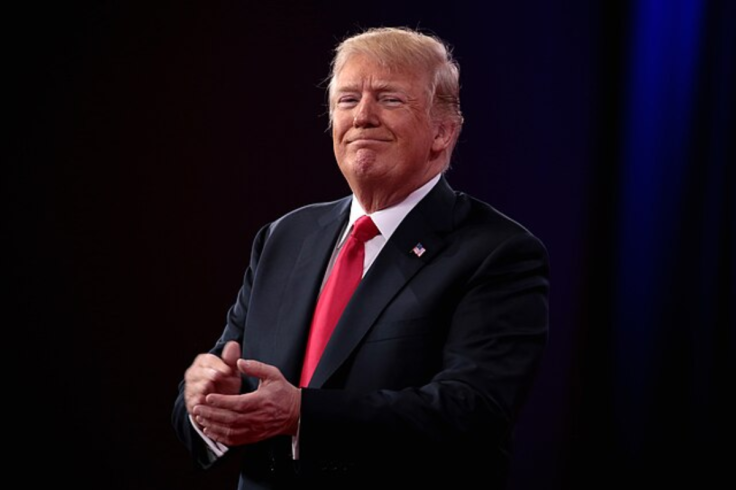
President Donald Trump used his first official State of the Union of his second term to bait Democrats into a televised confrontation on immigration while offering only limited clarity on Iran, speaking on Tuesday night at the US Capitol in Washington.
The address mattered less for any neat legislative blueprint than for what it revealed about the presidency Trump is running right now: politically defensive on prices, theatrically aggressive towards opponents, and deliberately vague where the stakes are highest abroad. Some claims were plainly contestable, some were broadly grounded in reality, and the unanswered questions will now hang over Thursday's scheduled US Iran talks in Geneva.
Donald Trump And The Iran Question
The most consequential unresolved issue going into the speech was what, exactly, Donald Trump intends to do about Iran. He leaned hard on menace and ambiguity, saying the US was 'in negotiations' and insisting Iran still had not uttered what he framed as the necessary pledge, 'We will never have a nuclear weapon.'
On its face, that is the classic Trump move, demanding a line in public that he can later claim as a personal victory. It also ducks the harder, messier part, which is what Washington wants beyond the slogan and what Tehran would accept without looking like it has been humiliated on the world stage.
There was already a direct contradiction sitting on the record before Trump took the podium. Iran's president, Masoud Pezeshkian, told the UN General Assembly last September, 'Iran has never sought and will never seek to build a nuclear bomb.'
Trump also hinted at a broader concern about Iran's long range weapons capabilities, nuclear or otherwise, and condemned Tehran's killing of protesters around the turn of the year. The problem is that none of this adds up to a defined end state, which is precisely the kind of fog that makes allies nervous and adversaries bold.
Donald Trump And The Midterms Economy Pitch
Trump knows where the public mood bites. His approval ratings have been low, especially on the economy, and the State of the Union was designed to rally Republicans before November's midterm elections. He used the early, high audience stretch of the speech to talk up economic strength and shift blame for stubborn household costs on to Democrats.
Some of his boasting was not baseless. He pointed to the stock market being at or near record highs. Other claims were shakier, including his assertion that he inherited 'inflation at record levels,' which the piece of evidence in the source material simply does not support by standard measures. The figures cited were 3.0 percent annualised inflation in January 2025 when his second term began, falling to 2.4 percent in the latest January figures.
Then there is the political reality, which Trump cannot tweet away. In a Washington Post/ABC News/Ipsos poll referenced in the source, 65 percent of adults disapproved of his handling of inflation and 32 percent approved. That is a grim set of numbers for any incumbent heading towards a midterm year, and it helps explain why Trump sounded less like a head of government and more like a campaigner in a permanent grievance loop.
Even his jibe about Democrats supposedly 'suddenly' discovering the word 'affordability' had that flavour. It was not a policy argument so much as an attempt to delegitimise the very language of the critique.
Donald Trump And The Immigration Showdown
Trump asked lawmakers to 'stand up and show your support' if they agreed with the statement that 'the first duty of the American government is to protect American citizens, not illegal aliens.' Democrats stayed seated. Trump stared them down and snapped, 'You should be ashamed of yourselves, not standing up.'
The exchange darkened when Trump referenced enforcement actions by Immigration and Customs Enforcement and other agents under the Department of Homeland Security, and those actions are being linked to the January shooting deaths of two US citizens in Minnesota, Renee Good and Alex Pretti.
Meanwhile, the shouting match involving Rep Ilhan Omar, a Democrat from Minnesota, underlined how combustible this has become. Omar shouted that Trump had 'killed Americans.' When Trump accused 'the Somali community' of having 'pillaged' billions of taxpayer dollars, Omar could be heard shouting that he was a liar.
Trump also had a score to settle with the Supreme Court after justices struck down many of his key tariffs last week, and several were in the room, including Chief Justice John Roberts and Justice Amy Coney Barrett. He called the ruling 'unfortunate' and 'disappointing' but did not fully detonate on the court, perhaps calculating that even he should not pick a fight with everyone in the same night.
Democrats, for their part, saved their cleanest rebuttal for their own response. Virginia governor Abigail Spanberger framed it around three questions, and in a way it was an answer to the whole evening. 'Is the president working to make life more affordable for you and your family? Is the president working to keep Americans safe, both at home and abroad? Is the president working for you?'
© Copyright IBTimes 2026. All rights reserved.