

'Peace President' Trump Sets Historic Record For Striking More Countries Than Any US Leader In History
A detailed look at the expansion of U.S. military operations under Trump's leadership.
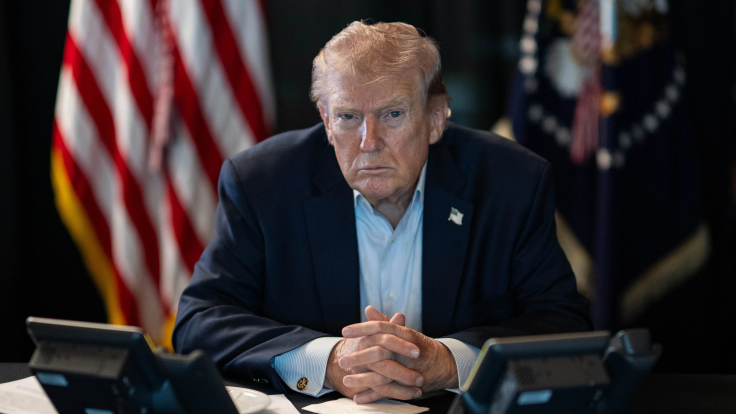
Donald Trump's second term in the White House has upended expectations about his foreign policy, recasting the self-styled 'Peace President' as the architect of a historically wide-ranging military campaign that has seen the United States carry out strikes across more countries than any successor before him.
Despite campaigning on a pledge to reduce US involvement in foreign conflicts and bring wars to an end, official military operations and independent tracking data tell a starkly different story, reshaping global geopolitics and raising profound questions about international law and US strategic priorities.
A Peace Pledge Meets A Global Battlefield
President Trump entered office in January 2025 with promises to restore peace by ending global wars and avoiding unnecessary foreign entanglements. That rhetoric has been sharply contrasted by a significant expansion of U.S. military action abroad. According to data from the Armed Conflict Location and Event Data Project, US forces conducted at least 626 air and drone strikes during Trump's first year back in office, surpassing the total launched by his predecessor over four years in office. These strikes spanned Somalia, Iraq, Nigeria, Yemen, Syria, Iran, Venezuela, and maritime targets in Latin America and the Caribbean.
Military officials have defended these actions as necessary responses to emerging threats and the protection of American interests. Secretary of Defense Pete Hegseth described operations against Iran as 'surgical, overwhelming, and unapologetic', asserting that the campaign aimed to degrade Tehran's military capabilities without dragging the US into an extended war.
Operation Epic Fury And The Iran Gamble
The most controversial military escalation has unfolded in the Middle East. In February 2026, the United States and Israel launched coordinated air strikes on Iranian military infrastructure and leadership targets in a campaign dubbed Operation Epic Fury. Official Pentagon briefings and Reuters reporting reveal that these strikes targeted missile systems, naval assets, and other facilities deemed threats by US forces. The operation marked a sharp departure from Trump's earlier criticisms of foreign interventions.
The offensive, which began with attacks on more than 1,000 targets, resulted in high-profile casualties, including the reported death of Iranian Supreme Leader Ayatollah Ali Khamenei. According to Pentagon sources, several US service personnel have been killed or wounded amid Iranian retaliation strikes on allied bases in the region, underscoring the operation's human cost.
In public addresses, Trump framed the campaign as a means to bring 'freedom' to Iranian citizens while warning of further action if Tehran's policies did not change. Vice-President JD Vance and senior military officials insisted the conflict would not resemble past 'endless wars', yet they refused to rule out ground troop deployments if necessary.
Expanding Fronts: Air Strikes, Militants, And Proxy Wars
Beyond the Middle East, US military engagements under Trump have targeted a mix of non-state and state actors across several continents. In Africa, air strikes against militant groups such as Islamic State affiliates have been carried out in Somalia and Nigeria, often in cooperation with local forces. In November and December 2025, strikes against ISIS-linked positions in north-western Nigeria were launched amid disputes over claims of persecution and violence.
Similarly, US involvement in Yemen's conflict has extended beyond counterterrorism. Beginning in March 2025, Operation Rough Rider saw sustained naval and air attacks on Houthi targets, including at the Ras Isa oil terminal, where 14 strikes killed dozens and drew widespread condemnation for their humanitarian impact. A truce brokered in May 2025 temporarily paused active hostilities, yet tensions linger.
The Syrian theatre has also seen US military action, with retaliation strikes in response to attacks on American forces and ongoing engagements against extremist groups. Other strikes in Iraq targeted senior Islamic State leaders, conducted with local and Kurdish partner forces.
Venezuela, Regime Change, And The Caribbean Push
Perhaps most striking for its geopolitical reach was the January 2026 intervention in Venezuela, where US forces conducted strikes on Caracas as part of what administration officials described as a counter-narco-terrorism campaign. Low-flying aircraft and naval air assets were involved in an operation that saw the capture of President Nicolás Maduro, marking the United States' most direct military intervention in the South American nation in decades.
This campaign was part of a larger maritime offensive against alleged drug trafficking networks in the Caribbean and eastern Pacific, involving at least 45 strikes on vessels and resulting in significant casualties, according to monitoring groups. The administration argued that drug smuggling constituted an armed threat, a position challenged by international legal experts and humanitarian groups.
— Donald J. Trump (@realDonaldTrump) March 2, 2026
Contradictions And Global Responses
Trump's expanded use of force abroad stands in stark contrast to his early pledges of non-intervention. Critics point to rhetoric from his campaigns and official addresses in which he claimed to have 'ended wars' and criticised US involvement in foreign conflicts, even as the global footprint of US military action widened. Independent analysts argue that many of these operations lack clear legal authorisation and may contravene international norms.
International responses have been mixed. Allies have expressed concern over the legality of unilateral strikes, particularly in Iran, while domestic political figures have called for more robust congressional debate before deploying military force. Statements from lawmakers stress the need for clearer justification and legal grounding for such profound actions.
As Trump's second term progresses, the enduring impact of these military actions remains unclear, but the sheer scale of operations has already carved a new chapter in US foreign policy, one that challenges the very identity of a president once touted as a 'Peace President'.
© Copyright IBTimes 2026. All rights reserved.