

Latest Poll Officially Reveals Trump the 'Least Popular Politician' to Hold Office in the History of America
CNN poll shows Trump's approval rating at 36%, with independents' support at an all-time low.
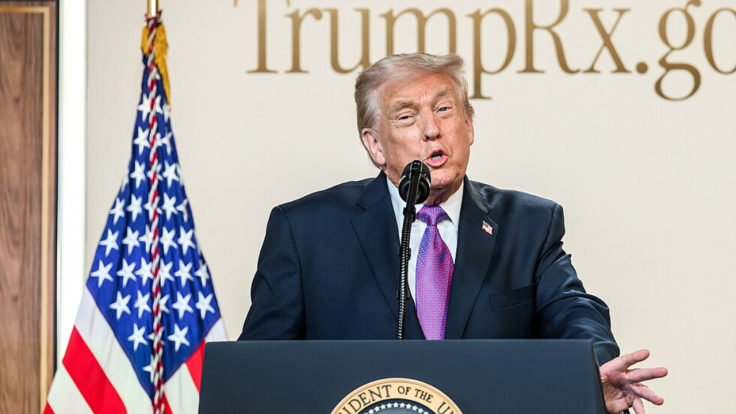
On the eve of his State of the Union address, the numbers arrived before the speech ever could. A new CNN/SSRS poll places Donald Trump's approval rating at 36%, a figure that does not merely suggest weakness but signals erosion — especially among voters who once floated between parties.
The survey, conducted between 17 and 20 February among 2,496 adults and released on 23 February 2026, captures a presidency under visible strain. Independents, in particular, appear to be moving away. Just 26% now approve of Trump's performance, 15 points lower than at the same moment last year.
The slide is not isolated. It is layered.
A Presidency Losing the Middle
Approval ratings often move in increments. This shift has been sharper.
Overall, 63% of respondents disapprove of Trump's job performance. Nearly half of all adults, 49%, say they strongly disapprove. Only 19% strongly approve. The gap between those two figures — strong opposition versus strong support — offers a clearer measure of intensity than headline approval alone.
Even more telling is the question about priorities. Just 32% say Trump has focused on the right issues. Sixty-eight per cent believe he has not paid sufficient attention to the country's most pressing problems.
By a margin of 61% to 38%, Americans say his proposals would move the country in the wrong direction rather than the right one.
In polling terms, that is not drift. It is directional resistance.
BREAKING:
— Morgan J. Freeman (@mjfree) February 23, 2026
New poll reveals that Donald Trump is now officially the least popular politician to hold office in the history of America..
Wow. #TrumpTariffChaos
pic.twitter.com/yORyEGrLf9
Fractures Inside the Republican Base
What makes the findings politically sharper is that they do not stop at independents.
Strong approval among Republicans has dropped to 49%, down from 64% after his address to Congress last year. It is the first time in his current term that the figure has slipped below half.
Nearly three in ten Republicans say he has not paid enough attention to the country's biggest issues. Sixteen percent say his policies would move America in the wrong direction — an unusual level of intra-party scepticism for a sitting president.
The generational split inside the party is equally stark. Among Republicans aged 65 and older, 63% strongly approve of his performance. Among those under 35, that number falls to 31%.
Younger Republicans are roughly twice as likely as their older counterparts to say Trump has not set the right priorities.
The coalition looks less uniform than it did twelve months ago.

How This Compares Historically
Trump's relationship with approval ratings has long been volatile, but the historical comparisons are unflattering.
Gallup's presidential approval averages show that his first-term average of 41% was the lowest recorded for any president since tracking began in 1945, lower than Jimmy Carter's 45.5% and Harry Truman's comparable figure.
His second term has tracked at similar levels. Gallup's final recorded approval reading for Trump in December 2025 was below 37%. In February 2026, the organisation announced it would discontinue its presidential approval tracking, citing a broader shift in mission. The timing drew scrutiny, though Gallup denied any contact with the White House prior to the decision.
Whether or not Gallup continues, the trajectory is clear: Trump has struggled to consistently break above the low-40s since the spring of 2025.
The Economy Dominates Voter Concern
If there is a single issue cutting across party lines, the poll suggests it is economic anxiety.
When asked what they most want addressed in the State of the Union, 57% of respondents selected the economy and cost of living. That figure dwarfed immigration, health care, or foreign policy.
Crucially, 56% of independents and 65% of Republicans said the same.
That convergence is politically significant. When a concern spans partisan identity, it becomes harder to reframe.
The broader polling landscape reflects similar patterns. Aggregates tracked by outlets such as Silver Bulletin have shown no sustained recovery above the low-40s since approval dipped during tariff announcements and immigration crackdowns last year.
A Difficult Map Ahead
Presidents rarely enter midterm cycles comfortably below 40% approval.
At 36% overall — and 26% among independents — Trump faces a historically challenging electoral environment for his party. Midterms often serve as referendums on the incumbent administration, particularly when economic unease dominates the public mood.
Polls do not determine outcomes. They measure atmospheres.
Right now, the atmosphere surrounding this presidency is not one of consolidation but contraction. The State of the Union will provide a platform. Whether it provides a reset remains uncertain.
For now, the numbers stand.
© Copyright IBTimes 2026. All rights reserved.