

Trump's Prime-Time Speech Slammed As 'Worst Ever' After Critics Highlight Blame Game
Trump repeatedly deflected responsibility for national problems, triggering widespread criticism and fact-checks.

US President Donald Trump faced immediate criticism for his year-end address to the nation on 17 December 2025, with opponents and analysts accusing him of deflecting responsibility and blaming others rather than acknowledging failures.
Speaking live from the White House in prime time, Trump repeatedly cited his predecessor and political rivals as the cause of ongoing national challenges.
The nearly 20-minute televised speech, delivered from the Diplomatic Reception Room, was intended to recap his first 11 months back in office. Instead, it became a catalogue of external blame and partisan rhetoric, with Trump mentioning his predecessor Joe Biden's name multiple times as the cause of economic, immigration, healthcare, and crime issues.
National polls showed Trump's handling of the economy received historically low approval. In a recent NPR/PBS/Marist poll, 57% of respondents disapproved of his handling of the economy, a stark contrast to his earlier support on economic issues.
Politicised Rhetoric Overshadows Policy Detail
Trump opened the address with the succinct claim, 'Eleven months ago, I inherited a mess, and I'm fixing it,' immediately setting the tone for a speech focused more on blame than on measured policy reflection.
Throughout the address, he mentioned former President Joe Biden by name at least seven times, assigning responsibility to him for persistent inflation, crime rates, healthcare shortfalls and immigration policy failures; issues that have continued during Trump's own administration.
While the White House had suggested the speech might include new initiatives, Trump offered few concrete proposals. He announced plans for new housing policies, signalled intentions to name a new Federal Reserve chair and outlined a controversial 'warrior dividend' of £1,420 ($2,600) to be paid to U.S. military personnel ahead of Christmas, funded in part by tariff revenues.
Critics noted that Trump provided few details on how his plans would be funded or implemented. Independent fact-checkers also challenged his economic claims, including the assertion that inflation had fallen sharply under his policies, which conflicts with official U.S. data showing inflation has remained around 3%.
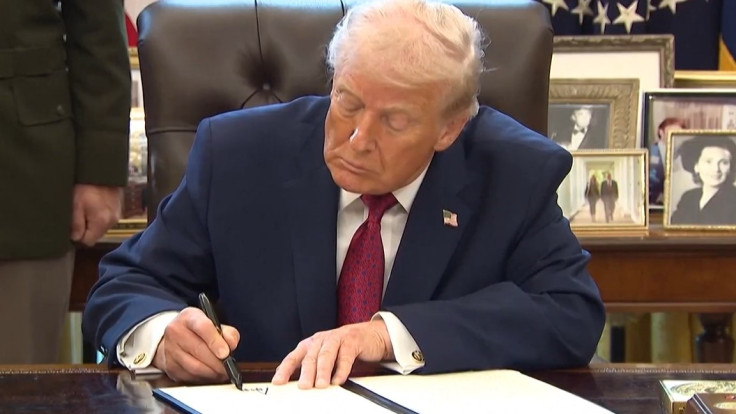
Senator Chris Murphy, a Democrat, challenged Trump's economic claims, citing figures showing many Americans still struggle with basic costs such as healthcare and food, issues the administration has often attributed to previous policies.
Despite those assertions, Trump insisted the US economy had gone 'from worst to best' under his watch, a claim that remains contested by independent data analyses.
Critics Label Address As Deflection Rather Than Leadership
The speech's rhetoric triggered strong responses across the political landscape. Opponents labelled it a partisan catalogue of grievances rather than a leadership statement. Critics described Trump's focus on assigning fault to previous administrations and political rivals as a deflection from current challenges that persist under his own leadership.
Commentators for outlets such as PBS NewsHour characterised the address as politically charged, noting that it was delivered live in prime time with the apparent goal of framing public perception ahead of the 2026 midterm elections.
Analysis from major news organisations observed that the address resembled a campaign rally more than a reflective year-end statement, with Trump emphasising culture-war issues alongside economic claims.
Independent fact-checkers and data analysts also challenged numerous claims made in the speech. For example, assertions about dramatic inflation reduction and job market gains under Trump's policies were contradicted by data showing lingering economic pressures and rising unemployment figures.
Political opponents argued that Trump was out of touch with the daily realities of many Americans. Local news coverage cited Democrats highlighting data showing that a large number of people still cannot afford basic necessities.
Thankfully Trump's 'Address to the Nation' tonight was short at just over 20min. No truths at all but we expected that. He was angry & practically yelling as he drove home his false points. The whole thing was familiar bs lifted almost directly from his truth social posts. 🤦♀️🤢🤦♀️ pic.twitter.com/MVmRx2NCQm
— Anarie Whit (@anarie_wit) December 18, 2025
Public Opinion, Polling and Electoral Implications
Public polling around the speech reflects broader dissatisfaction with Trump's performance on key issues. The NPR/PBS/Marist poll revealed that only about one third of US adults approve of his handling of the economy, underscoring deep public scepticism.
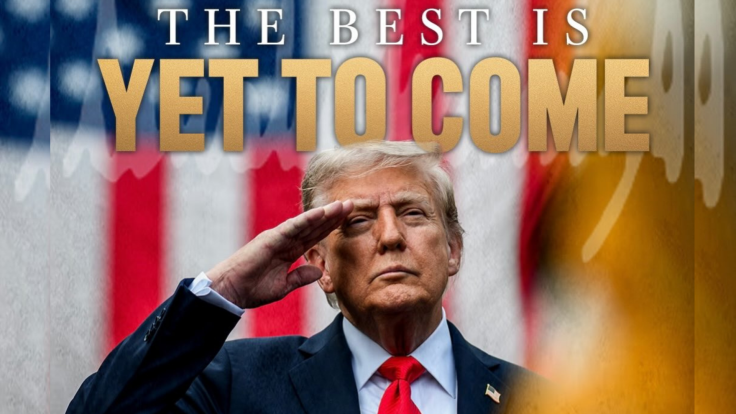
Trump's year-end address stands as a stark example of the current political moment: an incumbent president deflecting responsibility for enduring policy challenges while projecting confidence about future gains.
Whether this approach will resonate with enough voters to influence upcoming elections remains an open question as the U.S. political landscape continues to shift.
© Copyright IBTimes 2026. All rights reserved.