

Trump Vows Land Strikes on Mexican Cartels as Maduro Capture Reshapes US Anti-Narcotics Strategy
US administration declares 'armed conflict' with transnational drug syndicates.

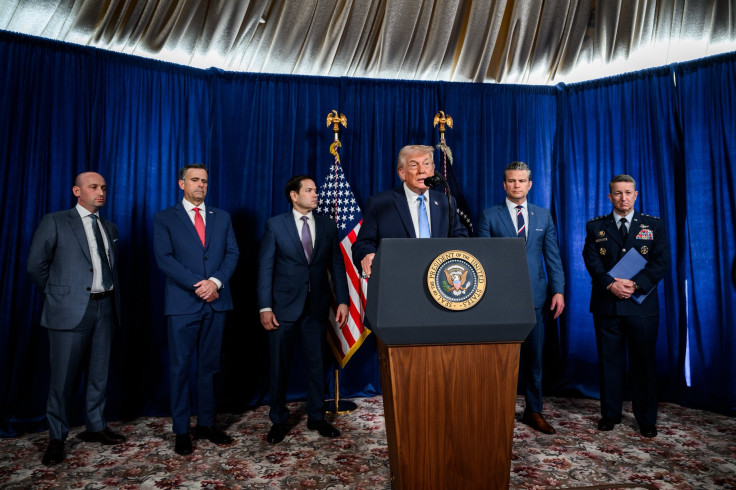
In the wake of the successful extraction of Nicolás Maduro from Caracas, US President Donald Trump has signalled a dramatic escalation in his administration's 'war on drugs,' indicating that the military tactics used in Venezuela could soon be deployed against cartels on Mexican soil.
The capture of Maduro on 3 January 2026, during Operation Absolute Resolve, has emboldened the White House to pursue what it describes as a 'non-international armed conflict' against transnational criminal organisations. In a series of statements following the raid, Trump suggested that the era of maritime interceptions is evolving into a strategy of targeted land-based strikes.
'Mexico is Next': The Pivot to Land Operations
Speaking at a press conference at Mar-a-Lago, the President described Mexico as a nation 'run by drug cartels.' He asserted that the United States would no longer wait for diplomatic consensus to protect its citizens from fentanyl and cocaine trafficking.
'Something is going to have to be done with Mexico,' Trump stated in a Fox News interview shortly after the Venezuelan operation. 'We know every route. We know the addresses of every drug lord. We know their front door. We know everything about every one of them.'
The administration's shift follows a December 2025 memo that formally designated major Latin American cartels—including the Sinaloa Cartel and the Jalisco New Generation Cartel (CJNG)—as 'unlawful combatants.' This legal designation, reminiscent of post-9/11 counter-terrorism policies, is intended to bypass traditional law enforcement protocols in favour of military-led 'snatch-and-grab' or drone operations.
The Blueprint of Operation Absolute Resolve
The operation that captured Maduro is being viewed by military analysts as a blueprint for future cartel interventions. Involving over 150 aircraft and elite Delta Force units, the mission proved that the US could suppress sovereign air defences and extract high-value targets with minimal casualties.
'The tactical success in Caracas has rewritten the rules of engagement,' noted a briefing from the IISS. 'By framing these missions as law enforcement actions with military support, the White House believes it has the inherent constitutional authority to act unilaterally.'
However, the prospect of land strikes in Mexico presents significantly higher risks than the Venezuelan raid. Unlike the decaying Venezuelan military, Mexican cartels possess sophisticated paramilitary wings and operate within densely populated urban centres. Mexican President Claudia Sheinbaum has repeatedly denounced any potential US incursion as a violation of sovereignty and a breach of the UN Charter.
Legal and International Fallout
The White House's 'maximum pressure' strategy is facing intense scrutiny at the United Nations. UN Secretary-General António Guterres warned that the unilateral strikes in Venezuela set a 'dangerous precedent.' Critics argue that applying the 'unlawful combatant' label to profit-motivated criminal groups—rather than political insurgents—undermines the foundations of international law.
Domestically, the administration's refusal to notify Congress prior to Operation Absolute Resolve has sparked a constitutional row. 'The military is not empowered to hunt down suspected criminals and kill them without trial,' stated Senator Jack Reed in a letter to the White House.
Despite the outcry, the Trump administration remains undeterred. US Attorney General Pam Bondi emphasised that the indictments against Maduro and his associates are 'valid warrants' being executed as part of a global anti-narcotics surge. With a massive military build-up continuing in the Caribbean and the Gulf of Mexico, the question remains not if, but when, the next phase of land-based operations will begin.
© Copyright IBTimes 2026. All rights reserved.