

UK Schools Urged To Go Phone-Free As Gov Slams Use Of Devices In Class
From the classroom to the social feed, the government is drawing a firm line in the sand to protect the mental health of a generation.

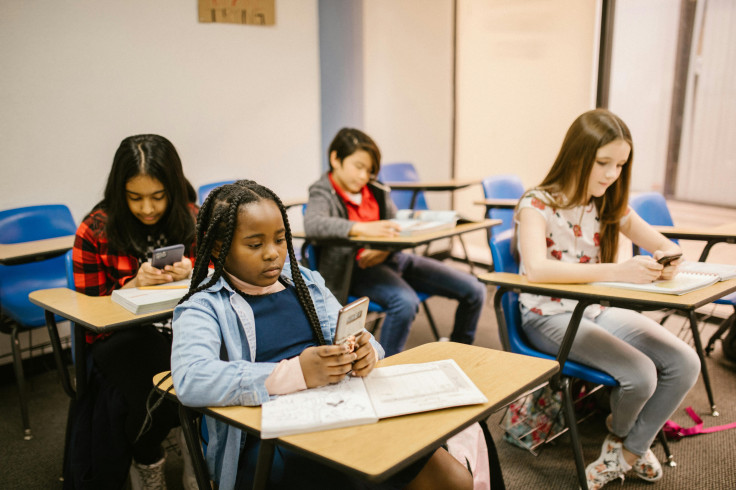
The Education Secretary has issued a direct challenge to the presence of smartphones in the nation's classrooms.
Bridget Phillipson has made it clear that the school day should be a sanctuary for learning, undisturbed by the persistent buzz of notifications or the lure of the 'infinite scroll'. In a letter that has rattled staffrooms and parent groups alike, the government has declared that mobile phones have 'no place' in school, extending the prohibition far beyond the classroom door to include break times and lunch hours.
The message is uncompromising: the era of using a personal handset as a makeshift calculator or a research tool is over. For the Department for Education, the distraction is simply too high a price to pay for convenience.
As the government pivots toward a more paternalistic approach to tech, the focus is shifting from simple classroom management to a broader moral argument about safeguarding a generation's mental health.
The Enforcement Gap: Why the Gov Is Slabbing the Phone-Free Agenda
Despite the tough rhetoric, the reality on the ground remains a patchwork of inconsistent rules. Data from the Department for Science, Innovation and Technology (DSIT) suggests that while nearly every primary school and 90% of secondary schools have a policy on paper, the enforcement is often porous.
Roughly 58% of secondary school students admit to using their phones without permission in lessons, a figure that leaps to a worrying 65% for those in the high-pressure years of Key Stage 4.
To bridge this gap, the government is bringing in the 'heavy hitters'. Ofsted has been officially instructed to scrutinise how effectively these policies are actually being implemented. No longer will a buried paragraph in a school handbook suffice; inspectors will now look for consistency across all classes and at all times.
'Schools should make sure those policies are applied consistently,' Phillipson urged, adding a firm request for parents to stop the 'pushback' and back the school gates' new boundaries. Even teachers have been told to lead by example, with guidance warning them against the habit of checking their own devices in front of the children.
Australia and Beyond: The Global Push for a Phone-Free Childhood
Ministers have launched a three-month national consultation to explore an Australian-style ban on social media for anyone under the age of 16.
This would represent a fundamental shift in the UK's digital age of consent and could see a radical redesign of app features, such as 'streaks' and 'infinite scrolling,' that are increasingly viewed as being built for addiction.
As part of this fact-finding mission, government officials are preparing for a trip to Australia, which recently enforced its own under-16 prohibition in December 2025. The aim is to study how a modern democracy can actually police the digital world without becoming a 'surveillance state'.
While some, like Paul Whiteman of the NAHT, argue that school leaders need 'support, not the threat of heavy-handed inspection', the momentum for change seems unstoppable.
The government plans to gather a wide range of opinions from families across the country before delivering its final response this summer, potentially rewriting the rules of childhood for the 2020s.
© Copyright IBTimes 2026. All rights reserved.