What Is A Flashbang? How ICE's Use Of NFDD Put Children In Serious Risk During An Operation
Agents use these devices for 'violence of action' to disorient suspects during raids or to disperse crowds, often causing collateral damage.
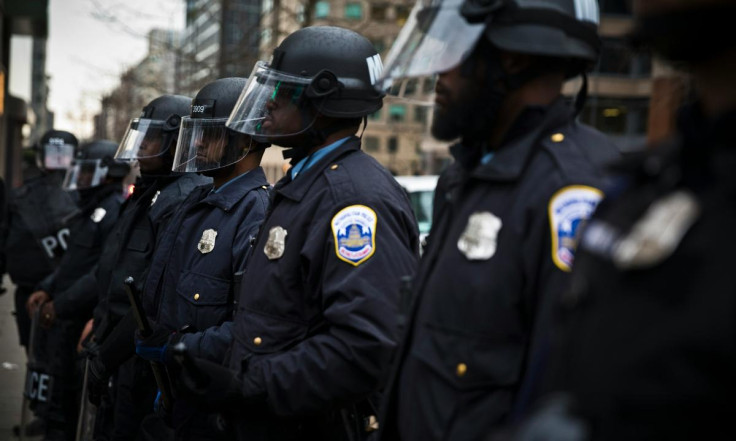
The escalating tension in North Minneapolis took a harrowing turn on 15 January, bringing the use of 'less-lethal' munitions into sharp relief. Amidst protests sparked by recent Immigration and Customs Enforcement (ICE) shootings, a family van found itself in the crossfire of federal agents and local police. Shawn and Destiny Jackson, who were travelling with their six children, reported that law enforcement officers deployed flashbangs and tear gas directly at their vehicle.
The impact was immediate and devastating. According to Shawn Jackson, the force of the blast was sufficient to trigger the van's airbags, filling the cabin with smoke and chemical irritants. The situation became critical when their six-month-old infant stopped breathing and lost consciousness, requiring Destiny Jackson to perform emergency CPR on the roadside. While the family had not intended to join the protests, they became the latest casualties in a conflict defined by the aggressive hardware used by border agents and police. To understand how a device classified as 'non-lethal' can hospitalise an infant and deploy vehicle airbags, one must look at the terrifying science behind the flashbang.
Thunder And Lightning In A Can
A flashbang—technically known as a noise-flash diversionary device (NFDD)—is an explosive engineered to overload the human senses. The standard M84 stun grenade, widely used by US tactical teams, produces a blinding flash of approximately two million candela and a thunderous report of roughly 170 to 180 decibels. For comparison, a commercial jet engine at take-off registers around 140 decibels. The sound produced by a flashbang is physically overwhelming, capable of causing immediate deafness and disrupting the fluid in the inner ear, which controls balance.
The device functions through a pyrotechnic reaction rather than a high-explosive detonation. It typically utilises a mixture of magnesium and ammonium perchlorate inside a perforated steel casing. When the pin is pulled, a fuse creates a short delay before the mixture deflagrates, burning with subsonic speed rather than supersonic force. This design allows the light and sound to vent outward while keeping the casing intact to prevent shrapnel injuries, though the pressure wave alone is significant.
The Physics Of The Blast
The incident involving the Jackson family's van highlights a frequently overlooked aspect of these devices: the overpressure shockwave. The fact that the flashbang detonated with enough force to trigger the vehicle's airbags indicates a substantial pressure wave. Modern airbag sensors are designed to detect sudden deceleration or high-pressure impacts. A close-range detonation of a flashbang creates a localised shockwave that can trick these sensors, illustrating just how violent the 'non-lethal' explosion truly is.
Physiologically, the flashbang is designed to induce 'flash blindness'. The intense light bleaches the rhodopsin pigment in the retina, rendering a person blind for five seconds to a minute, even if their eyes were closed. Simultaneously, the acoustic blast stuns the target, often causing vertigo. In a confined space like a vehicle, these effects are magnified, creating a disorientation loop that makes it nearly impossible for occupants to follow instructions or escape danger.
Why ICE Uses Them
For ICE and tactical police units, the flashbang is a tool of dominance. The primary tactical doctrine is 'violence of action'—using overwhelming speed and force to paralyse a suspect's ability to resist. In the context of the Minneapolis protests and the earlier raids involving Alex Pretti and Renee Good, authorities use these devices to disperse crowds or stun targets before they can access weapons.
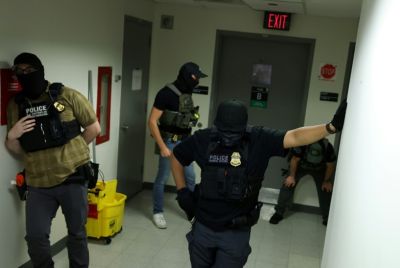
ICE agents often deploy them during high-risk entry operations. The theory is that the momentary confusion provides agents with a window of safety to secure a room. However, as the Jackson family experienced, when these devices are used in uncontrolled environments or against civilians who are not combatants, the results can be chaotic. The device cannot distinguish between a violent offender and a six-month-old baby.
The Burning Risk
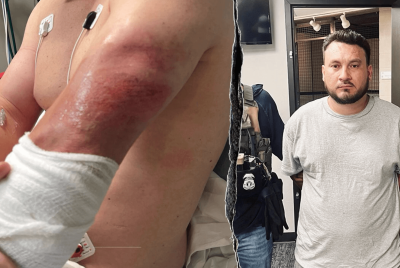
Beyond the blast, the heat generated by a flashbang is extreme. The magnesium charge burns at temperatures exceeding 2,000 degrees Celsius. This creates a severe fire hazard, particularly when deployed in residential areas or near vehicles. There have been documented cases in the US where flashbangs thrown into homes have landed on flammable furniture or in cribs, causing severe burns and structure fires.
In the Minneapolis incident, the combination of tear gas and the pyrotechnic heat of the flashbang created a toxic environment for the children trapped in the van. While law enforcement defends the use of these tools as a necessary alternative to lethal force, the hospitalisation of three children, including an infant, raises serious questions about the rules of engagement and the definition of 'acceptable risk' in civilian policing.
© Copyright IBTimes 2025. All rights reserved.
- Recommended For You