

Whitehall Officials Will 'Bug Phones' To Smash Nigel Farage, Dominic Cummings Claims
Cummings warns of establishment 'dirty tricks' against Farage. Reform leads polls at 29%, but path to power remains uncertain
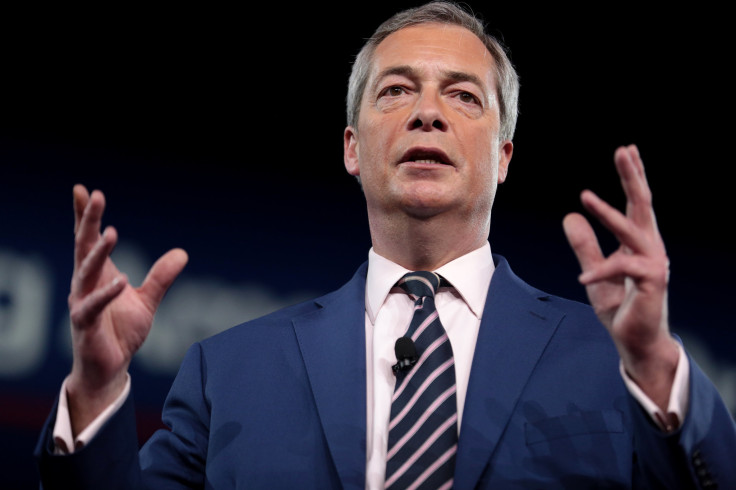
Britain's political establishment is bracing for potential confrontation with Nigel Farage, with claims that senior officials may resort to ethically questionable tactics to prevent him from reaching Number 10.
The warning comes from Dominic Cummings, the architect of the Brexit victory and former chief adviser to Boris Johnson, who has publicly alleged that Whitehall insiders and allies of Prime Minister Sir Keir Starmer are preparing an aggressive 'dirty tricks' campaign. Such claims, if true, would represent an illustration of how far the establishment might go to neutralise a political threat it views with genuine alarm.
Cummings detailed a chilling arsenal of potential attacks during an appearance on the Spectator podcast. 'They'll leak medical records, they'll leak tax records. They'll bug his phone and leak that. They'll do anything that they need to,' he said, painting a picture of an operation willing to cross legal and ethical lines.
These allegations raise serious questions about the lengths to which those in power will stretch to defend their authority against a challenger who has already captured the public imagination.
The Reform leader currently commands the backing of 29 per cent of voters, according to recent polling analysis, positioning him as the clear frontrunner in the race for power.
The Fear Factor: Why Whitehall Sees Farage As An Existential Threat
For Starmer's inner circle and the upper echelons of the civil service, the spectre of a Farage-led government looms like a worst-case scenario.
Cummings suggested that senior officials are looking to recent political upheavals, particularly the rise of Donald Trump in America and the election victories of populist movements across Europe as cautionary tales. 'The people around Starmer and all through the upper echelons of the Whitehall system are looking at Trump,' Cummings explained. 'They're looking across Europe, and they're saying to themselves: 'The lesson is to strike early and strike hard and not let these people in.'
Cummings claims that the establishment view is deeply coloured by regret over their failure to stop the Brexit referendum in 2016. 'We can't make this mistake again. Let's smash the absolute living s*** out of Farage and make sure that he doesn't win it by fair means and foul,' he said, articulating what he believes is the mentality driving the potential operation against the Reform leader.
This visceral determination to prevent a second political humiliation suggests that any campaign waged against Farage will be ruthless, well-resourced, and potentially willing to bend the rules of fair play.

Reform's Path To Power Remains Uncertain Despite Polling Lead
Although Reform leads the pack in public support, the mathematics of a general election majority remain treacherous terrain.
Polling data analysed by Politico puts Reform on 29 per cent, compared with 18 per cent for the Conservative Party and Labour and the Greens tied at 16 per cent each. However, raw polling figures do not automatically translate to parliamentary seats under Britain's first-past-the-post electoral system. A clear plurality of votes does not guarantee a majority in the House of Commons, though it could position Farage to form a government through a coalition arrangement with the Conservative Party.
Cummings acknowledged this political reality whilst insisting that the Conservative Party itself is finished as an independent force. A change of leadership alone, he argued, will do nothing to restore the Tories to their former standing. This assessment reinforces the notion that Farage represents the only viable pathway for those seeking an alternative to the incumbent Labour government.
The stakes, in other words, have never been higher and neither, seemingly, has the willingness of those defending the status quo to fight dirty.
The £5 Million Gamble: Reform's Pre-Election Campaign Blitz
Farage is preparing to pour substantial resources into the May local elections across Scotland, Wales and the English councils, recognising these contests as a crucial testing ground. The Reform leader plans to deploy approximately £5 million from his party's war chest, which was bolstered by a £9 million donation from businessman Christopher Harborne in August. 'It's double or quits,' Farage said, signalling his all-or-nothing approach to the forthcoming contests. 'My entire focus and energy is on the planning and preparation for it.'
The campaign will emphasise digital outreach and social media operations, specifically targeting voters who abstained from the 2024 general election. 'Our key audience is people who did not vote, to motivate them to get registered and offer them a fundamental change,' Farage explained.
This strategy reflects a shrewd calculation: that the true reservoir of electoral support lies not with existing party loyalists, but with a disengaged electorate searching for a genuine break from establishment politics. Whether those voters will materialise at the ballot box, however, remains the great unknown.
Farage Dismisses Allegations As Establishment Dirty Tricks
In recent months, Farage has been subjected to intense scrutiny, particularly from the Guardian, which has published a series of reports featuring allegations from his contemporaries at Dulwich College dating to the late 1970s and early 1980s. The claims include incendiary remarks allegedly made about Jewish classmates and Nazi Germany. Farage has flatly rejected the narrative, describing the attacks as coordinated efforts by the 'mainstream media' to damage his electoral prospects. 'It's having zero effect,' he said. 'It's maybe solidifying our core support.'
His dismissal of these allegations as an establishment conspiracy, whether justified or not, reflects a political climate in which trust in institutions has fractured almost completely, and in which any attack can be reframed as an attack on the challenger rather than a reckoning with his past.
© Copyright IBTimes 2026. All rights reserved.