

Who Is Greg Bovino? Inside His Rise from Border Patrol Agent to Trump's Immigration Enforcer — and What Comes Next
Following the deadly shootings by ICE in Minneapolis, Bovino's tactics and career are under intense scrutiny and criticism
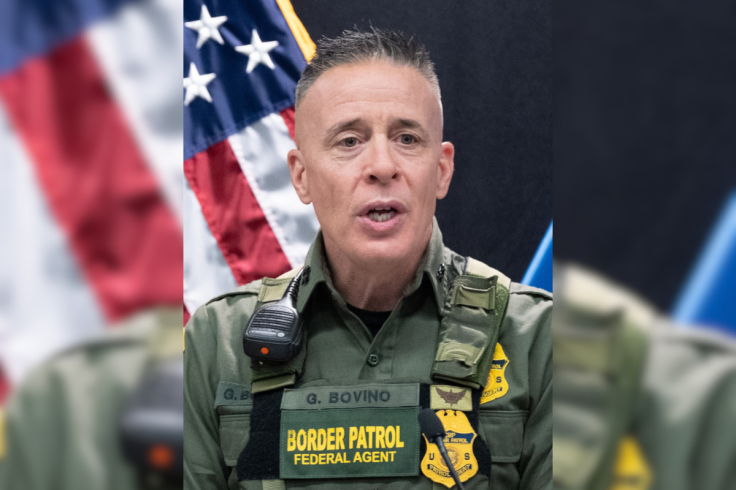
Last year, almost no one in the US had heard of Gregory Bovino. Now, he is set to leave his role in Minneapolis—possibly as soon as today—a sudden turn for someone once at the centre of Donald Trump's hardline deportation policies. At 56, his impending departure signals a quiet but significant shift.
His imminent exit, first reported by the Associated Press, follows two fatal shootings by federal agents in Minnesota this month. Renee Good, a 37-year-old mother, was killed by an ICE agent on 7 January. Alex Pretti, a 37-year-old ICU nurse, was fatally shot by a Border Patrol agent on 24 January. Both were American citizens.
Their deaths have sparked mass protests, federal lawsuits, and intense questions about what lies ahead for communities under increased immigration enforcement.
A Career Shaped by Hollywood
Gregory Kent Bovino grew up in North Carolina's Appalachian region. At 11, he watched the 1982 film The Border, starring Jack Nicholson, and was struck by how Border Patrol agents were portrayed as villains. He decided then to join the agency himself.
After earning a bachelor's degree in natural resource conservation from Western Carolina University and a master's in public administration from Appalachian State University, Bovino joined the Border Patrol in 1996 as part of Academy Class 325. His first posting was in El Paso, Texas.
According to his official biography, his career included assignments in Honduras, Egypt, and Africa. He later obtained a second master's degree in national security strategy from the National War College. By 2020, he had risen to Chief Patrol Agent of the El Centro Sector in California, overseeing roughly 1,100 personnel.
Controversy Under Biden, Resurrection Under Trump
A change in Bovino's career occurred in August 2023 after he lost leadership at El Centro. Reports from the Associated Press highlighted a photo circulating online—him holding an M4 rifle—as one reason for his removal. Social media activity was also seen as problematic by officials. Additionally, his public statements during a congressional hearing questioned border policies under President Joe Biden.
Trump's second term marked a turning point. The administration's large-scale deportation efforts required operational commanders willing to adopt aggressive tactics. Bovino fit that profile.
Since June 2025, he has led high-profile operations in Los Angeles, Chicago, Charlotte, and New Orleans. Homeland Security Secretary Kristi Noem granted him an unprecedented title with no statutory basis: 'commander-at-large.' He reported directly to her, operating outside the traditional Border Patrol chain of command.
His approach, which he calls 'turn and burn,' involves rapid-strike operations designed to make arrests before protests can form. Bovino has shared videos of these operations on social media and publicly defended his officers amid mounting criticism.
Minneapolis: The Breaking Point
The operation in Minneapolis proved different. When asked how long federal agents would remain in the city, Bovino replied: 'There is a number, and it's called all of them.'
But the deaths of two US citizens within three weeks transformed a policy debate into a national crisis. Tens of thousands of protesters flooded the streets. A federal judge questioned whether there was 'any limit' to executive power in immigration enforcement. Meanwhile, 19 state attorneys general backed Minnesota's lawsuit seeking to halt the operation.
What Comes Next
On Monday, President Trump announced he is sending Border Czar Tom Homan to oversee the Minnesota operations, effectively sidelining Bovino. A White House spokesperson, Karoline Leavitt, said Homan would lead coordination efforts directly from Minneapolis. Court documents indicate around 2,000 ICE officers and at least 1,000 Border Patrol personnel have been deployed to Minnesota. Whether the numbers will decrease after the operation remains uncertain; how things will unfold is anyone's guess.
At 56, Bovino is approaching the Border Patrol's mandatory retirement age of 57. In a widely cited interview, he said he planned to return to North Carolina to harvest apples after reaching that milestone.
For the families of Renee Good and Alex Pretti, and for immigrant communities across America where similar operations continue, the questions extend beyond one commander's career. The debate over federal immigration enforcement methods, their human cost, and constitutional limits has only just begun.
© Copyright IBTimes 2026. All rights reserved.