

The Winds of Winter Author George R.R. Martin Admits Relating to Dune Writer Who 'Hated' His Own Success
George R.R. Martin opens up about the psychological toll of The Winds of Winter and his creative bond with Dune creator Frank Herbert.
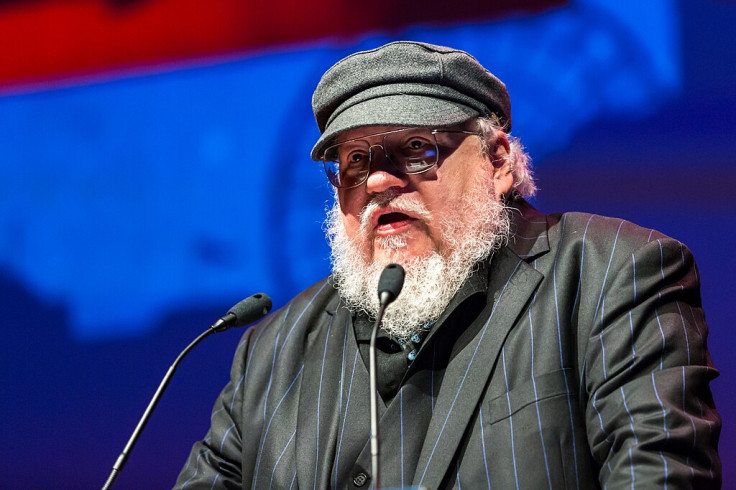
It is a peculiar kind of torture to be a prisoner of your own success. For George R.R. Martin, the architect behind the sprawling epic A Song of Ice and Fire, the shadow of his creation has grown long and heavy. Whilst fans across the globe clamour for the next chapter of the saga, Martin has offered a rare, vulnerable glimpse into the psychological toll of being tethered to a single world for decades. In a poignant reflection, he has admitted a deep kinship with another legendary author who eventually grew to 'hate' the very masterpiece that defined him.
During a recent conversation with The Hollywood Reporter, conducted near his Beastly Books bookstore in Santa Fe, the seventy-seven-year-old novelist retreated into the past to explain his present. He recalled a meeting in 1975 with Frank Herbert, the visionary behind Dune. Even then, at a book convention late in Herbert's life, the pattern was clear: the public wanted Arrakis, and nothing else.
Martin noted that while a publisher offered Herbert a modest advance for a completely new idea, they were willing to pay six times that amount for a return to the desert planet. Martin's memory of that encounter was stark. 'He didn't like Dune anymore and he didn't want to write any more Dune books,' Martin noted. 'But he felt locked in by the success of Dune, so he kept writing them.'

The Arrakis Trap: Why The Winds of Winter Pressure Mirrors Frank Herbert's Nightmare
When asked if that same crushing pressure felt familiar, Martin did not flinch. 'I'm not necessarily tired of the world [of Ice and Fire],' he admitted. 'I love the world and the world-building. But, yes, I do.' This admission underscores the duality of his current existence. On one hand, he remains the devoted custodian of a universe he clearly adores; on the other, he is an artist who craves the freedom to explore new horizons without being met by the collective roar of 'where is the book?.'
As his ride arrived to whisk him away, Martin even drifted into the specifics of the story that still haunt him, mentioning deaths he once planned for major characters, a tragic arc for Tyrion Lannister that has evolved over time, and a reconsidered fate for Sansa Stark.
It has been nearly fifteen years since A Dance with Dragons hit the shelves in July 2011. Since then, the Game of Thrones television series has lived, died, and divided its audience. The fact that the show outpaced the source material around its fifth season remains a point of contention amongst the fandom.
Many wonder if the television ending would have been received differently if Martin's own literary map had arrived first. Yet, for the author, the delay isn't just about plot points; it is about the soul of the work.
Beyond Westeros: The Creative Sacrifice Behind The Winds of Winter And New Projects
Martin has been vocal about his 'other children'—the projects that exist outside the Seven Kingdoms. He spoke passionately about Fevre Dream, a historical vampire tale set on an 1850s steamboat, which he described as his 'favourite child' and 'dream project.' To Martin, every minute spent on a side project or an anthology is an act of creative defiance.
At New York Comic Con, he addressed the backlash over his non-Westeros work with a sharp reminder: 'Why the f— is George R.R. Martin writing this other thing when he should be writing The Winds of Winter? I did it in 1993, guys. Come on!.'
His frustration is palpable. He is still working on The Winds of Winter, but he refuses to pretend that his other creative interests have simply vanished. He even contrasted his own vocal critiques of adaptations with Frank Herbert's quiet support for the 1984 Dune film directed by David Lynch and starring Kyle MacLachlan.
Whilst time was unkind to that version, Martin expressed a wish that Herbert had lived to see the scale and patience of the modern Denis Villeneuve adaptations featuring Timothée Chalamet. 'If Frank had lived long enough and seen what they're doing now, that would be great, but he's gone,' he lamented.
Ultimately, Martin's struggle is a human one. He is an author grappling with the mortality of his peers and the infinite expectations of a digital age. He remains committed to his world, but he is pleading for the space to be more than just the 'Westeros man.' The wait continues, and whilst the destination remains unsettled, the journey is clearly weighing heavier on the traveller than ever before.
© Copyright IBTimes 2026. All rights reserved.