

WW3 Closer Than Ever? Panic Mounts as UK Military Chiefs Sound Alarm Over Imminent Global War
Senior British military figures warn that global threats are converging and that the UK must rapidly strengthen its defence and preparedness to deter or respond to potential global war.
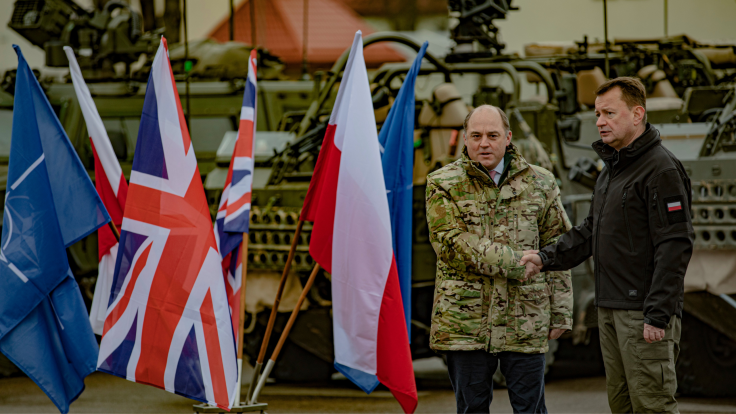
Britain's most senior military officials are increasingly warning that the world stands on the brink of major conflict and that the British state must urgently prepare for the possibility of global war.
The threat environment confronting the United Kingdom has shifted dramatically in recent years, according to senior military leaders and defence officials. Russia's full-scale invasion of Ukraine, China's growing military assertiveness in the Indo-Pacific, and the spread of sophisticated weaponry among rival states have combined to create what some describe as an unprecedented period of geopolitical danger. This convergence, they argue, demands not just stronger armed forces but a national effort to deter war and prepare society for conflict.
In a rare and stark warning, the Chief of the General Staff, General Sir Roly Walker, has argued that Britain must be ready for a major war within the next three years, urging deeper investment in military capability and deterrence. Meanwhile, other senior figures have raised the possibility that ordinary citizens may need to be called upon to support defence efforts if conflict breaks out.
Senior Army Chief Warns Of Global Convergence Of Threats
General Sir Roly Walker has emerged as one of the loudest voices urging urgent defence preparedness. In a speech to senior military officials and defence industry leaders, he warned that Britain faces a 'convergence of threats' that could manifest into war between 2027 and 2028 unless Western powers strengthen their deterrence. According to General Walker, the combined pressures of Russia's invasion of Ukraine, China's ambitions regarding Taiwan, Iran's nuclear aspirations, and North Korea's destabilising capabilities could trigger a broader conflict if left unchecked. He emphasised that this scenario represents a fundamental shift in the global security landscape, with the potential for simultaneous crises across multiple regions.
Walker's comments reflect an acceptance within parts of the UK defence establishment that the era of distant, manageable conflicts has passed. Instead, they argue, the world now confronts a series of potential flashpoints that could interlock into a wider war. His assessment did not suggest that war is inevitable, but he stressed that Britain must 'restore credible hard power' to both deter aggression and reassure allies.
Crucially, Walker has linked this emerging threat environment to the state of the British Army itself. He has repeatedly warned that without significant leaps in capability, including doubling the army's combat effectiveness within three years, the UK risks being unable to defend its interests effectively in a large-scale conflict.
Calls For Citizen Involvement And Conscription Debate
Beyond the purely military realm, discussions are emerging about whether Britain's society as a whole must change its approach to defence. A Times Radio interview carried on YouTube shows former Chief of the General Staff General Sir Patrick Sanders urging the British people to consider themselves as part of a 'pre-war generation' that must be ready to take up arms if necessary.
Sanders' remarks have sparked controversy precisely because they broach issues long absent from British political discourse: conscription and mass mobilisation. Britain abolished conscription in 1960, and successive governments have emphasised a volunteer professional force. But Sanders and a handful of other senior figures have openly questioned whether society is sufficiently prepared for the scale of commitment required in a major war.
These calls have not gone unchallenged. The UK's Chief of Defence Staff and the Ministry of Defence have been careful to stress that there are currently no plans to reintroduce mandatory national service. Official spokespeople continue to affirm that Britain's military will remain a volunteer force, even as they discuss the importance of enhancing reserve forces and national resilience.
Government And Defence Strategy Responses
The UK government and senior defence officials have acknowledged the shifting global threat landscape, even if they stop short of declaring an impending World War 3. In a major address to defence stakeholders on 15 December 2025, the Chief of the Defence Staff outlined the Ministry of Defence's perspective on rising risks, emphasising the need for a 'whole of society' approach to deterrence. He warned that peace can no longer be taken for granted and urged greater public understanding of defence imperatives, including investment in military readiness and industrial capacity.
This call for broader societal engagement reflects what many military planners see as a gap in public awareness about the seriousness of current threats. Officials have pointed to rising hostile intelligence activity and the continued conflict in Ukraine as signs that Europe, and by extension the UK, must consider deeper preparations for war.
At the same time, there are signs that policy is already shifting. The Ministry of Defence has updated policies to broaden the circumstances under which former reservists can be recalled to service, extending eligibility in recognition of the need for rapid expansion capabilities in the event of war.
The UK is preparing for war...
— Neil McCoy-Ward (@NeilMcCoyWard) January 15, 2026
British military veterans up to age 65 are being told to prepare for mobilisation.
The Ministry of Defence wants to raise the recall age from 55 to 65 as part of new “war preparation” powers.
I’m ex-army. Ten years served. And I’m telling you… pic.twitter.com/DDgE2NVhkm
Public And Political Reactions
As senior military voices broaden the debate about the risk of major war, public and political reactions have been mixed. Some MPs have echoed the urgency of preparedness, warning that should hostilities escalate with Russia or another major power, the UK might have to consider conscription to meet the demands of a fully mobilised conflict.
Opposition and scepticism have also arisen, with critics cautioning against alarmism and reaffirming the government's stance that there are no immediate plans for compulsory military service. They argue that such debates can fuel public anxiety without corresponding policy foundations.
As the debate continues, Britain faces a delicate balance: acknowledging the increasing complexity of global threats while avoiding unnecessary panic. Yet for now, many of the UK's military leaders believe that neither the public nor policymakers have fully grasped the extent of the changes required to deter and, if necessary, prevail in future conflicts.
The threat landscape is shifting. Britain's preparedness debates reflect deep geopolitical anxiety, and whether they mark the dawn of a new era of conflict or the sobering recognition of evolving risks remains contentious, but undeniable.
© Copyright IBTimes 2026. All rights reserved.