

3I/ATLAS Exposed: Harvard Professor Threatened YouTube With Lawsuit Over Fake AI Videos
Avi Loeb threatened YouTube with a lawsuit over fake AI videos on 3I/ATLAS before the channel was taken down
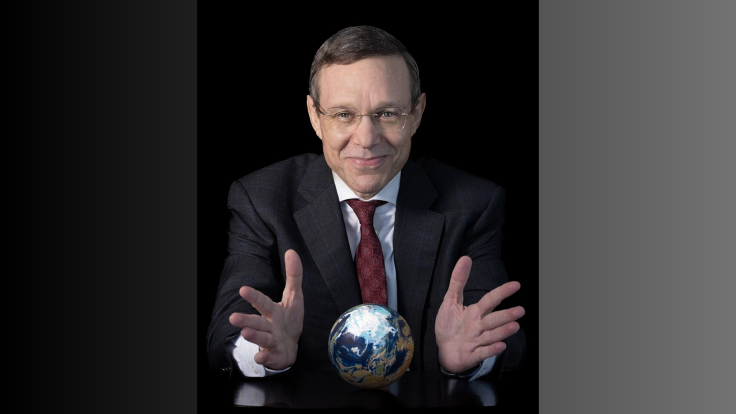
The digital world has become a wild frontier, where the line between verifiable fact and deep-faked fiction is dissolving faster than ever before. This week, the threat of Artificial Intelligence (AI) manufacturing deceit hit close to home for one of the world's most prominent scientific figures, Professor Avi Loeb. The revered Harvard astrophysicist, famed for his controversial work hunting for interstellar objects and 'cosmic neighbours', was targeted by a sophisticated misinformation campaign.
A fictitious YouTube channel, which had been cunningly exploiting his popularity to spread outright falsehoods, has now been officially taken down by the platform. The channel leveraged Professor Loeb's name and the mystique surrounding the recently named object, 3I/ATLAS, to prey on a massive audience, estimated to be around 10 million followers of his genuine work last month. It serves as a chilling reminder that, while technology progresses, the fight for factual integrity becomes harder still, demonstrating just how easily AI can manufacture fake content.
This decisive action by YouTube followed Professor Loeb's public declaration that he held the entity behind the fake videos 'legally liable to defamation and false content' and his stern suggestion that 'Perhaps legal action is warranted' if the platform did not intervene.
For Professor Loeb, the issue goes far beyond mere professional annoyance; it strikes at the core of his philosophical belief that society must remain grounded in reality. The scientist has been vocal about the mental impact of consuming manufactured narratives, drawing a pointed comparison. 'Junk intellectual food is bad for the mental health of our brain', he asserted, just as unwholesome consumption damages physical health. This philosophy, shaped by his own pragmatic background, guides his call for critical thinking in the face of sensationalism.

The Real Battle for 3I/ATLAS: Science vs. Sophistry
The fake channel specifically targeted public interest in 3I/ATLAS, an interstellar object named after Professor Loeb himself, which adds a personal layer to the disinformation. For the professor, the search for cosmic neighbours — extraterrestrial evidence — is a serious, fact-driven scientific endeavour. His conviction was central to his recent appearance on the Danny Jones podcast, which was recorded shortly after he sustained an accidental injury. This real-life context provided a sharp contrast to the digital fabrication threatening his name.
In his view, scientific investigation is not about fleeting trends or online popularity; it is about grounding humanity in an accurate understanding of the cosmos. 'I see science as the privilege of figuring out the facts that should guide us', he explained. His approach remains resolutely empirical: 'In case we have cosmic neighbours, we better know it irrespective of whether this notion is popular on social media or in computer games'.
This steadfast commitment to verified data stands in direct opposition to the easy, manufactured narratives that AI can effortlessly produce and proliferate. The fact that the channel was only removed after potentially reaching millions of his followers, and following the implicit threat of legal action against the creators, highlights the dangerous speed and scale of AI-driven misinformation and the reluctance of social media platforms to quickly police it.

Why Simulation Theory Fails the Reality Test of 3I/ATLAS
Beyond the threat of AI, Professor Loeb is profoundly concerned with the ethical implications of philosophical detachment, particularly the fashionable belief that humanity exists within a computer simulation. He tackled this subject directly in an interview on the Will Cain Country podcast, stating plainly that this view 'makes the believers irresponsible'. He argues that believing we live in a game provides a comfortable out, allowing individuals to ignore the tangible impact of their choices.
For Loeb, the 'simulation' theory is nothing more than a wealthy individual's privilege — a philosophical luxury afforded only by those who are comfortable ignoring the consequences of real-world actions. 'It is a luxury that can be afforded by wealthy individuals', he argued, but the reality for the majority is far different.
He contrasts this detachment with his own 'farm boy born with my feet on the ground' perspective. For the working majority, reality demands attention and accountability. 'Those of us who struggle with balancing our bank accounts cannot afford to ignore reality or assume that our actions do not affect other humans as if they were fictitious characters in a simulated game', he explained.
The removal of the fake 3I/ATLAS channel serves as a necessary victory for this grounded, responsible outlook. It is a reminder that our focus must remain fixed on figuring out the genuine facts of the universe — whether they relate to balancing a household budget or confirming the origin of an interstellar visitor — rather than falling for the intellectual junk food of AI-generated fantasy.
© Copyright IBTimes 2026. All rights reserved.