

Interstellar Comet 3I/ATLAS Is Nearing Earth: What Scientists Discovered
New images of Interstellar Comet 3I/ATLAS reveal its bizarre composition
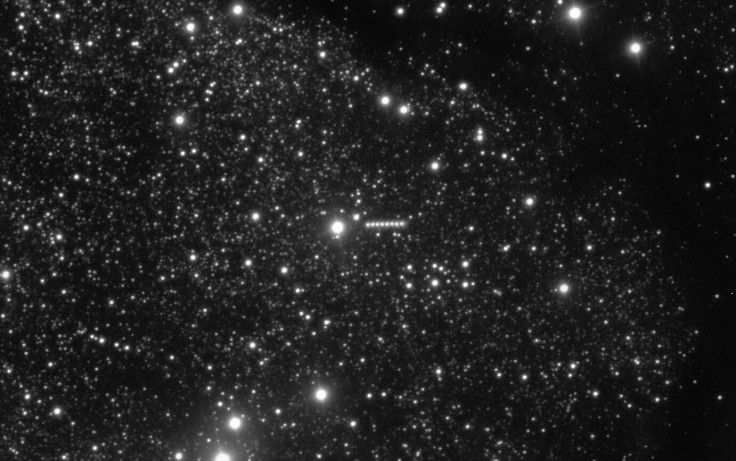
Forget aliens lurking in the shadows of some distant planet; astronomers are transfixed by one that's just blazed into our solar system from the cosmic void. This comet is an object so profoundly rare that it is only the third interstellar object ever observed zipping through our celestial neighbourhood.
Its two confirmed predecessors were the mysterious 'Oumuamua in 2017 —which sparked intense debate due to its rocky, cigar-like shape and lack of a tail — and 2I/Borisov in 2019, which behaved much more like a typical comet in our own system, complete with a visible coma and tail.
The object in question is Comet 3I/ATLAS, a ghostly wanderer that has been travelling for millennia before it was initially discovered just a few months ago in July. The comet was first spotted by the NASA-funded ATLAS (Asteroid Terrestrial-impact Last Alert System) survey telescope located in Rio Hurtado, Chile, on July 1, 2025, and subsequently confirmed as an interstellar interloper due to its high velocity and hyperbolic trajectory.
And as it nears its closest approach to Earth later this month, a pair of groundbreaking missions have fixed their gaze upon the icy vagrant, yielding fresh images that are currently driving a frenzy of analysis. Both the venerable Hubble Space Telescope and the European Space Agency's pioneering Jupiter Icy Moons Explorer (Juice) mission have captured stunning, detailed shots of the comet, helping scientists nail down its trajectory and begin to unlock its secrets.
The reason for the global astronomical attention is simple: because 3I/ATLAS originated outside of our own solar system, it offers a pristine, untouched sample of matter from another star system — a cosmic gift that has allowed researchers to gather crucial clues about its composition. This information comes chiefly from the gases that sublimated, or turned directly from ice to gas, from the comet during its closest pass by the sun in October.
Crucially, observations from the James Webb Space Telescope (JWST) have already shown that the comet has an unusually high ratio of carbon dioxide to water ice compared to comets born in our solar system, suggesting its ices were shaped by a significantly different environment around its parent star — a star likely older than our own sun.

The Rarity of 3I/ATLAS: Why Scientists Are Scrambling for Data
The Hubble Space Telescope was one of the first missions to observe 3I/ATLAS shortly after its discovery in July. Its initial sighting provided the most detailed view of the comet's teardrop shape at the time, offering a glimpse of the bizarre geometry this far-flung traveller possesses.
The world's most famous space observatory, however, wasn't finished. Astronomers spotted 3I/ATLAS with Hubble again on Nov. 30, capturing an even clearer, more spectacular image. At the time of this observation, the comet was still a vast distance away, approximately 178 million miles (286 million kilometres) from Earth.
The image was secured using the telescope's high-resolution Wide Field Camera 3 instrument, confirming its distinct shape and allowing mission scientists to refine their models of its unpredictable journey. These Hubble observations were also crucial in narrowing down the size of the comet's nucleus, estimating its diameter to be between 1,400 feet (440 metres) and 3.5 miles (5.6 kilometres).
But perhaps the most intriguing activity around the comet has been captured by the Juice mission. This craft, whose full name is the Jupiter Icy Moons Explorer, is currently en route to a much different destination, one of the most exciting in our solar system. The spacecraft's primary objective is to investigate the potential habitability of Jupiter's three largest moons: Ganymede, Callisto, and Europa. These worlds are believed to host incredible subsurface oceans beneath their frozen crusts, oceans that could potentially support life.
Chasing 3I/ATLAS on the Road to Jupiter: The Juice Mission's Incredible Detour
The Juice mission is a testament to the sheer scale of modern space exploration. Launched in April 2023, the spacecraft is not expected to arrive at its Jovian destination until July 2031. Given this arduous journey, the fact that its path happened to place it in a prime position to observe a fleeting interstellar comet is a stroke of incredible luck for cosmologists.
At the beginning of November, the spacecraft was a mere 41 million miles (66 million kilometres) away from the comet, allowing it to dedicate five of its scientific instruments, as well as its onboard Navigation Camera, or NavCam, to glimpse the speeding object.
The only frustrating aspect is the pace of the data transfer. Because the spacecraft is wisely using its main, high-gain antenna as a heat shield to protect its delicate instruments from the sun during its long journey, it must rely on a smaller antenna. This means data trickles back at a fraction of the rate.
Consequently, the Juice team couldn't wait for the full download, which is not expected until February. Instead, they managed to download just a quarter of a single image taken by the NavCam. This sliver of data has already proved invaluable, showing heat-driven activity on the comet resulting from its close pass by the sun.
The newly released image clearly depicts a coma, or a glowing halo of gas surrounding the nucleus, as well as the object's two distinct tails: a plasma tail composed of electrically charged gas, and a faint dust tail of solid particles being released into space. This dual-tailed structure is typical of comets that originate within our own solar system, indicating that the building blocks of this alien object might not be so different from our own.

The good news is that while Comet 3I/ATLAS will come within 167 million miles (270 million kilometres) of Earth on Dec. 19, it will be safely on the other side of the sun and poses no risk to our planet. For context, Earth is about 93 million miles (150 million kilometres) from the sun. The comet is expected to remain visible to both telescopes and deep-space missions for a few more months before it finally exits our solar system for good, according to NASA.
The rest of the Juice data from the comet's historic flyby, which should include high-resolution images and crucial composition data, is expected to arrive between Feb. 18 and 20. Scientists anticipate this final data will help determine if the comet's overall chemistry reflects a younger or older region of the galaxy than our own sun, offering a direct probe of planet-forming material from an alien star system. Until then, the world's astronomers will be holding their breath.
The journey of Comet 3I/ATLAS through our celestial home is a fleeting, once-in-a-lifetime opportunity for science to peek into the chemistry of another star system. While the comet poses no threat, the data it leaves behind — especially the unexpected carbon dioxide signatures — could redefine our fundamental understanding of planet formation across the galaxy. With the full Juice mission data drop due between Feb. 18 and 20, the biggest discoveries about this rare alien object are still to come.
© Copyright IBTimes 2026. All rights reserved.