

3I/ATLAS Revelation: UFO Researcher Unveils CIA Decision to Classify Interstellar Files
Is 3I/ATLAS a comet or an alien probe? The CIA's secret files deepen the interstellar mystery.

As the world began to look away from the green-tinged visitor streaking through our cosmic backyard, a cryptic message from the American intelligence community has reignited a firestorm of speculation.
3I/ATLAS, the third interstellar object ever discovered in our solar system, was supposed to be a settled matter—a simple, albeit ancient, lump of ice and rock. Yet a startlingly guarded response from the CIA suggests that, behind closed doors, the official certainty may be far less absolute than NASA would have us believe.
The disclosure has come at a critical time, as the object—which reached perihelion on 29 October 2025—is now on a steady exit trajectory from our neighbourhood.
The object, first spotted on 1 July 2025 by the ATLAS telescope in Río Hurtado, Chile, has spent months under the intense scrutiny of the world's most powerful observatories.
While the scientific establishment quickly labelled it a natural comet, the fringe of the internet—bolstered by some of the most respected names in astrophysics—refused to let go of a more tantalising theory: that 3I/ATLAS might be an artificial reconnaissance probe from a distant civilisation.
This speculation was fueled by the object's extreme orbital eccentricity of 6.14—the highest ever recorded—and its estimated age of up to 14 billion years, predating our own Sun.

The CIA's 'Glomar' Response Sparking 3I/ATLAS Fear
The latest twist in this interstellar drama comes courtesy of John Greenewald Jr., a prominent researcher and creator of The Black Vault, who, in November 2025, used the Freedom of Information Act (FOIA) to request any records, assessments, or communications regarding the object.
Rather than a simple 'no,' the agency issued, on 31 December 2025, what is known in the trade as a 'Glomar' response. The CIA stated it could 'neither deny nor confirm the existence or nonexistence of records' concerning 3I/ATLAS, adding that the very fact of such records existing—or not—is 'properly classified.'
This linguistic tap dance is a leftover from the Cold War, meant to protect national security by not even acknowledging that a topic existed. The word comes from the 1970s and the Hughes Glomar Explorer, a ship that the CIA used in a secret mission to find a sunken Soviet submarine.
A lot of people are very confused by the decision to keep such a 'natural comet' a secret. If the object is really just an 11-billion-year-old piece of space ice, as the data suggests, why would the CIA keep records about it as secret as they would keep records about a secret operation?
Harvard astrophysicist Professor Avi Loeb, a long-time proponent of investigating 3I/ATLAS for technological signatures, found the response 'surprising', especially given that NASA officials had firmly stated on 19 November 2025 that the object was 'undoubtedly a comet of natural origin.'
Loeb has been a vocal critic of what he calls the 'arrogance' of dismissing anomalous data, such as the object's peculiar 'triple-jet' structure and its unusually fine-tuned trajectory. He suggests the CIA's secrecy might be a calculated effort to prevent a 'black swan event' from triggering mass panic.
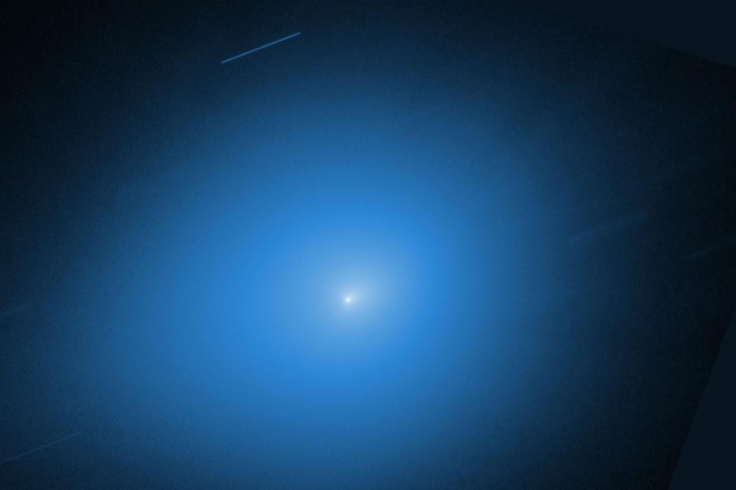
Why 3I/ATLAS Continues To Defy Standard Scientific Logic
Despite 's insistence that 3I/ATLAS 'does comet things,' the data remains stubbornly complex. Loeb has pointed to the presence of nickel and iron atoms in the comet's coma—elements that shouldn't be vaporising at the frigid temperatures where the object was observed. Furthermore, the symmetry of its outgassing jets—which appear to precess every 7 hours and 45 minutes—has led some to wonder whether they are observing a natural process or a form of controlled propulsion.
'This is a wise policy for mitigating societal unrest or instability of financial markets at a time when the reality of a black swan event is still regarded as highly unlikely,' Loeb remarked, defending the CIA's guarded stance. He argues that if the government even suspected a non-natural origin, the potential for global instability would necessitate keeping those discussions firmly under wraps.
As 3I/ATLAS hurtles towards its 15 March 2026 encounter with Jupiter's moon Eupheme, the window to uncover its true nature is closing. For now, the public is left with a choice: trust the official line of a natural comet, or wonder why the world's most powerful intelligence agency is so afraid to talk about a ball of ice that passed within 269 million kilometres of Earth just weeks ago on 19 December.
© Copyright IBTimes 2026. All rights reserved.