ICE Detention Crisis: 911 Calls Capture Children Struggling to Breathe at Dilley Immigration Centre
In Dilley, the argument is not only about borders, but about how long a child can be kept somewhere that needs an ambulance to function.

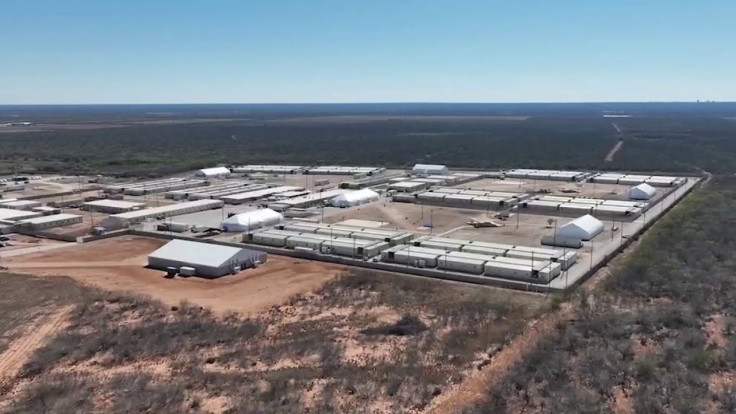
Recordings of 911 calls from the Dilley Immigration Processing Centre in Dilley, Texas, show medical staff repeatedly seeking ambulances for children in distress inside an ICE family detention site, according to an NBC News report.
Since mid September, emergency crews were reportedly dispatched to Dilley at least 11 times for children in medical distress, with most taken to a nearby community hospital and some transferred to a specialist paediatric hospital in San Antonio, based on EMS call logs and 911 audio obtained by NBC News. The logs do not show what happened to those children after transport, and official accounts of conditions at the facility sharply diverge.
ICE And The 911 Calls From Dilley
The striking thing about the calls is their tone. No shouting, no panic, just the careful language of clinical triage as a dispatcher asks what is wrong and a caller answers from inside a remote detention compound.
In one call, a staff member asks for help for 'a little kid going through respiratory distress,' then clarifies the patient is a 'six year old' after the dispatcher mishears. In others, staff describe a child 'desatting' with an oxygen level at 80, a small boy with a possible allergic reaction, a teenager with a possible leg fracture, and a young child who had suffered three seizures in a day.
The pattern described in the records is what doctors often worry about in paediatrics, not simply that infections circulate, but that warning signs are missed or managed too late, until an ambulance becomes the first real escalation. Dr Lara Jones, a paediatric critical care physician, argued the calls point to potential missed opportunities for earlier intervention, and said detention is fundamentally incompatible with children's health, pointing to studies linking detention with serious health consequences.
A separate case in the report hints at just how quickly an emergency can turn into a logistical problem. In one incident involving a 22 month old in respiratory distress, first responders wanted to fly the child by helicopter but could not because of bad weather, according to the records. Another family refused transport for a toddler with low oxygen, a reminder that fear and mistrust do not stop at the clinic door.
ICE, CoreCivic, And Competing Versions Of Care
The report places those calls inside a broader argument that has been simmering for months, with lawyers, immigration advocates and paediatricians warning that the facility is not suitable for children, and families alleging contaminated food, inadequate medical care, weak schooling, and barriers to timely treatment.
CoreCivic, the private contractor that operates Dilley under a federal contract, disputed the implication that emergency calls equal neglect. In a statement, spokesperson Ryan Gustin said no child 'has been denied medical treatment or experienced a delayed medical assessment,' adding that staff are trained to call 911 when a child's condition exceeds what can be managed on site, and that such calls reflect 'an abundance of clinical precaution.'
The Department of Homeland Security has yet to respond to questions about the emergency calls. ICE, however, issued a public statement this week saying it was 'correcting the record' against what it called 'mainstream media lies,' insisting parents and children are housed in facilities providing for their 'safety, security and medical needs,' and claiming families have access to full medical staff including a paediatrician.
Then there is the version of events offered by people who were inside.
Kheilin Valero Marcano, an asylum seeker from Venezuela, told NBC News that her 17 month old daughter Amalia's respiratory symptoms worsened over weeks after the family was arrested during an immigration check in and transferred to Dilley, and that care was complicated by a policy requiring families to queue outside for each dose of medicine, sometimes for hours in cold or rain. She said Amalia's condition spiralled on 18 January when staff noted dangerously low blood oxygen levels and called an ambulance, and she recalled replying, 'Thank God. Because you haven't done anything.'
Amalia was taken first to Frio Regional Hospital, then transferred to Methodist Children's Hospital in San Antonio, where Valero Marcano said the child was treated for pneumonia, Covid 19, RSV and respiratory distress while ICE officers stood guard, according to the report. After discharge, Valero Marcano and a habeas petition alleged Dilley staff withheld a prescribed nebuliser as unnecessary, while DHS denied medication was withheld and said the child 'immediately received proper medical care' and then continued treatment in the medical unit on return.
For Dr Ashley Cozzo, a paediatrician and neonatologist who signed a letter urging DHS Secretary Kristi Noem and congressional leaders to release every child held at Dilley, the calls point to something structural, a system that waits for collapse rather than preventing it. She warned that conditions may contribute to the spread of infectious diseases and that escalation may be too slow once a child becomes unwell, adding, 'Those calls are pointing in the same direction. A missed opportunity at early identification and appropriate intervention.'
© Copyright IBTimes 2026. All rights reserved.
- MOST POPULAR IN Trending