AI Companies Are Buying Millions of Books, Chopping Off Their Spines, and Destroying Them to Train Chatbots
Demand for obscure academic books has reached secondhand shops, raising concerns about the destruction of valuable titles
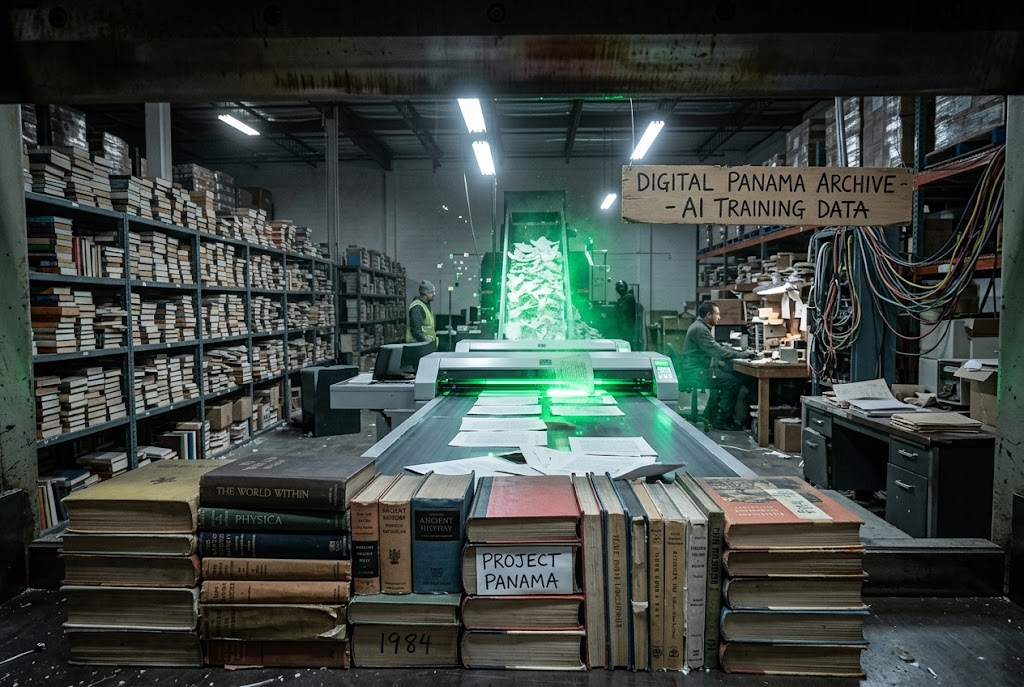
Artificial intelligence companies have been buying millions of printed books, cutting off the spines with industrial cutters, scanning the loose pages, and destroying what remains to train their chatbots, court records show.
The practice surfaced through Bartz v Anthropic, the copyright class action that ended in a $1.5B (£1.1B) settlement. Unsealed documents described a secret programme Anthropic called Project Panama, summed up in one internal memo from April 2024: 'Project Panama is our effort to destructively scan all the books in the world.' The same memo noted the team used a 'soft codename', because it did not want the work known outside the company. To run it, Anthropic brought in Tom Turvey, the former head of partnerships for Google Books.
The company turned to paper for a reason. It had already amassed roughly 7M pirated books from shadow libraries such as Library Genesis, and those downloads later triggered the copyright claims against it. Buying physical copies and destroying them offered a route the law was more likely to permit.
Why AI Companies Want Older Books
The books in demand are rarely new releases. Companies want titles printed before 2022, the year ChatGPT launched and AI-written text began spreading across the internet.
Large language models degrade when they train on their own output, a fault researchers call model collapse. Print from before that cut-off is valued because it is human-written and free of what the industry now labels AI slop. As the metadata firm ISBNdb put it while advertising a bulk-sourcing service, 'The world's best AI training data is sitting on a shelf.'
How Destruction Made the Scanning Legal
The destruction also mattered in court. In June 2025, US District Judge William Alsup ruled that scanning a legally bought book to train AI counted as fair use, specifically because the printed original was destroyed rather than copied and kept, so one copy replaced another. The first-sale doctrine, which lets anyone resell or destroy a book they own, covered the rest.
The piracy was a separate matter. Alsup let those claims head towards trial, and rather than risk damages that lawyers warned could top $1T (£750B), Anthropic settled for about $3,000 (£2,240) per title across roughly 500,000 books. A federal judge granted final approval in July 2026, making it the largest publicly reported copyright recovery on record.
A Reporter Tracked the Books to Amazon
Anthropic is not the only company doing this. A 404 Media investigation followed a bulk order of about 1,000 secondhand books after a bookseller hid an Apple AirTag inside one volume. The shipment crossed several states before reaching an Amazon warehouse in North Las Vegas, where staff cut the bindings and scan the pages for AI training data. Amazon said only that it buys books through commercial channels to improve its products and services.
Booksellers Report Suspicious Orders
The demand has now reached secondhand shops. Peter Sellers of Sellers & Newel in Toronto said the calls began around June, with requests for seemingly random lists of titles. 'There's something not right here,' he said.
Patrick Hempelmann, who runs BMV Books in the same city, said a reseller had spent months ordering obscure technical titles, old medical texts, and graduate-level maths and physics books. He had not heard about the scanning until reporters contacted him. 'I mean, we are booksellers. Books shouldn't be destroyed,' he said.
The trail also runs through resellers. Court documents named UK-based World of Books among Anthropic's suppliers, and a Canadian recycler, Zoom Books, whose growth chief worked there until this spring, has placed its own bulk orders, though it says it does not sell to Anthropic.
Booksellers in Australia and Spain have reported similar orders.
Musk Says His Team Won't Cut Spines
Objections have also come from inside the industry. Elon Musk, whose AI firm xAI now sits under SpaceX, said his team would scan its books without destroying them. 'I've asked the SpaceXAI team to preserve any rare books in a library and scan them the hard way vs just cutting off the spine and scanning,' he wrote on X.
I’ve asked the SpaceXAI team to preserve any rare books in a library and scan them the hard way vs just cutting off the spine and scanning
— Elon Musk (@elonmusk) July 27, 2026
Booksellers and collectors have raised one further concern. When an out-of-print title survives in only a handful of copies, destructive scanning can take the last of them.
© Copyright IBTimes 2026. All rights reserved.
- Recommended For You