

Moving Products From Concept to Reality: Yian Lin on the Power of 3D Visualization Technologies
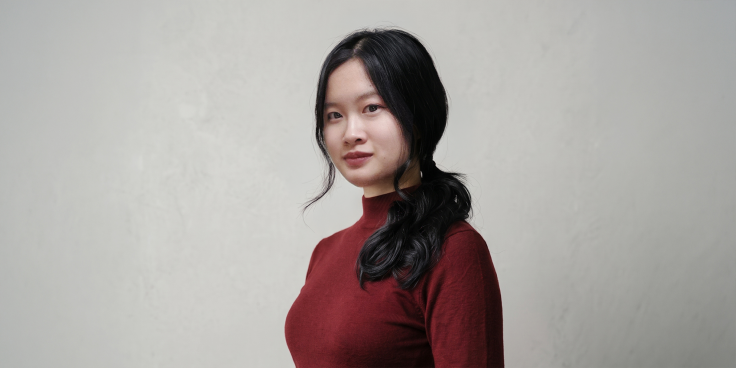
A product can look convincing on a screen and still fail when it reaches a factory. Yian Lin is confronting that in physical products now reaching national retail channels, where she uses advanced 3D visualization technologies like 3D modeling and rendering work when she creates photorealistic renders, and emerging Artificial Intelligence tools for her personal project elevation and art explorations.
Generative AI as an Ideation Accelerator for Art and Design
"Technologies like digital software and AI open up directions quickly, but they do not understand the physical consequences of those choices," Lin says. "A designer still has to know how an object will be manufactured, how materials behave, and what happens when a real person interacts with it." Her work across ergonomic furniture and beauty packaging demonstrates how that balance operates commercially.
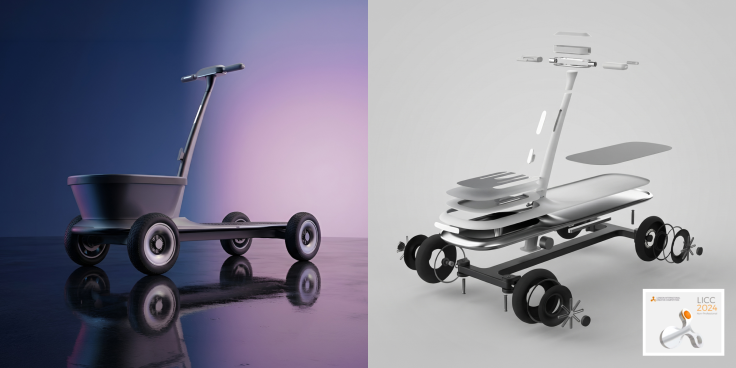
In her personal product concepts and fine arts explorations, Lin incorporates emerging generative artificial intelligence to elevate visual fidelity rather than relying on automated generation. Building directly upon her own three-dimensional baseline CAD models and conventional rendering studies, she uses artificial intelligence tools as an accelerator to refine complex specular reflections, subtle material translucency, and nuanced atmospheric lighting at unprecedented speed. By anchoring algorithmic enhancements to her original structural models, Lin pushes earlier design foundations to new levels of photorealism and depth that traditional render workflows alone could not easily achieve.
Designing Tangible Products Through Predictive 3D Visualization
Yet digital visual assets become truly meaningful only when a designer translates striking imagery into viable manufactured goods. In commercial retail and wholesale expansion at SM Beauty, factors like wall thickness, part tolerance, surface finish, and assembly constraints dictate whether an idea ever reaches physical shelves. Navigating this critical threshold places Lin inside a central industry challenge: leveraging advanced 3D visualization technologies to accelerate complex development decisions long before physical engineering and mass production take over.
That predictive capability is central to Lin's ongoing spatial design for Cosmoprof Miami in January 2027, an international trade event uniting beauty industry leaders. Moving directly from SolidWorks modeling into KeyShot rendering, Lin conducts millimeter-accurate digital spatial simulations. By applying photometric lighting computation to calculate real-world venue illumination, visitor sightlines, and structural fixture clearances, she eliminates spatial conflicts and finalizes material finishes long before physical fabrication begins.
That insistence on physical verification took root during Lin's earlier industrial design work at Perrigo in 2022, where she led color, material, and finish research across healthcare hardware, including oral care devices. Presenting to cross-functional development teams across company facilities, she translated predictive forecasts from WGSN and Pantone into viable resin formulations, textures, and manufacturing specifications engineered for high-volume production.
Guiding the Future of Product Design Across Emerging Technologies
Lin's integration of digital tools and physical rigor also led to an invitation in April 2026 to address emerging designers at ArtCenter College of Design in Pasadena, California. Recognized globally for leading excellence in product design education, ArtCenter provided an ideal platform for Lin to discuss coexisting with artificial intelligence. In her lecture, Lin urged young designers to tame emerging tools rather than passively surrender to them, reminding them that true product design remains anchored in human empathy, manufacturing discipline, and real-world execution.
For Lin, physical manufacturing remains the ultimate test of any digital concept, including those enhanced by artificial intelligence. By mastering both AI generative platforms and production realities, product designers can ensure that technological exploration always yields tangible, market-ready products.
© Copyright IBTimes 2026. All rights reserved.