Wall Street's Biggest Hedge Funds Didn't Get Hacked, but AI Voice Clones Came Alarmingly Close
Attackers impersonated trusted colleagues to seek internal access instead of exploiting software flaws

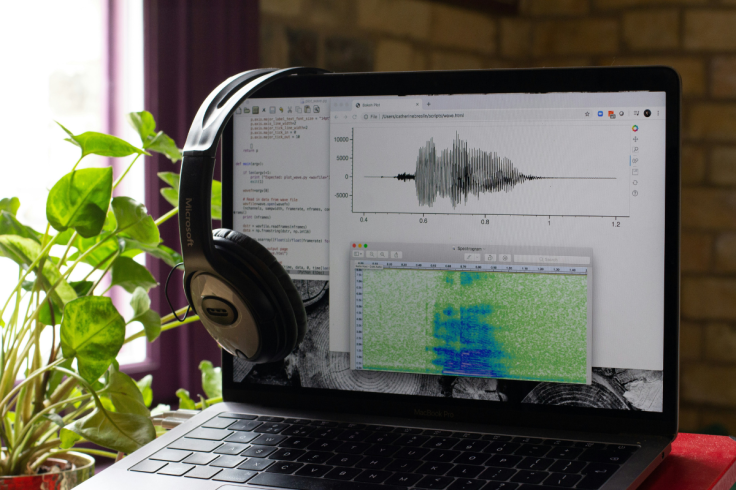
Employees at some of Wall Street's largest hedge funds recently picked up phone calls that sounded as if they were coming from trusted colleagues at the very top of their firms. The voices were convincing.
The requests were routine. Yet the callers were not co-workers at all, but artificial intelligence voice clones allegedly trying to trick staff into handing over access to some of the financial industry's most sensitive systems.
The attempted campaign targeted several of the world's biggest investment firms, including Point72 Asset Management, Two Sigma Investments, Citadel and Millennium Management, according to Bloomberg. While no major breach has been confirmed, the incident has heightened concern that AI-generated impersonation has moved from isolated fraud to a scalable cyber threat capable of testing even the most security-conscious financial institutions.
AI Voice Clones Target Elite Investment Firms
Bloomberg reported that attackers used AI-generated voices to imitate senior executives and colleagues during telephone conversations. The calls allegedly sought login credentials or other forms of internal access by exploiting employees' trust rather than technical vulnerabilities.
The campaign appears to have reached multiple hedge funds almost simultaneously, a shift from traditional social engineering attacks that typically focus on one organisation at a time. Citadel and Millennium declined to comment publicly on whether they were affected.
Point72 told investors on Wednesday that it had identified an attempted cyberattack. The firm said its initial review found no evidence that client information had been compromised, while adding that its investigation remains ongoing.
Two Sigma, which oversees about $75 billion in assets, confirmed it had been targeted but said its security systems prevented any compromise. 'Our security team responded quickly to an attempted vishing campaign targeting Two Sigma and other investment managers, and we have no indication of any impact to our data or our systems,' a company spokesperson said. 'We continue to monitor the situation closely.'
Human Weakness, Not Malware, in the Firing Line
Unlike many conventional cyberattacks that rely on malicious software or network exploits, the latest operation appears to have focused on deception.
Investigators believe the attackers cloned voices using publicly available audio, including conference presentations, interviews and earnings calls, before placing convincing phone calls to employees.
Rather than attempting to break through security controls directly, the operation relied on persuading staff to bypass them. That distinction has drawn attention from cybersecurity specialists because the approach targets human judgement instead of software.
Financial Industry Regulatory Authority officials have reportedly been in contact with member firms following the attempted attacks.
AI Supercharges Social Engineering Attacks
The incident also illustrates how artificial intelligence is changing cybercrime. Operations that once required extensive preparation can now be launched against many targets with relatively little effort. Improvements in voice synthesis allow attackers to recreate not only how someone sounds but also their cadence, pauses and speaking style.
That capability makes verification over the phone significantly more difficult than it was only a few years ago. Kevin, founder of cybersecurity company GitLawb, said the industry should expect similar campaigns to become increasingly common. 'We will see more and more of this attackers leveraging powerful AI models, need to up the defense too,' he wrote on X.
No Confirmed Breaches, but a Serious Warning Sign
No company involved has reported successful unauthorised access or financial losses linked to the campaign. That may ultimately become the most significant outcome.
The attacks showed that some of Wall Street's largest hedge funds were able to stop AI-powered impersonation attempts before sensitive information left their networks. At the same time, the coordinated nature of the operation suggests attackers are no longer experimenting with AI-generated voices on isolated victims.
Instead, they appear increasingly willing to deploy the technology at scale against some of the world's best-defended financial institutions. The episode underlines that future attacks may not begin with malicious code. They may begin with a familiar voice asking for a simple favour.
© Copyright IBTimes 2026. All rights reserved.
- Recommended For You