App Called Zuckoff Uses Bluetooth To Spot Nearby Meta Camera Glasses but Can't Tell if They're Recording
The free app has attracted 5,000 App Store users, but its developer warns that Bluetooth detection cannot confirm whether a camera is switched on or filming

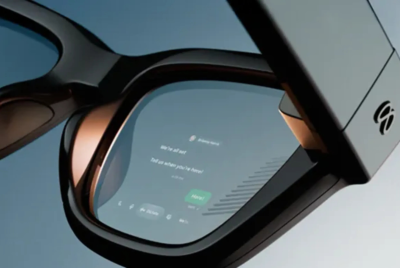
A free smartphone app that reads Bluetooth signals to locate nearby camera-equipped smart glasses has attracted 5,000 users since launching on Apple's App Store, highlighting interest in detecting recording-capable devices in everyday spaces.
Named ZuckOff, it was built by Pawel Szydlowski, a 30-year-old Polish software developer who said he was disturbed by footage of unsuspecting people being filmed and identified online without their knowledge.
There is one thing ZuckOff cannot do, and its developer makes no claim otherwise. The app tells a user that compatible camera glasses are nearby, but it cannot confirm whether the camera is switched on or whether recording is taking place.
How Zuckoff Reads Smart Glass Signals
The app identifies smart glasses by listening for Bluetooth signals and matching manufacturer signatures, such as an ID, service UUID or advertised device name, against a catalogue of known devices. Szydlowski compiled that catalogue himself, studying multiple models including Ray-Ban Meta and other camera-equipped glasses.
Some devices broadcast identifiers associated with their manufacturer or product, which can help the app recognise them. 'If the unique identifier matches, and also if the manufacturer identifier matches, then we have like an ultimate combo there,' he said.
Once detected, the app shows how close the glasses appear to be, although the developer says its proximity categories range from 'very close' to 'far' and do not indicate direction.
A notification should therefore be treated as a proximity warning, not confirmation that filming is taking place. Conversely, a failure to detect a device does not prove that no compatible glasses are nearby.
Why Szydlowski Built It
Szydlowski said he was moved to act after seeing footage of people being filmed without their awareness and later identified in online comments. 'We as a society have the right to at least know that someone is recording,' he said.
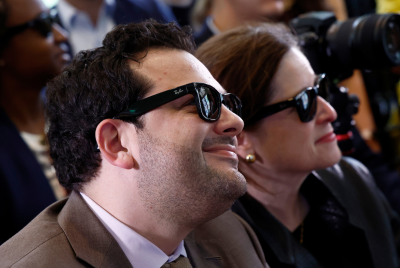
Szydlowski was particularly concerned that smart glasses can make recording less obvious because, unlike someone visibly pointing a phone, a person wearing camera-equipped glasses may not appear to be filming.
The concern is grounded in documented cases. In 2024, two Harvard students demonstrated a surveillance tool called I-XRAY that used Meta Ray-Ban glasses to livestream footage while facial-recognition and data-search tools were used to identify people and retrieve information about them in real time.
The project was presented as a proof of concept intended to demonstrate the privacy risks of combining wearable cameras with publicly available data, rather than as a system for targeting individuals.
Reports have also documented the use of camera-equipped smart glasses to film people without their knowledge, including in dating and school settings. Research into 'RizzCam' content has examined the use of smart glasses by pickup-artist communities to record interactions without the knowledge of those being filmed.
His Majesty's Courts and Tribunals Service has also prohibited Meta smart glasses in court buildings across England and Wales.
Meta CTO Andrew Bosworth said the glasses were designed for the camera 'to be noticed by the people around you'. Meta has since introduced additional safeguards: its July 2026 update disables the camera if the system detects that the capture LED has been physically tampered with or destroyed.
Meta says the measure is intended to prevent users from bypassing the recording indicator.
A developer built an app that alerts you when camera glasses are nearby.
— Reclaim The Net (@ReclaimTheNetHQ) September 20, 2026
It’s called ZuckOff.
The free iPhone and Android app scans Bluetooth signals from Ray-Ban Meta, Snap and other smart glasses, then estimates how close they are.
The developer says he built it after seeing… pic.twitter.com/vLDmaRpNNy
The Gap That Matters
ZuckOff converts an otherwise difficult-to-detect device presence into a visible warning, even if that visibility has real limits.
European Union regulators have reportedly contacted Szydlowski for more information about the app, according to Business Insider, although there is no indication that the contact amounts to formal enforcement proceedings. 'There's a need for such an application,' he told the outlet.
The app is available for free on Apple's App Store, with background notifications offered through its paid Pro tier.
The App Store lists the Pro option at $9.99 per year or $24.99 as a one-time purchase.
Reclaim the Net reports that the app is also available for Android, although the availability of specific features may differ between platforms.
The gap ZuckOff cannot close is the more pressing issue.
Wearable cameras can be difficult for bystanders to identify, while the presence of a recording indicator does not necessarily tell them whether a particular device is actively capturing content.
A tool that detects the presence of compatible glasses but cannot confirm whether recording is active illustrates the limits of privacy technology in responding to increasingly inconspicuous recording devices.
© Copyright IBTimes 2026. All rights reserved.
- Recommended For You