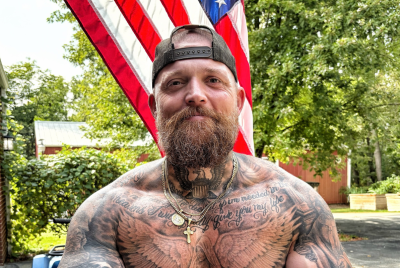
'Antisemitism Does Not Only Endanger Jews': Community Mourns Bondi Shooting Victim Adam Smyth
Adam Smyth, a non-Jewish father of four, is mourned as leaders warn that antisemitic hate threatens all Australians

The deadly Bondi Beach mass shooting that claimed 15 lives has become a stark illustration that antisemitism not only endangers Jews but also imperils the safety and social fabric of all Australians.
Sydney's iconic Bondi Beach was transformed into a scene of horror when gunmen opened fire during a Hanukkah celebration, killing 15 people, injuring dozens, and shattering the sense of safety in a city known for its multicultural harmony. Among the dead was Adam Smyth, a 50-year-old father of four walking with his wife, Katrina, a victim who was not Jewish but died in the crossfire of a hate-fuelled terrorist attack. Smyth's death underlines the indiscriminate nature of hatred unleashed on 14 December 2025, when two gunmen armed with rifles targeted crowds near Archer Park during the 'Chanukah by the Sea' event attended by about 1,000 people. Australian authorities have characterised the assault as an antisemitic terror act tied to extremist ideology that threatens not only Jewish Australians but broader civil society.
Attack and Immediate Aftermath
The Bondi Beach massacre unfolded around 18:47 on 14 December 2025 when two men, identified as a 50-year-old father and his 24-year-old son, opened fire from a pedestrian bridge on crowds gathered for a Jewish holiday observance near the beach.
Australian police responded swiftly, shooting and killing the older assailant and wounding the younger, who remains hospitalised and charged with 59 offences, including 15 counts of murder and terrorism-related charges.
Fifteen victims were killed in the attack; among them were Holocaust survivor Alex Kleytman, 87; Yaakov Levitan, 39, a rabbi; Peter Meagher, a retired police detective and photographer; Marika Pogany, an 82-year-old community volunteer; and Matilda, aged 10, who was attending the festival with her family.
In a nation unaccustomed to such violence, the massacre instantly sparked national mourning and a fierce debate on antisemitism, extremism, and public safety, prompting funerals and vigils across Sydney and beyond.
Adam Smyth and the Broader Threat of Hate
Adam Smyth, a Bondi local and devoted family man, was killed while walking with his wife near the festival site. His family remembered him as 'generous and kind,' with passions for sport and life that extended far beyond religious or cultural divisions.
Smyth was not the only victim killed who was unaffiliated with the Jewish community. Police victim lists and family statements confirm that Peter Meagher, a retired New South Wales police detective and photographer; Dan Elkayam, a 27-year-old French national living in Sydney; and Boris Tetleroyd, a 68-year-old visitor to the area, were also among those fatally shot. Another victim, a 40-year-old man whose family has not yet publicly identified him, was similarly not connected to the Hanukkah gathering. Their deaths underscore the indiscriminate nature of the violence and challenge any attempt to confine the attack's consequences to a single community.
Although Smyth was not attending the Hanukkah event and was not Jewish, prominent community figures highlighted his death as evidence that antisemitic violence casts a far wider shadow. Rabbi Avraham Berkowitz emphasised that 'Antisemitism does not only endanger Jews... it threatens everyone,' a sentiment echoed in statements from Smyth's bereaved family and interfaith leaders.
Smyth's passing has become a rallying point for advocates who argue that antisemitism, if left unchecked, corrodes the safety of all citizens and undermines the inclusive values at the heart of Australian society. Community vigils and interfaith services have increasingly stressed that the threat of hate crosses religious and ethnic lines, affecting secular neighbours and multicultural communities alike.
We mourn the loss of Adam Smyth who was walking with his wife Katrina along the Bondi Beach, a passerby to the Chanukah celebration and was shot in the crossfire, he has succumbed to his wounds and passed away.
— Avraham Berkowitz (@GlobalRabbi) December 18, 2025
Adam a good Australian, was not Jewish, but he he is unequivocally a… pic.twitter.com/VjlSl0e9sF
Political and Social Reckoning
In the days following the massacre, political leaders confronted intense scrutiny over whether policymakers had adequately addressed rising antisemitism and extremism. Prime Minister Anthony Albanese condemned the attack as an act of 'pure evil' and pledged legislative reforms aimed at strengthening hate speech laws and countering radicalisation.
Opposition figures, including Sussan Ley, have called for an urgent parliamentary session to tackle antisemitism and related threats, signalling that national unity is under strain as Australians demand clear action.
The death of Smyth, in particular, has been invoked by civil rights advocates and race discrimination officials as evidence that systemic hate speech and online hate proliferation jeopardise broader societal safety, not only targeted minorities. These leaders have criticised social media platforms for permitting unchecked hate to spread and urged comprehensive anti-racism frameworks to be adopted alongside hate crime legislation.
International responses have also underscored the global implications of the Bondi tragedy, with world leaders lamenting the attack and offering solidarity. Israeli Prime Minister Benjamin Netanyahu accused Australian authorities of fostering conditions conducive to antisemitism, a charge firmly rejected by the Australian government amidst calls for greater preventative measures.
The death of Adam Smyth stands as a stark reminder that the corrosive force of hate reaches far beyond its ostensible targets, threatening the safety and unity of entire communities.
© Copyright IBTimes 2026. All rights reserved.
- MOST POPULAR IN World