

Apple iPhone Fold Design Leak Signals a Risky Shift That Could Frustrate Users
Reports indicate Apple will use new Samsung components to create a remarkably slim profile

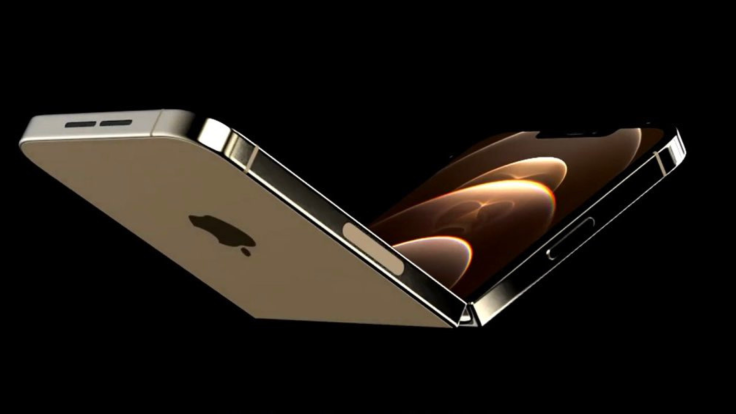
Rumours surrounding the upcoming Apple iPhone Fold suggest the tech giant is moving in a bold new direction. While innovation is expected, leaked design details point toward a controversial setup that may alienate long-time fans. This potential shift represents a significant gamble for a company usually known for its seamless user experience.
According to a recent leak, Apple plans to use new Samsung technology to create a thinner and more luminous screen for the Apple iPhone Fold. This sophisticated hardware will likely feature in the iPhone 18 line and the Galaxy S26 series as well. Since these displays are so energy-efficient, they might even remove the requirement for bulky silicon-carbon batteries.
READ MORE: Apple iPhone 18 Pro Series to Launch in 2026? Date, Camera and Design Specs Leaked
READ MORE: Apple iPhone Fold Tipped to Kill the Crease, Report Claims — A Make-or-Break Moment
New Screen Tech for the Apple iPhone Fold
According to a report by the South Korean outlet The Elec, Apple plans to use Samsung's 'Color Filter on Encapsulation' (CoE) technology for its upcoming foldable. This specific hardware shift aims to produce a more vivid display and better power efficiency. Consequently, the device could offer longer battery life while maintaining a much thinner profile.
BREAKING!
— Ice Universe (@UniverseIce) January 6, 2026
Samsung showcased a foldable display with no visible crease at CES 2026.
The panel looks excellent in terms of overall quality and also adopts under-display camera technology. Most importantly, there is no crease at all.
This display technology is expected to be used… pic.twitter.com/BuL1gke9AZ
'On-Cell Film', as Samsung Display brands its CoE technology, eliminates the plastic layer used for polarisation that usually sits between the outer glass and the OLED screen. The job of a polariser is to reduce glare while enhancing colour depth. If this component were missing, a mobile display would essentially function as a mirror.
The issue is that a polariser obstructs roughly half of the light produced by the OLED screen. To compensate for this loss in luminance, the device must send more energy to the display, which quickly uses up the battery. In contrast, CoE systems build the colour filter straight into the slim shielding layer of the OLED.
Seems suspicious to me 🤔 Apple's first foldable iPhone is rumored to feature a crease-free Samsung display, and Samsung Display just so happened to be showing off exactly that kind of smartphone innovation at CES 2026 👀 #iphonefold #foldablephone #samsungdisplay… pic.twitter.com/kVu0aX3gdL
— Tom's Guide (@tomsguide) January 8, 2026
In 2021, Samsung debuted this CoE method—known at the time as 'Eco² OLED'—inside the Galaxy Z Fold 3. Every folding phone they have released since then has utilised the same tech. It is largely thanks to this efficiency that the Z Fold series maintains great uptime even with smaller power packs than those found in Galaxy S Ultra models.
According to reports from The Elec, this display tech is headed for the Apple iPhone Fold, the iPhone 18 range (notably the iPhone Air 2), and the Galaxy S26 Ultra. Interestingly, this marks the very first time Samsung has used CoE in a traditional smartphone design.
Boosting Efficiency for the Apple iPhone Fold
Although the exact increase in usage time remains unknown, the benefits could be substantial. Samsung Display suggests that adopting CoE technology can cut power usage by as much as 37%.
With the launch of the iPhone Air last year, Apple debuted 'metal can' technology—a firm metal shell that enables batteries to fit into new shapes and reach the very edge of the device. This was made possible by engineers moving the logic board, which cleared out the centre of the phone to make room for a much larger power cell.
iPhone Fold will have a 5400mah-5800mah battery
— Anthony (@TheGalox_) November 16, 2025
It will be thicker and heavier than other foldables in order to fit a bigger battery pic.twitter.com/aC6YwfxEkA
Samsung followed a nearly identical path with the Galaxy Z Fold 7. By using a revamped camera sensor and a fresh mounting system, they managed to tuck internal parts right up against the edges of the device. This clever arrangement played a huge role in making the phone thinner while still fitting in advanced hardware.
If combined with a larger battery and faster charging, these upgrades could lead to a significant performance boost. However, it is more probable that the Apple iPhone Fold will simply be thinner than users expect, without any obvious loss in battery life. It is unlikely that Apple would create a bulky device like the Google Pixel 10 Pro Fold. Given how the Galaxy S25 Edge helped make the ultra-slim Galaxy Z Fold 7 possible, Apple may well follow a similar path.
© Copyright IBTimes 2026. All rights reserved.