Galaxy Z TriFold Exposes Fold 7 Flaws — Why Its Screen And Battery Change Everything
Samsung's Triple-Fold Innovation: How the Galaxy Z TriFold Sets a New Standard Over the Fold 7

The Samsung Galaxy Z TriFold is more than just a new foldable phone. It represents a big leap, one that reveals just how limited even the latest generation of the Galaxy Z Fold (specifically the Samsung Galaxy Z Fold 7) has become.
Thanks to a massive screen and a battery built for real work and play, the TriFold shows the compromises that lingered in Fold 7 and why Samsung's future now looks radically different.
TriFold Screen: Redefining What 'Foldable' Means
One of the most striking advantages of the Samsung Galaxy Z TriFold is its enormous 10-inch Dynamic AMOLED 2X display, which unfolds across three panels. As per reviews like Tom's Guide, this transforms the device from a compact phone into a tablet-like interface, which is a shift that goes well beyond what the Fold 7 offered.
When folded, the TriFold still gives you a usable 6.5-inch cover screen, but when opened, you get a full 10-inch canvas, ideal for reading, editing documents, watching videos, or multitasking. Samsung has even updated its software to match, giving users a standalone Samsung DeX on the TriFold. That means you can run multiple apps side by side, which is easily more than the Fold 7 could handle.
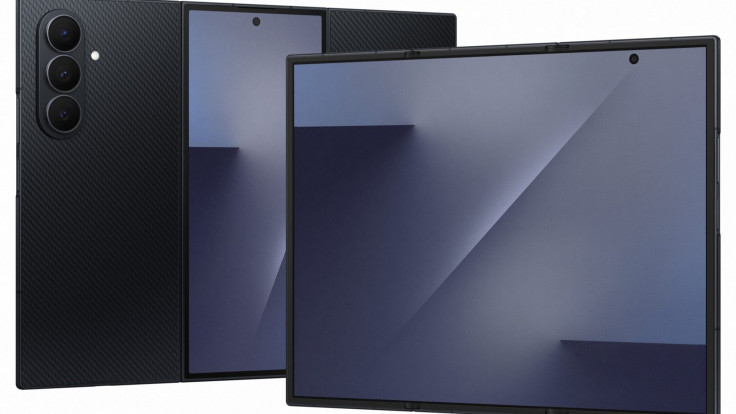
By comparison, Fold 7, with its single internal fold, still feels like a compromise, a phone first and a small tablet second. So for anyone who regularly juggles e-mails, documents, streaming, social media or editing photos on the go, the TriFold's display is a revelation. The extra screen size changes not only what you can do, but how comfortably and fluidly you do it.
Read More: Samsung's Galaxy Z Tri-Fold vs iPhone Fold — A New Battle For Foldable Dominance
Read More: US Shoppers Splash £13.1 Billion On Cyber Monday — Here's Their Biggest Buys
Battery And Power: Realising The Potential Of A Foldable
A large, tablet-class display only reaches its potential if paired with a battery that can keep up. Here again, the TriFold outshines its predecessor with a substantial 5,600 mAh battery, reputed to be the largest ever fitted in a Galaxy foldable device.
That extra 1,200 mAh bump over Fold 7's reportedly 4,400 mAh cell is significant. In real-world use, it could be the difference between a device that dies mid-afternoon and one that lasts comfortably through a busy day of productivity, browsing, streaming or gaming. Charging speeds have also been improved: the TriFold supports 45 W wired fast charging, and can reach roughly 50 per cent in 30 minutes.
Contrast that with Fold 7, whose battery and charge speeds have drawn criticism. Some reviewers, such as one by SamMobile, deemed Fold 7's battery life 'just good enough,' describing long charging times and limited screen-on time as quirks of the design that persisted despite broader improvements. Moreover, for users who demand longevity, especially on a device this large and powerful, that's a flaw. The TriFold, though, corrects it.
Battery aside, TriFold also retains high-end features like a flagship-class processor (the Snapdragon 8 Elite) and generous RAM and storage, alongside a multi-sensor camera system comparable to Fold 7's.
What TriFold's Approach Reveals About Fold 7's Limits
The introduction of the TriFold highlights the limits Fold 7 faced, even after being billed as the next generation of foldables. The single-fold design, lighter battery, and comparatively smaller screen now feel like necessary compromises compared to what's possible with triple-fold. Fold 7 catered to users who wanted a large screen yet still roughly phone-sized portability.
However, for those seeking productivity, media, creativity or truly 'do-it-all on one device' flexibility, it falls short. TriFold, on the other hand, doesn't apologise for its aspirations. Its screen size, battery endurance, and multitasking features show a commitment to letting a foldable be more than 'a phone that unfolds.' It's a statement: foldables don't have to force you to choose between convenience and capability.
That said, it is not without trade-offs. TriFold weighs roughly 309 grams which is heavier than typical flagship phones, and heavier than Fold 7. That may make it less pocket-friendly for everyday carry if you mostly use the cover display. The triple-fold hinge mechanism will likely be more complex, which could raise long-term durability or repair concerns.
Finally, there is a massive price difference: in the United Kingdom, the Samsung Galaxy Z Fold 7 is priced at about £1,799 for the 256 GB variant, rising to £1,899 for the 512 GB and £2,149 for the 1 TB model, according to sources.
On the other hand, the new Samsung Galaxy Z TriFold does not officially have UK pricing yet. In fact, Samsung has not confirmed a UK launch so far. Some third-party sites list an estimated UK price for TriFold around £2,300–£2,500, but given the absence of an official UK release, those figures remain speculative. Because of that uncertainty, Fold 7 remains the only Galaxy foldable flagship actually available to purchase in the UK for now.
© Copyright IBTimes 2026. All rights reserved.
- MOST POPULAR IN Technology