

Trump Aide Natalie Harp Likened to Fictional 'Stalker Who Got the Job' by Author Kurt Andersen
Author Kurt Andersen compares Natalie Harp to characters from Dickens and Orwell as scrutiny grows over the Trump aide's access to the president

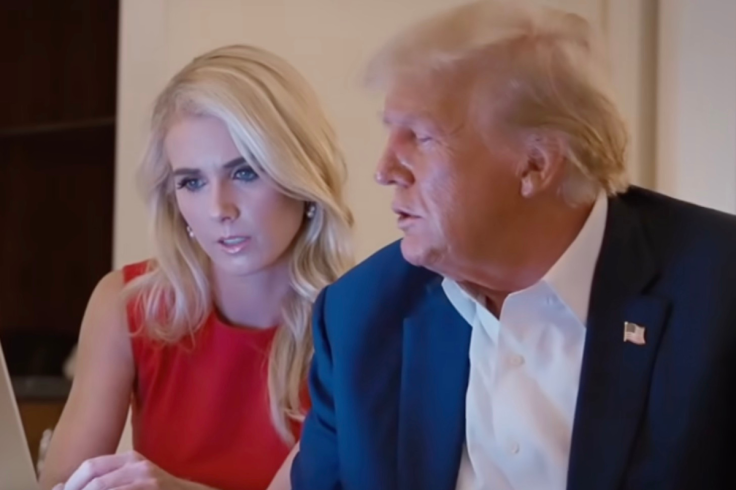
Author Kurt Andersen has likened US President Donald Trump's aide, Natalie Harp, to a fictional stalker. Andersen made the comparison during an August 2026 episode of The Daily Beast Podcast.
He discussed Harp's role and motivations with host Joanna Coles, suggesting she resembled a character more likely to appear in fiction. For context, Harp is a 35-year-old special assistant and executive assistant to the president.
She recently made headlines after The Daily Beast published letters attributed to her that expressed intense personal devotion to Trump.
Author Calls Trump Aide a 'Stalker Who Got the Job'
In the published letters, Harp reportedly wrote that Trump was 'all that matters' to her. Harp also described herself as unworthy of the president in one of the writings.The authenticity of the letters has not been independently confirmed by all outlets reporting on them.
Their publication has intensified scrutiny of Harp's access to Trump and her position within his inner circle. Andersen suggested that Harp's motives and intentions were unclear enough to make her a compelling fictional character.
'She is a rich fictional character only because the whole nature of her motives and intentions are unclear,' Andersen told Coles. He then offered a more provocative characterisation of her unusual career trajectory.
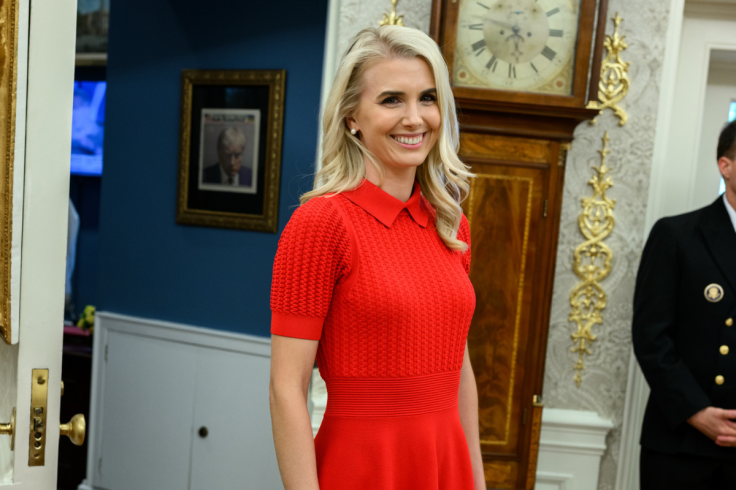
'Except for like, whoa, she's like a stalker who got the job,' Andersen said. He went on to distinguish Harp from other members of Trump's circle.
'I think she is more in a certain way unwell than the rest of them,' Andersen said. His assessment was an expression of opinion rather than a medical diagnosis or established fact about Harp.
Harp reportedly earns $150,000 (about £111,000) a year in her White House role. She previously worked as a conservative news anchor at One America News before joining Trump's operation in 2022.
New York Times reporter Maggie Haberman has compared Harp's role in Trump's inner circle to that of a 'binky', or comfort object. Harp's practice of carrying a portable printer and providing Trump with articles, social media posts and other material previously earned her the nickname 'human printer'.
Andersen Compares Harp to Dickens and Orwell Characters
During the podcast, Andersen also compared Harp with characters found in the works of Charles Dickens.
He noted that Dickens often portrayed innocent or idealistic characters who became caught up in forces larger than themselves. 'They weren't really evil,' Andersen explained. 'They were true believers.'
He then drew a specific parallel to the titular character of Barnaby Rudge. Andersen described Rudge as an idealistic character who becomes caught up in the Gordon Riots without fully understanding the forces around him.
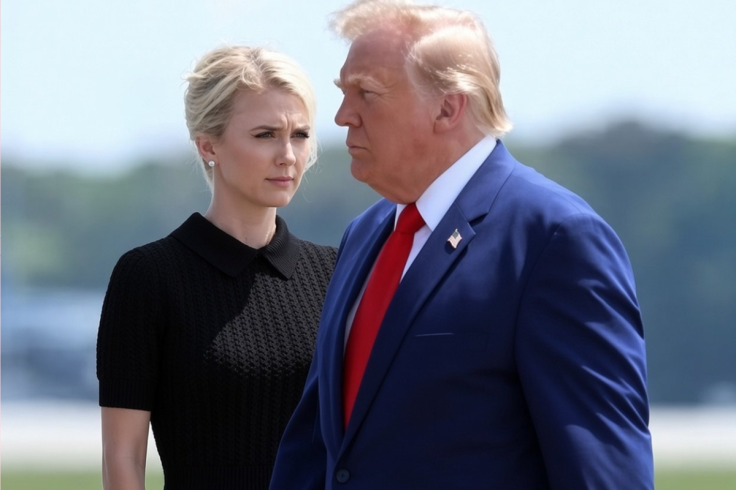
'[Rudge is] a simple, idealistic character who just doesn't understand the world,' Andersen said.
Andersen's comparison was literary commentary rather than a factual assessment of Harp's beliefs, mental state or intentions.
The conversation then shifted to George Orwell's novel Animal Farm. Andersen also invoked Boxer, the loyal and hardworking cart horse, while discussing political devotion and loyalty.
Separately, reporting surrounding Regime Change, the 2026 book by Maggie Haberman and Jonathan Swan, has described Trump's high regard for Harp. Reports about the book say Trump told staff that Harp was the only person who loved him as much as his wife and children.
The White House has defended Harp amid scrutiny of her relationship with Trump, describing her as a loyal and hardworking aide.
Harp Joined Trump During Secret Turkey Aircraft Switch
Harp's access to Trump was also highlighted during a highly unusual security operation in Turkey in July. She was among a small group of aides who accompanied the president when he secretly switched aircraft following intelligence about a potential Iranian threat.
Trump was discreetly transferred from the publicly identified presidential aircraft using an airport catering truck before boarding a smaller C-32A aircraft. The operation followed intelligence concerning a credible potential missile threat against the president's aircraft.
Harp joined Trump in the catering truck alongside White House deputy chief of staff Dan Scavino and Oval Office operations director Walt Nauta. Defence Secretary Pete Hegseth was also aboard Trump's secret flight.

Secretary of State Marco Rubio and Treasury Secretary Scott Bessent travelled aboard the decoy aircraft. However, reports indicate that they knew Trump was travelling separately, meaning they were not simply abandoned without knowledge of the security operation.
The extraordinary security measure offered another indication of Harp's proximity to Trump. However, her inclusion in a Secret Service security operation does not by itself establish the extent of her influence over presidential decisions.
Her position has nevertheless attracted increasing scrutiny because of her access to the president, the highly personal letters attributed to her and reports about her role in controlling the flow of information reaching Trump.
Andersen's literary comparisons add another layer to that debate, but they remain his personal interpretation of Harp rather than established descriptions of her character or psychological state.
What is established is that Harp occupies an unusually close position within Trump's working circle.
Reports describe her travelling frequently with the president, supplying him with printed material and serving as a conduit for people seeking his attention. How much political influence accompanies that access remains less clear.
© Copyright IBTimes 2026. All rights reserved.