

Donald Trump Health Fears: Why Experts Fear US President Is Covering Up Medical Issues
Is the White House hiding Donald Trump's health issues? Medical experts blast 'non-existent' MRI claims as the 79-year-old President faces fatigue concerns.

The White House released a medical note saying that the 47th President was in 'excellent overall health' to put an end to rumours about his physical strength.
Instead, it has started a heated argument between doctors and political commentators. One of the most famous doctors in the world says that the procedure at the centre of this controversy is so rare that it doesn't exist in standard clinical practice.
On December 1, 2025, Navy Captain Sean Barbabella, the current Physician to the President, sent a memo explaining the results of a 'routine' check-up at Walter Reed National Military Medical Centre.
Dr Sanjay Gupta, a renowned medical analyst, has stepped forward to question the official story, which raises numerous questions about the administration's transparency regarding health issues. The controversy comes from the President's claim that he had a 'preventative abdominal MRI,' a term that has left doctors confused. On January 1, 2026, the President himself added to the confusion by telling reporters that he had a CT scan to 'definitively rule out' heart problems, which went against what the White House had said in writing before.
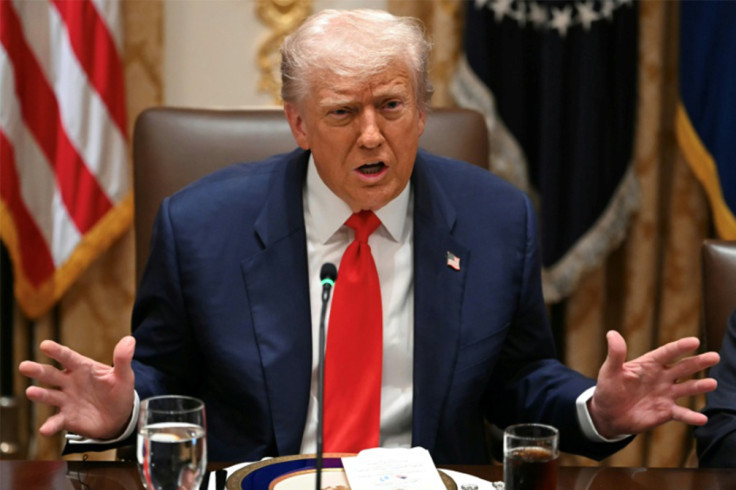
Medical Experts Question the Transparency of Donald Trump and His Latest Health Claims
According to Dr Gupta, the procedure outlined in the medical note is virtually unheard of as a routine screening tool. To verify his suspicions, Gupta contacted leading radiology experts across the United States to ask if a 'torso MRI' is ever used for preventative purposes in aging patients. The consensus was a resounding 'no.'
'No one is aware of getting an MRI of the torso... It doesn't exist,' Gupta remarked during an appearance on the Midas Health programme. He explained that there is no established clinical guideline suggesting that as a person ages, they should undergo an MRI of the heart and abdomen.
In the world of medicine, MRIs are highly specific diagnostic tools used to investigate known issues, rather than broad nets cast to catch potential problems. Critics have pointed out that at 79 years old, the President is now the oldest sitting commander-in-chief in US history, making the clarity of such diagnostic choices vital for public confidence.
'MRIs are not used as primary screening tools,' Gupta added. 'But the fact that they just chose to focus on the heart and the abdominal findings honestly makes no sense. And this has been vetted across the spectrum with external experts as well.' The lack of a clear medical rationale for such a scan has led many to wonder if the procedure was actually diagnostic—meaning it was intended to look at an existing problem—rather than preventative.
This follows a previous White House disclosure from mid-2025 revealing the President had been diagnosed with chronic venous insufficiency, a condition affecting blood flow in the legs.
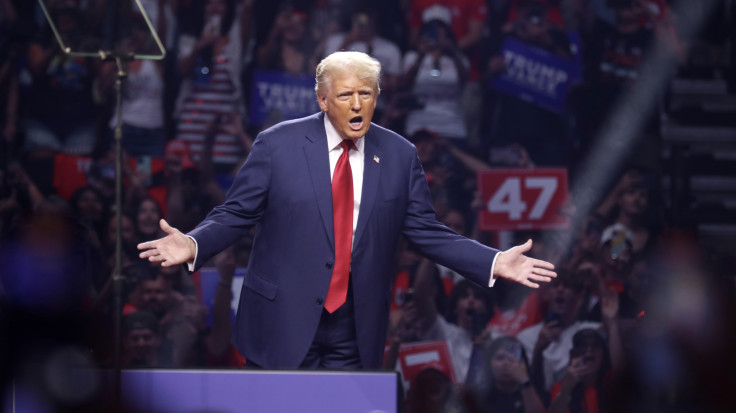
Public Observations and the Impact of Fatigue on Donald Trump
The White House, in its attempt to project strength, may inadvertently be 'creating more questions than answers.' Gupta pointed out that the public appearances of the President often tell a different story than the one written on official letterheads.
In late 2025, The New York Times said that his schedule for his second term is much less busy than for his first. They also noted times when his 'battery appears to be running low' at public events.
People who have seen him say he looks more and more tired, and many think it's because he's not getting enough sleep. This observation is in line with a lot of reporting from The New York Times, which raised concerns about his ability to function. The administration has dismissed such reports, but Gupta says that the evidence is 'bearing out' in real time. In November, the President was seen in the Oval Office with drooping eyelids and seemed to doze off for a short time. This made people even more worried about how his health was affecting him.
'I have been very mindful of not speculating, but to simply report the observational, objective things that we're seeing,' Gupta stated. He noted that the 'erratic behaviour' often associated with the President is either a permanent personality trait or, more worryingly, a symptom that is becoming more frequent. As the leader of the free world, the President's health is a matter of national security.
When the medical information given to the public seems fake or wrong, it makes the public less trusting of the government. The 'torso MRI' is still a medical ghost for now, and the questions about what is really going on behind closed doors keep coming up. As January goes on, the need for a more thorough and medically sound explanation will only grow.
© Copyright IBTimes 2026. All rights reserved.