

Epstein Survivor Confronts Trump After Holiday 'Witch Hunt' Claims: 'Every Accusation Is A Confession'
Trump's 'Sleazebag' Epstein post backfires as survivor responds amid DOJ dump

On Thursday evening, just hours after celebrating Christmas with his supporters, President Donald Trump took to Truth Social to launch a carefully orchestrated broadside against those he claimed had betrayed Jeffrey Epstein when the stakes became too high.
The timing was deliberate, released on one of the most sacred days in the Christian calendar, and the message was unmistakable: Trump sought to rewrite the narrative surrounding his decades-long association with the disgraced financier. The post has made survivors of Epstein's crimes even angrier, and one victim wrote a scathing response that goes to the heart of an already tense scandal.
There was an unprecedented storm of revelations when Trump made his controversial comments. The Justice Department released about 11,000 to 30,000 documents from federal investigations that lasted more than ten years between Dec. 19 and Dec. 23, 2025. These documents included photos, grand jury transcripts, flight records and other investigative materials.
In November 2024, Congress passed the Epstein Files Transparency Act, which Trump signed. This law forced the Justice Department to make public documents that had been kept secret about federal investigations into Epstein's sex trafficking operation. But instead of talking about the substance of these shocking new facts, Trump switched gears and attacked people he says stayed away from Epstein until the pressure became too much.
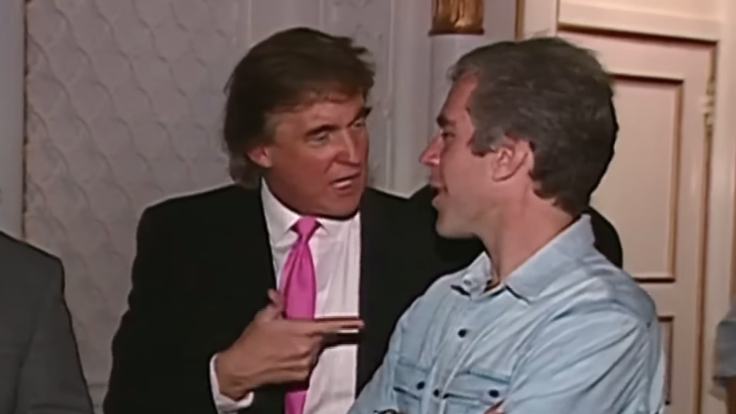
Donald Trump and Jeffrey Epstein: A Christmas Day Defence
'Merry Christmas to all, including the many Sleazebags who loved Jeffrey Epstein, gave him bundles of money, went to his Island, attended his parties, and thought he was the greatest guy on earth, only to 'drop him like a dog' when things got too HOT,' Trump wrote, before adding: 'falsely claimed they had nothing to do with him, didn't know him, said he was a disgusting person, and then blame, of course, President Donald J. Trump, who was actually the only one who did drop Epstein, and long before it became fashionable to do so'.
The president then escalated his rhetoric, channelling grievances about what he termed a 'Radical Left Witch Hunt' and suggesting that Democrats and 'one lowlife Republican,' referring to Kentucky Representative Thomas Massie — who spearheaded the congressional discharge petition forcing the Epstein file release — would soon 'have a lot of explaining to do' once additional names emerged in ongoing investigations. He concluded the post with a notably ominous flourish: 'Enjoy what may be your last Merry Christmas!'
The underlying claim Trump has repeatedly made — that he was the first to distance himself from Epstein — stands in stark contrast to newly released flight records and investigative documents. Federal prosecutors' emails released this week reveal that Trump flew on Epstein's private jet at least eight times between 1993 and 1996, with Ghislaine Maxwell, Epstein's accomplice and now-imprisoned co-conspirator, present on at least four of those flights.
One 1993 flight listed only Epstein and Trump as passengers; another flight contained only three passengers: Epstein, Trump and a redacted 20-year-old female passenger. Additionally, Trump's 2007 ban of Epstein from Mar-a-Lago followed allegations that Epstein had sexually harassed the teenage daughter of another club member who worked as a masseuse in the resort's spa — a detail that prompted fresh questions about what Trump knew and when.

Donald Trump and Jeffrey Epstein: A Survivor's Scathing Retort
Marijke Chartouni, who has publicly disclosed that she was sexually abused by Epstein when she was 20 years old, did not mince words in her response. The survivor, posting on X (formerly Twitter) on Thursday, delivered a six-word verdict that seemed to encapsulate the broader criticism aimed at the president's self-serving posturing: 'Every accusation is a confession. Cheers,' she wrote, accompanying the message with a champagne glass-clink emoji.
Chartouni's response carries particular resonance given her transformation from victim to prominent advocate. In 2020, she became one of the first survivors to publicly name herself, breaking years of silence about her experience. She was a 20-year-old model from a small town in Alaska — newly transplanted to Manhattan and seeking opportunities in the fashion industry — when she was introduced to Epstein.
As she later recounted in a 2021 interview with Politico, entering Epstein's Manhattan townhouse near Central Park felt like 'walking through the rabbit hole as soon as you got in that door.' She has since become an influential voice in survivor communities, advocating fiercely for transparency and holding enablers accountable, whilst also seeking to protect fellow survivors' privacy during the document release.
Chartouni's retort on Thursday was particularly pointed, given that Trump's own defence strategy mirrors a common accusation pattern: deflecting scrutiny by accusing others of precisely what he is being investigated for. The pithy riposte suggests that Trump's attempt to distance himself from Epstein rings hollow to those who have suffered at the hands of the sex trafficker and his associates. Several other survivors, including Annie Farmer and Virginia Roberts Giuffre's family members, have expressed similar outrage at how the DOJ has managed the file release, criticising heavy redactions, inconsistent transparency, and a lack of communication with survivors.
President Trump:
— Yashar Ali 🐘 (@yashar) December 25, 2025
“Merry Christmas to all, including the many Sleazebags who loved Jeffrey Epstein, gave him bundles of money, went to his Island, attended his parties, and thought he was the greatest guy on earth, only to "drop him like a dog" when things got too HOT…” pic.twitter.com/rtCwa8G9eX
The president's Christmas message arrives amid a broader controversy that his administration cannot easily escape. Amongst the released documents are claims the Justice Department has disputed as 'untrue and sensationalist' — including allegations submitted to the FBI shortly before the 2020 election. The DOJ has insisted these claims lack credibility and would have been 'weaponised' against Trump already if they had merit.
However, one document — an FBI intake report dated Oct. 27, 2020 — purports to describe an account from a former limousine driver who claimed to have witnessed Trump making incriminating remarks about Epstein during a 1995 encounter. The Justice Department subsequently issued a statement asserting that such allegations represent unfounded claims submitted before the election.
The heavy redactions in the released files have drawn criticism from both Democrats and Republicans alike. Over 550 pages have been entirely blacked out, raising questions about whether victims' information is truly the only material being withheld. More than a dozen survivors released a joint statement expressing outrage at the manner in which documents were disclosed, criticising the DOJ for failing to communicate with survivors and for releasing files in a way that made locating pertinent information difficult or nearly impossible.
The contrast between Trump's aggressive posture on the holiday and the vulnerability of survivors like Chartouni underscores the inherent tension at the heart of the Epstein scandal: whilst powerful figures trade accusations and attempt to reshape their own narratives, survivors continue seeking genuine accountability and justice — and growing increasingly frustrated that the system designed to protect them may be failing them once again.
© Copyright IBTimes 2026. All rights reserved.